
Blog Search Results


84 results for last judgement
found
within the Blog
6 displayed out of 84 (0.50seconds)Page 13 of 14

The Early Concept of the Trinity: Tracing the Roots
Posted by Luke J. Wilson on 16th November 2023 in Trinity | trinity,early church,early church fathers,tri-unity,triune God,godhead
The doctrine of the Trinity, which asserts the co-equality of the Father, Son, and Holy Spirit, has deep roots in the early Christian writings of the first three centuries. While the full articulation of the Trinity developed over time, culminating at the Council of Nicaea in the fourth century, references to the equality of these three persons can be traced back to influential documents and the teachings of early Church Fathers in the centuries leading up to this pivotal moment in Church History.
Early Church Beliefs and Teachings
One of the earliest Christian documents, the Didache, believed to have been written in the late first or early second century, pro...
Who was the real Santa Claus?
Posted by Luke J. Wilson on 17th December 2018 in Christmas | christmas,xmas,St Nicholas,early church,Nicea council,father Christmas,santa claus
It's that magical time of year when the lights go up, the trees get decorated and a familiar bearded man in a red suit pops up everywhere.
He goes by a few names: Santa Claus, Father Christmas, and Saint Nick.
But who was the real Santa Claus?
Well, to answer that, we need to go way back in history to the fourth century to a Bishop called Nicholas of Myra (present-day Demre, Turkey).
Memes abound about St Nicholas and Arius
Some early lists place him as one of the Bishops who attended the First Council of Nicaea in 325 AD, and there are some questionable legends which state that he was temporarily defrocked (removal from office) and imprisoned during...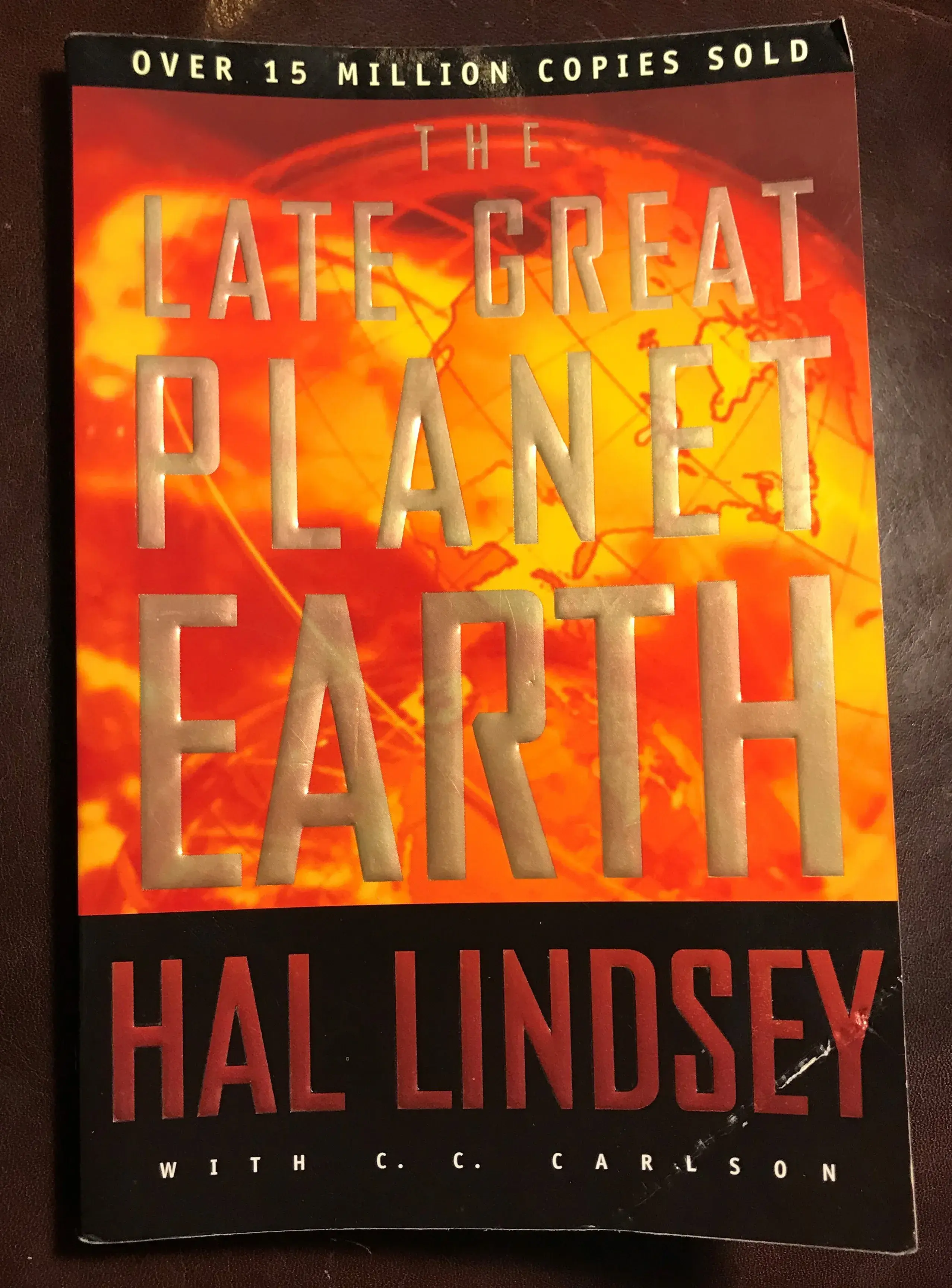
Where Hal Lindsey and Dispensationalism Went Wrong
Posted by Charles Meek on 2nd December 2024 in Eschatology | Dispensationalism,end times,Hal Lindsey,John Nelson Darby,false prophets
This is a guest post from Charles Meek
Hal Lindsey’s bookThe Late Great Planet Earth
Hal Lindsey’s book The Late Great Planet Earth, first edition in 1970, sold over 40 million copies. Gullible Christians got sucked into Lindsey’s soon-end-of-the-world cult-like poppycock. As time has passed without his version of Armageddon taking place, we can now objectively analyze where Lindsey went wrong:
Lindsey (p. 54, 181), like other dispensationalists, placed the beginning of the end with Israel becoming a nation in 1948. He thought all prophecy would be fulfilled within a 40-year generation (Matthew 24:34). But 1988 came and went, proving him to b...
Coffee With Jesus: Luke 24
Posted by Luke J. Wilson on 10th February 2023 in Devotional | Coffee with Jesus,Road to Emmaus,resurrection,eucharist
Brief thoughts from daily devotions
The road to Emmaus. A familiar story from the Gospel to many, though today as I read it, I noticed some things which I probably glossed over in previous times.
At the start of this chapter we see that some of the women who followed Jesus had gone to the tomb with spices to prepare the body of Jesus, and yet were met with a few surprises: an open, empty tomb and some angels! They ran back to the group of apostles and other disciples to tell the exciting news, and what was their response? “[T]hese words seemed to them an idle tale, and they did not believe them.” (v.11). They thought it was nonsense! Probably not the react...
Does Easter Have Pagan Origins?
Posted by Luke J. Wilson on 22nd March 2021 in Easter | Easter,easter sunday,early church,church history,paganism,pagan roots,Ishtar,Eostre,fertility goddess
Much like any major Christian holiday, there are the usual arguments and accusations about how it’s all just pagan festivities with a “Christian mask”. Easter is no different, and usually gets hit the hardest over its so-called “pagan roots”, or in the month or so preceding it, Lent being some “invention of the Catholic Church”.
Table of Contents
The Lenten Fast
The Easter controversy and why we celebrate it when we do
Is the Name “Easter” really the Anglo-Saxon goddess Eostre?
Chocolate eggs and bunnies?
Concluding Thoughts
Further Reading and Sources
I like to try and observe Lent, as it is one of the most ancient custom...
Before The Pumpkins: The Day Two Women Defied Rome
Posted by Luke J. Wilson on 29th October 2025 in Halloween | halloween,martyrdom,Perpetua,Felicity
In the last post, we looked at Polycarp — a faithful bishop who faced the flames rather than deny his Lord. His courage in the face of certain death became a rallying light for generations of believers after him. But his story is only one among many in the long line of the cloud of witnesses who ran the race before us (Hebrews 12:1). Today, we step forward a few decades to another account of extraordinary faith — that of two women, Perpetua and Felicity.
Perpetua left an account of her own martyrdom (technically a Passion) which is considered historically reliable. What makes it extraordinary is that Perpetua herself wrote a portion of it in Latin b...
Powered by WebBoss.io 3.7.1
Copyright © 2026 The Sacred Faith: Timeless Truths for Modern Minds. All Rights Reserved.
