
Before The Pumpkins: The Day Two Women Defied Rome
In the last post, we looked at Polycarp — a faithful bishop who faced the flames rather than deny his Lord. His courage in the face of certain death became a rallying light for generations of believers after him. But his story is only one among many in the long line of the cloud of witnesses who ran the race before us (Hebrews 12:1). Today, we step forward a few decades to another account of extraordinary faith — that of two women, Perpetua and Felicity.
Perpetua left an account of her own martyrdom (technically a Passion) which is considered historically reliable. What makes it extraordinary is that Perpetua herself wrote a portion of it in Latin before her death, making it one of the earliest known writings by a Christian woman! It was then continued by another who witnessed the events once she entered the arena.
The Setting: Carthage, AD 203
Our story takes us to North Africa during the reign of Emperor Septimius Severus. Christianity was still seen as a threat to the Roman order, and anyone refusing to sacrifice to the emperor’s image could be imprisoned or executed. Among the arrested were a small group of catechumens (new believers preparing for baptism) including a young noblewoman named Vibia Perpetua and her servant, Felicity.
Perpetua was only twenty-two years old and the mother of an infant son. Her father, a pagan, begged her to renounce the faith and save her life, but she would not. In her prison diary — one of the earliest surviving Christian texts written by a woman — she records their suffering and her unshakable resolve and faith. After she was arrested with her companions, she wrote of a moment when her father came and tried to persuade her to sacrifice to the Emperor and deny her faith:
When my father, out of love for me, tried to turn me from my faith, I said to him: ‘Father, do you see this vessel here — a water pot or whatever it may be? Can it be called by any other name than what it is?’ He answered, ‘No.’ Then I said to him, ‘So too I cannot call myself anything other than what I am — a Christian.’
A few days after this they were all baptised while imprisoned under house arrest awaiting their trial before being moved to the more restrictive Roman cells once they were formally condemned to die by wild beasts. After her baptism, the Spirit spoke to Perpetua and told her that she must “pray for nothing else after that water save only endurance of the flesh”.

The prison was dark, so dark she said she had “never known such darkness”, plus it was hot and crowded, the soldiers mistreated them all and she was trying to care for her child! Thankfully, later on a couple of deacons, Tertius and Pomponius, who were ministering to them managed to somehow pay the Romans to allow Perpetua and Felicity some respite in a better part of the prison where the child could be better fed and later handed off into the care of Perpetua’s mother.
Dreams of Victory
While in prison, Perpetua received a series of visions that strengthened her for what lay ahead. In one, she saw a golden ladder reaching up to heaven, guarded by a fierce serpent below, and sharp iron spikes along either side. Only those who stepped on the serpent’s head and climbed the ladder could enter. She interpreted this as her coming trial — the climb of faith through suffering to eternal life, realising that God wasn’t going to deliver her from this trial, but that it should be her passion (i.e. her death). It’s an image of triumph through endurance that echoes Christ’s own words: “Be faithful unto death, and I will give you the crown of life” (Revelation 2:10).
Felicity’s story is just as moving. She was heavily pregnant at eight months when arrested and gave birth in prison mere days before the execution. Roman law forbade torment of a pregnant woman, so she would have stayed in prison until the birth. When she cried out in labour, one of the guards mocked her, saying, “If you suffer so much now, what will you do when you face the beasts?” She calmly replied, “Now it is I who suffer; but then there will be another in me who will suffer for me, because I will be suffering for Him”. She gave birth to a daughter who was immediately adopted and raised by one of the Christian women who came to support her in her trials.
The Arena
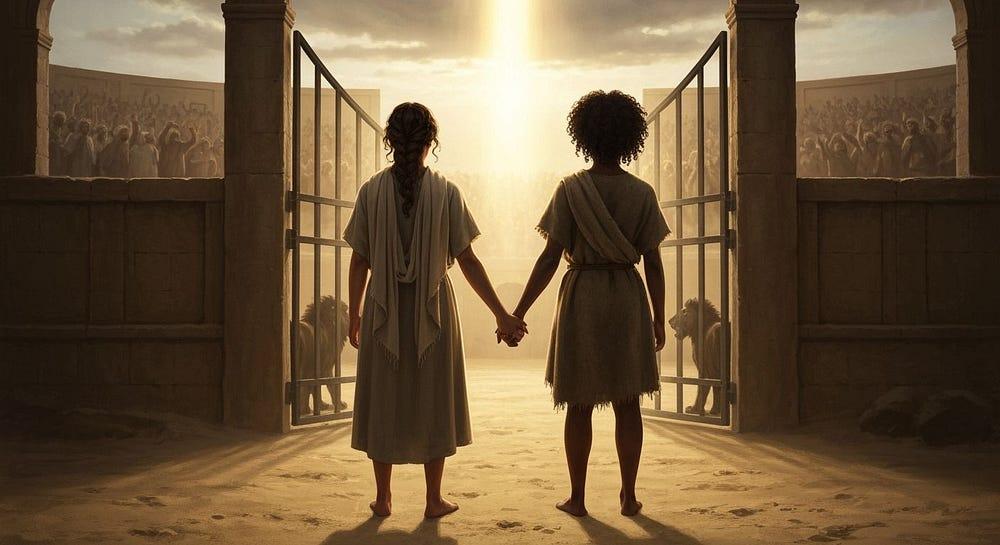
When the day came, the women were led to the amphitheatre. The crowd roared as if for sport, but heaven was watching for witness. Perpetua had dreamt of a golden ladder leading to paradise, guarded by a dragon below and angels above. She had already seen her victory. So, she and Felicity entered the arena hand in hand, clothed in faith rather than fear.
The account tell us they faced a wild cow chosen, perhaps, to mock their womanhood and maternal instincts as it was noted that this was entirely against the usual custom. The animals charged — the wild cow meant to humiliate them gored and trampled, yet still they rose. Bloodied but unbroken, they embraced one another and offered the kiss of peace, sealing their testimony in love. When the beasts failed to kill them, the guards sent in the sword. The chronicler records the moment with awe:
She guided the trembling hand of the young gladiator to her own throat. It was as though such a woman, feared by the impure spirit, could not be slain unless she herself willed it.
And so the day two women defied Rome became a day heaven rejoiced. It’s also noted that through Perpetua, Felicity, and their fellow companion’s victory and grace in martyrdom, a few of the soldiers came to faith because of their example. The way they all faced death had a big impact on everyone watching.
Perpetua and Felicity stood not in isolation, but among that great cloud of witnesses of which Hebrews speaks, those who “ran with perseverance the race set before them”. They remind us that courage is not the absence of fear, but the presence of faith. Their story crosses the centuries to speak to us still today with all relevance that no worldly power, no pain, no chain, can silence the voice that says, I am a Christian.
Reflection
You can’t read their story and not feel moved by it. Their sense of conviction and faith is a testimony to the power and strength of God dwelling in believers, and a witness to us today that no matter what we face, if we rely on God and trust in him during those times, he will give us the strength to endure.
There’s no bitterness in their testimony, only trust. Their faith was not about defiance but devotion. The quiet, immovable conviction that Christ is worth everything, even life itself.
Their story reminds us that the Church was built not on force, but on faith; not on conquest, but on witness. “The gates of Hades shall not overcome it” as Jesus taught (Matt 16:18). These women stood firm, not as warriors or rulers, but as mothers, daughters, and servants whose hope burned brighter than whatever devices the devil used to end their lives. They remind us that the cloud of witnesses includes every kind of believer — rich and poor, male and female, young and old — all joined by the same unshakable confession: “Jesus is Lord”.
As we remember them today, may we find courage for our own smaller trials, and be inspired by those who stood on the sand of the arena before us: standing on the shoulders of giants, and walking in the steps of Christ, who first endured the
Further Reading
Leave a comment Like Back to Top Seen 787 times Liked 0 times

Enjoying this content?
Support my work by becoming a patron on Patreon!
By joining, you help fund the time, research, and effort that goes into creating this content — and you’ll also get access to exclusive perks and updates.
Even a small amount per month makes a real difference. Thank you for your support!
x
Subscribe to Updates
If you enjoyed this, why not subscribe to free email updates and join over 897 subscribers today!
My new book is out now! Order today wherever you get books
Subscribe to Blog updates
Alternatively, you can subscribe via RSS 
All email subscriptions must be confirmed to comply with GDPR.
Related Posts
Luke J. Wilson | 31st October 2025 | Halloween
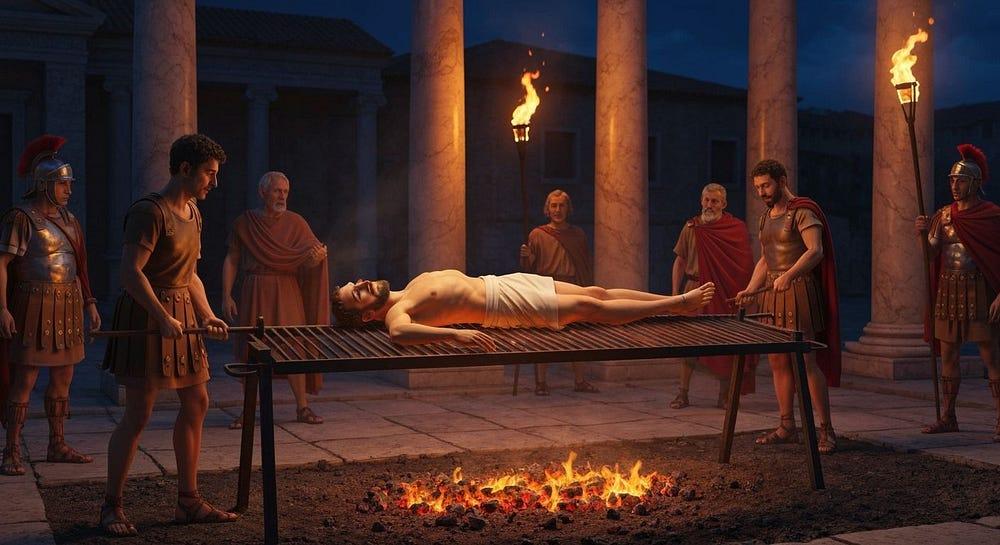
In our last post, we walked with Perpetua and Felicity through the sands of the amphitheatre, their faith outshining Rome’s cruelty. Now for the final part in this series, we turn to another of the Church’s earliest heroes — one whose courage was matched by an unexpected wit. His name was Lawrence, a deacon of Rome, remembered across centuries as the man who kept his humour even while lying on the griddle. The Setting: Rome, AD 258 Under Emperor Valerian, a fresh persecution of Christians swept through the Empire. Bishops, priests, and deacons were hunted down, their property seized, and their churches closed. The bishop of Rome at that time was Sixtus II — a gentle and wise shepherd who, like the apostles before him, was soon to drink from the same cup as his Lord. Among his closest companions was Deacon Lawrence, entrusted with overseeing the Church’s treasury and distributing alms to the poor. The Acts of St Lawrence tell us that when Sixtus was arrested and led to execution, Lawrence ran after him, crying out that he would not be left behind. Where are you going, father, without your son? Where are you going, priest, without your deacon? You never used to offer sacrifice without me as your minister! To which Sixtus replied: My son, I’m not leaving you. Greater trials are waiting for you. In three days you’ll follow me. Sixtus was beheaded soon after. Lawrence, meanwhile, was arrested and brought before the Roman prefect who, hearing that Lawrence had been the keeper of the Church’s wealth, demanded that he hand it over to the empire. The True Treasure of the Church The exchange that followed has been remembered ever since, partly for its irony, partly for its courage. “Bring forth,” said the prefect, “the treasures of the Church — the gold, the silver, and the precious vessels — that the emperor may possess them.” Lawrence asked for three days to gather them, which the prefect granted, no doubt imagining chests of glittering riches being prepared for him. Instead, Lawrence went through the city, gathering the blind, the crippled, the widows, the orphans, and all who were destitute or suffering. On the third day, he presented them before the prefect and declared: These are the treasures of the Church. Behold the gold and silver that I promised thee — the eternal jewels in whom Christ dwells. The prefect, enraged at being mocked, ordered that Lawrence be scourged and tortured, then laid upon an iron gridiron above a slow fire. The Martyrdom The ancient texts, mingling reverence and humour, tell the story that has echoed down the ages and had left an impact on me purely for the humour that I find in it! They laid him upon the iron bed, and beneath it kindled coals, that his flesh might be roasted little by little. And Lawrence, lying there, lifted up his eyes to heaven and gave thanks to God for counting him worthy to suffer. After some time, the account continues with words that have made Lawrence one of the most memorable of all martyrs: Having been a long time on the fire, he said to his tormentors with a cheerful countenance: ‘This side is done; turn me over and eat.’ It is difficult to read those words without laughing at how funny it sounds! It matches the kind of dark humour that I can have and often think of, which is probably why the story of Lawrence appeals to me so much, it’s the kind of silly thing I would think to say (though I’m not sure if I would in Lawrence’s place!). In the face of unbearable agony, Lawrence mocked his tormentors and even death itself. His humour was not flippant, but a final victory over the fear that his persecutors wanted to instil. His joke was an act of defiance against the gods whom Decius implored against the power of Christ within Lawrence. Despite how hot it must have been, Lawrence declares a worse fate on Decius, warning him of the fire he will face because of this, saying that the “burning c...
Luke J. Wilson | 25th October 2025 | Halloween

Picture the scene: the year is somewhere around 155–160, Polycarp has just been arrested and brought to the city. The crowd roared in the stadium. The smell of sweat and fear mingled with the dust of Smyrna’s arena. And in the centre of it all stood an old man — calm, unflinching, his face marked with years of faith. The Roman proconsul urged him again: “Swear by the fortune of Caesar. Curse Christ, and I will release you.” Polycarp looked him in the eye and replied with a defiant response that has echoed down the ages, Eighty and six years I have served Him, and He has done me no wrong. How can I blaspheme my King who saved me? Those words have become immortal in and of themselves, reverberating from pulpits, prison cells, and whispered prayers in dark times. They belong to Polycarp, bishop of Smyrna, and one of the clearest windows we have into the courage of the early Church. The place of Polycarp’s martyrdom was not Rome, as many assume, but the bustling city of Smyrna, in what is now western Turkey. Smyrna was one of the great cities of Asia Minor — wealthy, loyal to Rome, and proud of its grand stadium where games and public spectacles were held. It was in that very stadium, believed by archaeologists to have seated up to 20,000 people, before the watching crowds and the Roman proconsul of the province, that the aged bishop was brought to stand trial. The same stadium that once echoed with cheers for athletes and gladiators would now resound with the final testimony of a Christian who refused to curse his King. The Roman stadium of Smyrna, located on the slopes of Mount Pagos, fully excavated in 2014. (Source) A Disciple of the Apostles Polycarp was no obscure figure on the fringes of history. Born around AD 69, he lived at the very hinge between the apostolic age and the developing life of the Church. Tradition tells us that he was a disciple of the Apostle John, friend and fellow bishop with Ignatius of Antioch, and a mentor to another great bishop — Irenaeus of Lyons. Through Polycarp, we stand just one generation away from the eyewitnesses of Jesus Himself. He served faithfully as bishop of Smyrna (modern-day Izmir, Turkey), a bustling port city of trade, culture, and imperial devotion. When persecution began to stir, Polycarp was not a young zealot but an elderly shepherd who had spent his life guiding others in Christ’s way. His story is preserved in The Martyrdom of Polycarp, one of the earliest martyr narratives ever written, likely composed by those who knew him personally. How the Stadium would have looked in the time of Polycarp. Image: İzmir Time Machine The Arrest and the Trial When soldiers came to arrest him, Polycarp did not run. Instead, he greeted his captors with hospitality, ordering food and drink to be brought to them. He even asked for an hour to pray, and they granted it. His prayer was so fervent and filled with grace that several of his guards later regretted their role in his capture. Brought before the governor, Polycarp was told to swear by Caesar’s name, to prove his loyalty to Rome. He could have chosen silence. He could have muttered a few words to save himself. But instead, he stood firm in his faith and act boldly with confidence in his Saviour, who, when entering the stadium spoke to him by voice from heaven saying, “Be strong, and show thyself a man, O Polycarp!”. The other believers who were with Polycarp also heard the voice but no one saw where it came from. Due to Polycarp’s advanced age, the proconsul tried to persuade him to just declare what was asked of him and say, “Swear by the fortune of Cæsar; repent, and say, ‘Away with the Atheists’”. In this context at the time, “Atheists” referred to Christians because they denied the pantheon of Roman gods. But Polycarp, he wasn’t so easily intimidated. Looking around at “all the multitude of the wicked heathen” in the stadium seats, he waved his h...
Luke J. Wilson | 20th October 2025 | Halloween
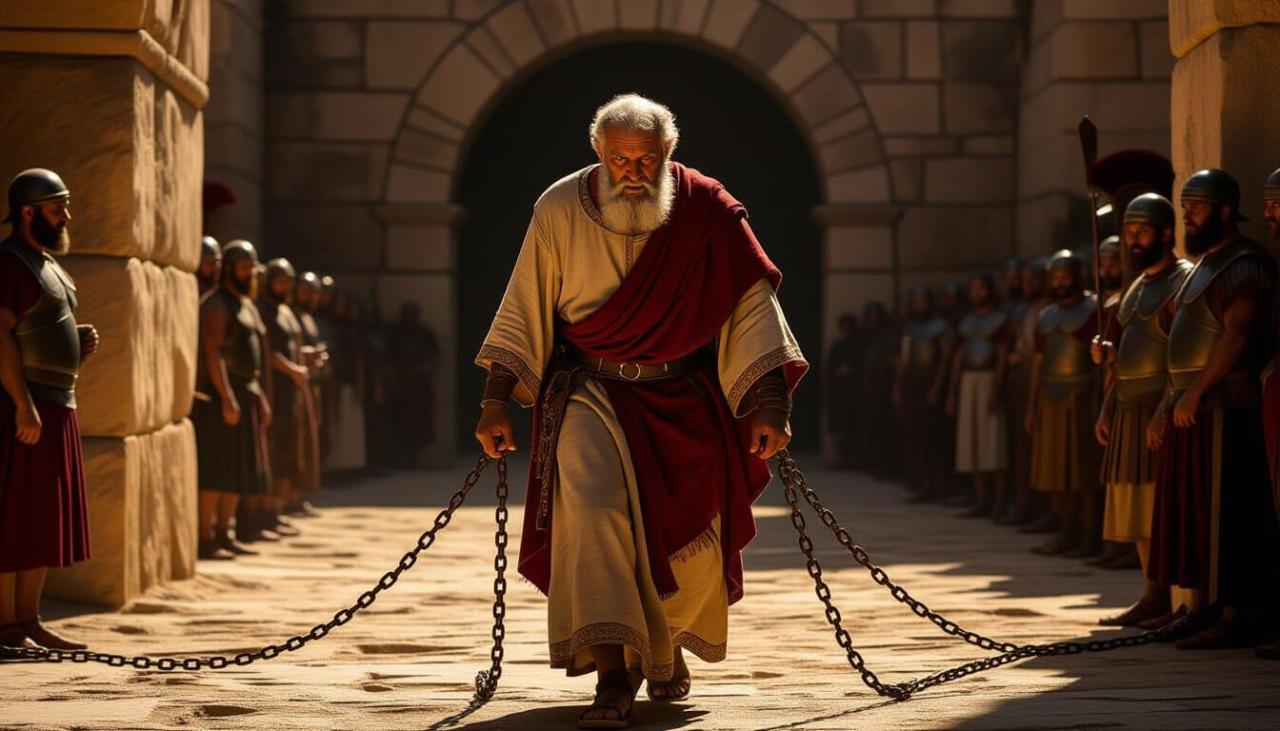
The sound of chains echoed through the streets as Ignatius of Antioch was led from Syria to Rome. The old bishop’s body was frail, but his heart burned with the strength of Christ. Each clinking step brought him closer to the arena — and to the wild beasts that would tear him apart — yet his letters brimmed with joy and passion, and a sense of urgency inspiring others to unity, obedience, and unwavering faith. For Ignatius, death was not defeat; it was the completion of discipleship, crossing the finish line of faith… the moment when imitation of Christ became complete. Ignatius of Antioch is one of my favourite Early Church Fathers mainly for how much reading his letters had an impact on me. His letter to the church in Rome, especially, as you could really sense his passion and dedication to his faith and conviction to see through his impending martyrdom head on, fearless in the face of death! And as one of the earliest martyrs outside of the New Testament, his story is the perfect place to begin this series. A Disciple of the Apostles Ignatius lived in the generation just after the apostles, serving as bishop of Antioch in Syria. Tradition says that Ignatius was the small child whom Jesus held in his arms in Matt. 18:2, though this cannot be verified as Ignatius himself never states it. A more trustworthy tradition 4tells us that he was a disciple of the Apostle John, and this lineage can be felt in his writings. His letters echo the same themes and emphasis on Christ as John does in his Gospel around the incarnation, never failing to highlight the physical nature of Jesus as well as his divine which can be seen with such statements like “Jesus Christ our God” (Epistle to the Ephesians). During the reign of Emperor Trajan (around AD 107), Christians were increasingly viewed as enemies of the Roman order. Refusing to worship the emperor was seen as defiance, and Ignatius, as one of the most visible leaders of the Church, became a prime target. He was arrested and sentenced to be taken to Rome to die in the arena by wild beasts. Letters from the Road As he travelled under heavy guard, ten soldiers he referred to as “being bound between ten leopards” (Letter the Romans, 5), Ignatius wrote seven letters to various Christian communities along the way: to Ephesus, Magnesia, Tralles, Rome, Philadelphia, Smyrna, and to Polycarp himself, the bishop of Smyrna. These letters are among the earliest Christian writings outside the New Testament, and they give us an amazing insight into the heart of a man preparing for martyrdom. Not many things touch me emotionally, but these letters did. Again and again, he speaks of unity and humility, urging believers to remain bound together under their bishop just as the Church is bound to Christ. He warns against false teachings that denied Christ’s true humanity, writing passionately: “Stop your ears, therefore, when any one speaks to you at variance with Jesus Christ, who was descended from David, and was also of Mary; who was truly born, and did eat and drink.”. But above all, his letters shine with a desperate longing for his final witness, pleading with the Roman Christians not to “show an unseasonable good-will” towards him and prevent his martyrdom. His desire to face his fate still gives me chills when I read it; I’m encouraged and also challenged so much by his words: Suffer me to become food for the wild beasts, through whose instrumentality it will be granted me to attain to God. I am the wheat of God, and let me be ground by the teeth of the wild beasts, that I may be found the pure bread of Christ … Rather entice the wild beasts, that they may become my tomb, and may leave nothing of my body … Let fire and the cross; let the crowds of wild beasts; let tearings, breakings, and dislocations of bones; let cutting off of members; let shatterings of the whole body; and let all the dreadful torments of the devil come upon me: only let me at...
Luke J. Wilson | 12th October 2025 | Halloween

It’s that time of year again when pumpkins appear in windows, skeletons hang from doorways, and debates resurface about whether Christians should have anything to do with Halloween. Some will say it’s entirely “pagan” in origin, others that it’s harmless fun — and many of us fall somewhere in the middle, just trying to work out what’s right (or try to ignore it!). But what if we’ve forgotten that Halloween began not with ghosts and ghouls, but with grace and glory? Hallowe’en — “All Hallows’ Eve” — was never about celebrating darkness; it was about remembering the light. It marked the night before All Saints’ Day, a day to honour those who gave their lives for Christ — the martyrs and the faithful who stood firm when the world turned against them. The very first commemorations of this kind go back far earlier than medieval Europe. Around 135 AD, Christians were already gathering at the tombs of martyrs like Polycarp of Smyrna, treating their remains as “more precious than the most exquisite jewels”. By the third century, Cyprian of Carthage was writing that the Church should record the dates when martyrs were killed so that their witness could be remembered each year. The faithful didn’t gather to mourn their loss, they gathered to celebrate their victory over death by attaining the reward of eternal life. Over time, as persecutions multiplied, there were simply too many to commemorate individually. So the Church dedicated a universal feast: first in May, then later moved to November 1st — All Saints’ Day — to honour every witness who had finished the race and kept the faith. That’s the true origin of Halloween’s eve: not a night of fear, but a vigil of remembrance. And so, as the world lights candles inside pumpkins, we light ours in memory of those who shone brightest in the darkness. Saints and martyrs remind us that the Christian story is one of life conquering death — of love refusing to yield to hatred. Their courage wasn’t rooted in despair, but in the unshakable hope that Christ has already triumphed. This October, we’ll look back at a few of these extraordinary lives — men and women who carried the light through the fires of persecution: Ignatius of Antioch, Polycarp of Smyrna, Perpetua and Felicity, and Lawrence of Rome. Each of them teaches us something vital about what it means to be a witness. As we journey through their stories, perhaps we can recover what All Hallows was always meant to be: a time not for horror, but for holy remembrance. As we pause to remember these men and women of faith, we take our place among what the writer of Hebrews calls “so great a cloud of witnesses”. Their stories are not distant echoes but living testaments and voices that still urge us to “run with perseverance the race set before us.” From Stephen, whose face shone like an angel as stones rained down upon him, to those who came after — Ignatius, Polycarp, Perpetua, Lawrence — the line of faithful witnesses stretches unbroken through history. Each one bore the light of Christ into the darkness of their age, refusing to give up or give in even when the cost was their life. Today, we stand on the shoulders of these giants of faith. Their courage reminds us that our lives, too, are part of this great story; that our endurance, our love, our quiet faithfulness all take their place among the saints who have gone before. As we begin this journey through their lives, may the same Spirit who sustained them stir our hearts anew. For though centuries divide us, we walk the same road, a road marked by the cross, but leading always toward resurrection! Dive into the lives and testimonies of these faithful men and women who can still inspire faith in us even now: Before The Pumpkins: The Road To The Lions Before The Pumpkins: Faith In The Flames Before The Pumpkins: The Day Two Women Defied Rome Before the...
Luke J. Wilson | 29th July 2026 | Faith & Reason

��Pilate asked him, ‘What is truth?’ (John 18:38) What is “truth”? A question famously asked by Pilate to Jesus during his trial. Ironically, Pilate was speaking to the embodiment of Truth itself. John 14:6Jesus said to him, ‘I am the way, and the truth, and the life.’ Here’s a little ‘riddle’ to think about while you read this; see if you agree or not: “all truth is fact, but not all facts are truth”. I’ll explain it at the end if you’re confused. Jesus is the ultimate Truth, but in a world and society that is becoming increasingly more relative, how do we test the truth and know what’s real or not? Especially with the sudden rise of AI video and photos getting more and more realistic, that old adage “the camera never lies” is completely false now. This makes sifting and filtering facts from fiction on social media all the more difficult. Memes and images are shared stating claims bluntly and authoritatively as truth, which people just assume are accurate and then share it hundreds of thousands of times. Truth has been replaced by opinion masquerading as truth. “Your truth”, “my truth”, “their truth”. But we can’t just blindly accept everything we see and are told. We must use our brains, check the sources and use our reasoning. God gave us intellect and reasoning to be used. In Isaiah 1:18, God invites us to come and reason together with him. We don’t follow a blind faith, we’re never asked to believe “just because”. The Old Testament is full of times when the historical examples of God’s actions are used as an anchor and reason for faith, and the same is true in the New Testament where we have the Gospels as eyewitness accounts, rooted in history. Paul writes to say that 500 people saw the risen Christ and that many are still alive so you can go and verify it for yourself and that he is passing on what he received from trusted people. The resurrection itself is grounded in it being a real event that if shown otherwise would make our faith “futile” and that we would be people to be most pitied. 1 Corinthians 15:17“If Christ has not been raised, your faith is futile and you are still in your sins.” So with this in mind about our faith being grounded, all the more we should aim to do the same in other aspects of our lives. “Do your own research” is a common mantra online, but that in itself isn’t just Googling something and taking the first result that pops up. Especially now as most search engines give an AI overview first, which is just a compilation of the top results, not anything verified or fact-checked. And top results don’t always mean best results, or even accurate results. It typically just means the best keyworded and SEO-optimised result, which could be anything. To properly research, you must know which are trusted sources, reputable websites as well as looking up people who are experts and authorities in their fields. Now this doesn’t always mean they are right but at least you’ll be better informed to make up your own mind and make decisions based on well-researched information, rather than the first blog you find online, or the most viewed YouTube video with someone yelling “facts” at you. Doing your own research means doing the leg-work in tracing down sources and footnotes and citations to see who said what and where it originated to ensure its faithful and trustworthy, and used in context. The answer and example of the riddle The “Black Swan Problem” Strictly speaking, it highlights the difference between observed facts and absolute truth: The “Fact” (at the time): For thousands of years, every recorded, verified observation of a swan in Europe was white. As far as European zoologists were concerned, “all swans are white” was a well-documented, empirically backed fact. The Truth: Millions of black swans were happily swimming around in Western Australia. The truth was always that black swan...
Luke J. Wilson | 29th December 2025 | Christmas
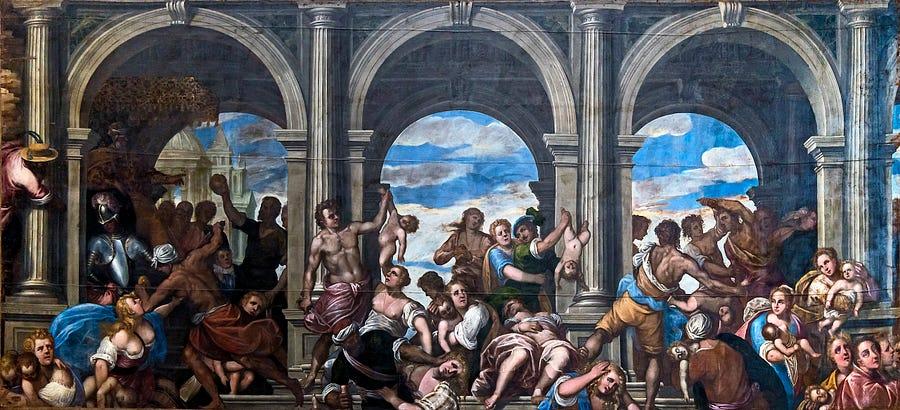
January 6th marks the day in the liturgical calendar when the arrival of the Magi visiting baby Jesus with their gifts is celebrated. But with it comes the often distressing account of what is known as the Massacre of the Innocents. Matthew places this moment of revelation of Jesus as King alongside one of the darkest episodes in his Gospel, and it’s a stark contrast: one King is here to bring peace on earth, as the angels declared, the other king brought death and destruction. For some readers, this raises an immediate historical question. If Herod truly ordered the killing of all the male children under two in Bethlehem, why does no other ancient historian mention it? Josephus, after all, delights in cataloguing Herod’s cruelty. He records the execution of Herod’s wife, his sons, and numerous political rivals. Herod was paranoid and vicious. As for Herod, if he had before any doubt about the slaughter of his sons, there was now no longer any room left in his soul for it; but he had banished away whatsoever might afford him the least suggestion of reasoning better about this matter, so he already made haste to bring his purpose to a conclusion. He also brought out three hundred of the officers that were under an accusation … whom the multitude stoned with whatsoever came to hand, and thereby slew them. — Josephus, Antiquities of the Jews 16.11.7 So, why the silence here about Bethlehem? The answer, I would say, isn’t anything nefarious or made-up by Matthew, but just something simply down to scale. Bethlehem Was a Very Small Place Bethlehem in the early first century was not a city. It was a village — small, agricultural, and politically insignificant. Most historians estimate its population at somewhere between 300 and 1,000 people, with around 500 being a sensible midpoint. Once we factor in ancient demographics, the numbers become surprisingly modest. Modern demographic research into pre-industrial societies consistently shows that nearly half of all children died before adulthood, with the highest concentration of deaths occurring in the first two years of life. These findings align closely with conditions in Roman-period Judea and support conservative estimates for the number of infants living in a small village such as Bethlehem. Source: Mortality in the past: every second child died — Our World in Data In pre-modern societies with high infant mortality, only about 2–3% of the population would be living children under the age of two at any given time. Many children were born; far fewer survived those earliest years. Applying a conservative 2.5% figure to Bethlehem gives us roughly: 7–8 children under two in a village of 300 12–13 children under two in a village of 500 25 children under two even at the extreme upper estimate of 1,000 inhabitants Herod’s order, however, targeted male children only. Statistically, that halves the number. This places the likely number of victims somewhere between three and twelve boys. Matthew’s reference to ‘Bethlehem and the surrounding region’ does slightly widen the scope of Herod’s order, but not by enough to change the demographic picture. Even when nearby settlements are included (e.g. farmsteads, shepherd settlements, etc. not major cities/towns), the total number of children under two likely remained in the dozens rather than the hundreds, maybe anywhere between 14–45 boys maximum if we make an educated estimate. This is entirely consistent with what we know of population size and infant mortality in the ancient world. This is an important number to realise and consider. Not because the deaths are insignificant simply due to being so few, but because ancient historians did not record history the way we do now. A small number of peasant children killed in an obscure village would not have registered as a notable event alongside palace intrigue, royal executions, or political upheaval. For Josephus, it wou...
Luke J. Wilson | 13th December 2025 | Christmas

How can God beget a Son? Does that mean Jesus is His creation? This question comes sharply into focus during Advent, when the Church contemplates the Incarnation: the eternal Son entering the world as a baby in Mary’s womb. And to understand this, we turn to language the Church has treasured for centuries — especially that crucial distinction between begotten and created. And C. S. Lewis describes this with a real concise clarity: We don’t use the words begetting or begotten much in modern English, but everyone still knows what they mean. To beget is to become the father of: to create is to make. And the difference is this. When you beget, you beget something of the same kind as yourself. A man begets human babies, a beaver begets little beavers, and a bird begets eggs which turn into little birds. But when you make, you make something of a different kind from yourself. A bird makes a nest, a beaver builds a dam, a man makes a wireless set — or he may make something more like himself than a wireless set: say, a statue. If he is a clever enough carver he may make a statue which is very like a man indeed. But, of course, it is not a real man; it only looks like one. It cannot breathe or think. It is not alive. Now that is the first thing to get clear. What God begets is God; just as what man begets is man. What God creates is not God, just as what man creates is not man. By saying that Jesus is begotten from the Father, we are saying that Jesus is fully God and not a creation of God (Arianism), nor is the Son of God simply a mode or action of God (Sabellianism). This is the heart of Christian theology: begotten = shared nature created = different nature Begotten Means “of the Same Essence” When the Father begets the Son, He is not constructing or manufacturing Him. Begetting is not an act inside time. It is an eternal relationship. Just as: light is never without radiance a fire is never without heat the Father is never without the Son There was never a moment “before” the Son existed. The Son is eternally from the Father, sharing His nature, His essence, His Godness. As John says in the opening of his Gospel, Jesus as the Son was/is “in the bosom of the Father”. This was historically understood that the Word always existed within the Father. When Christ Is Misunderstood: Modalism and Arianism Two ancient heresies emerge from misunderstanding “begotten, not made.” 1. Modalism (Sabellianism) This claims that: Father, Son, and Spirit are just different forms or roles of one person. This erases the real distinctions within the Trinity. If Modalism were true: Jesus is praying to Himself. The Father sending the Son is theatre. Christ’s baptism is a staged illusion. Modalism collapses the Persons into one persona wearing different masks. 2. Arianism Arius taught that: Jesus was created by God ex nihilo He is a divine-like being, but not equal in essence This makes Jesus the highest creature… but still a creature. If Jesus is created, then He cannot: reveal God perfectly unite humanity to God save us entirely and absolutely Only God can reconcile us to God. The Nicene Creed: Drawing a Line in the Sand At the Council of Nicaea (325 AD), the Church responded boldly and clearly: God from God, Light from Light, true God from true God, begotten, not made, of one being with the Father. This was a decisive boundary. begotten — of the same nature not made — not a creation of one being (homoousios) — equal in essence, not similar The Creed functioned like a theological guardrail. Christ is not “like God” — He is God. The creeds act as guardrails for orthodox interpretation Proverbs 8: Wisdom Begotten, Not Created The Fathers saw Proverbs 8 as speaking of the Son under the title “Wisdom”: The Lord begot me at the beginning of his work...
Luke J. Wilson | 31st October 2025 | Halloween
In our last post, we walked with Perpetua and Felicity through the sands of the amphitheatre, their faith outshining Rome’s cruelty. Now for the final part in this series, we turn to another of the Church’s earliest heroes — one whose courage was matched by an unexpected wit. His name was Lawrence, a deacon of Rome, remembered across centuries as the man who kept his humour even while lying on the griddle. The Setting: Rome, AD 258 Under Emperor Valerian, a fresh persecution of Christians swept through the Empire. Bishops, priests, and deacons were hunted down, their property seized, and their churches closed. The bishop of Rome at that time was Sixtus II — a gentle and wise shepherd who, like the apostles before him, was soon to drink from the same cup as his Lord. Among his closest companions was Deacon Lawrence, entrusted with overseeing the Church’s treasury and distributing alms to the poor. The Acts of St Lawrence tell us that when Sixtus was arrested and led to execution, Lawrence ran after him, crying out that he would not be left behind. Where are you going, father, without your son? Where are you going, priest, without your deacon? You never used to offer sacrifice without me as your minister! To which Sixtus replied: My son, I’m not leaving you. Greater trials are waiting for you. In three days you’ll follow me. Sixtus was beheaded soon after. Lawrence, meanwhile, was arrested and brought before the Roman prefect who, hearing that Lawrence had been the keeper of the Church’s wealth, demanded that he hand it over to the empire. The True Treasure of the Church The exchange that followed has been remembered ever since, partly for its irony, partly for its courage. “Bring forth,” said the prefect, “the treasures of the Church — the gold, the silver, and the precious vessels — that the emperor may possess them.” Lawrence asked for three days to gather them, which the prefect granted, no doubt imagining chests of glittering riches being prepared for him. Instead, Lawrence went through the city, gathering the blind, the crippled, the widows, the orphans, and all who were destitute or suffering. On the third day, he presented them before the prefect and declared: These are the treasures of the Church. Behold the gold and silver that I promised thee — the eternal jewels in whom Christ dwells. The prefect, enraged at being mocked, ordered that Lawrence be scourged and tortured, then laid upon an iron gridiron above a slow fire. The Martyrdom The ancient texts, mingling reverence and humour, tell the story that has echoed down the ages and had left an impact on me purely for the humour that I find in it! They laid him upon the iron bed, and beneath it kindled coals, that his flesh might be roasted little by little. And Lawrence, lying there, lifted up his eyes to heaven and gave thanks to God for counting him worthy to suffer. After some time, the account continues with words that have made Lawrence one of the most memorable of all martyrs: Having been a long time on the fire, he said to his tormentors with a cheerful countenance: ‘This side is done; turn me over and eat.’ It is difficult to read those words without laughing at how funny it sounds! It matches the kind of dark humour that I can have and often think of, which is probably why the story of Lawrence appeals to me so much, it’s the kind of silly thing I would think to say (though I’m not sure if I would in Lawrence’s place!). In the face of unbearable agony, Lawrence mocked his tormentors and even death itself. His humour was not flippant, but a final victory over the fear that his persecutors wanted to instil. His joke was an act of defiance against the gods whom Decius implored against the power of Christ within Lawrence. Despite how hot it must have been, Lawrence declares a worse fate on Decius, warning him of the fire he will face because of this, saying that the “burning c...
Recent Posts
Luke J. Wilson | 25th August 2026 | William Lane Craig

If you’ve been on Christian social media this week, you’ve probably seen it: William Lane Craig — one of the most respected Protestant apologists of our time— flatly denying a core line of the Nicene Creed. In his own words, he does not believe or confess that the Son is eternally begotten from the Father in his divine nature. Human nature, yes. But divine? Nope. For a lot of readers, that’s a jarring sentence. Isn’t “eternally begotten of the Father” literally in the Creed we recite? How can someone who has spent decades defending the resurrection and the existence of God turn around and reject something so central? I want to walk through what’s actually going on here, because it’s more interesting — and older — than a single viral clip suggests. What Craig is actually rejecting The doctrine in question is called eternal generation: the idea that the Son is eternally derived from the Father, “begotten, not made,” sharing the Father’s nature without there ever being a time he didn’t exist. It’s not saying the Son had a beginning; it’s saying the Son’s very being is eternally from the Father, the way light is eternally from the sun. Craig has argued for years, most fully in his paper Is God the Son Begotten in His Divine Nature? (2019), that this idea owes more to Greek philosophical categories borrowed by the second-century Apologists than to anything the biblical writers themselves teach. He calls it a vestige of “Logos Christology” and prefers a model where Father, Son, and Spirit are simply co-equal and co-eternal, without one eternally generating another. William Lane Craig disavows the Nicene Creed Why I think this gets the history backwards Here’s where I’d push back, and where I think this whole debate needs a bit more historical texture than a viral post can give it. Long before Nicaea formalised its language, the earliest post-apostolic Christians were already working with something like what’s called the Monarchy of the Father (or Monarchical Trinitarianism) — a framework that takes the Father’s monarchia (his unique, self-existent source of divinity, or autotheos) seriously as the fountainhead from which the Son is begotten and the Spirit proceeds. This is worth distinguishing carefully from Monarchianism, the second/third-century heresy that collapsed the persons of the Trinity into one another to protect God’s oneness — the Monarchy of the Father is the orthodox opposite of that, affirming three distinct, co-eternal persons while still honouring the Father as their singular source. On this reading, the Son and Spirit aren’t lesser, but they do find the very source of their divinity in the Father — not as effects of a philosophical system layered onto scripture, but as a way of taking John’s own language (the Word who was with God and was God, yet distinct from “the Father”) with full seriousness. That’s the thing I think gets lost when eternal generation gets dismissed as a “leftover.” Logos Christology isn’t an embarrassing accretion — it’s arguably what John 1 is doing from verse one. The Church didn’t import that idea to explain the text; the text seems to be why the Church needed the idea. None of this makes Craig any less serious a thinker, and it’s worth saying plainly: this isn’t the first time he’s stepped outside Nicene orthodoxy — he’s made similar moves on Christ’s two wills (dyothelitism) in the past. But it is, I think, a real departure, not just a “minor unorthodoxy.” Why it matters beyond the argument It would be easy to turn this into another “gotcha” moment — ‘look, even the great apologist gets it wrong!’ I don’t think that’s the right response. Craig has done more than most to defend the reasonableness of the Christian faith to a sceptical world, and disagreeing with him on this doesn’t erase that. But it is a good reminder that ev...
Guest Author | 31st July 2026 | Prayer

Guest Post By Fiach OBroin-Molloy My own roots lie in the Catholic tradition, but my workbench has brought me into contact with Christians whose devotional lives differ from mine. I make Catholic rosaries, Anglican prayer beads and other forms of devotional beads by hand. That work has not taught me that distinctions between traditions do not matter. It has taught me that, beneath those distinctions, many of us know the same difficulty: we want to pray, but our attention is restless. I have travelled, lived and worked in a number of countries, from parts of Africa to countries further east. Again and again, I encountered beads or knotted cords held, counted or carried in prayer. The words, beliefs and purposes were not the same, and I would not flatten them into one vague spirituality. What stayed with me was the recurring human instinct to give devotion rhythm and weight—to let the body help the mind and heart remain present. For a Christian, however, that instinct is gathered into a particular faith—the faith confessed in the creeds. Our prayer is addressed to the God made known as Father, Son and Holy Spirit. It is shaped by Scripture and centred on Jesus Christ, the Word made flesh, crucified and risen. Prayer beads do not broaden that confession into something less definite. At their best, they help us stay with it. A faith that takes flesh seriously Christian prayer is never only an activity of the mind. We speak and sing. We stand, kneel and bow. We fold our hands, make the sign of the cross, and receive bread and wine. The Christian faith does not ask us to escape being embodied creatures. At its centre is the astonishing declaration that the Word became flesh and dwelt among us (John 1:14). Material things are not God, but they can serve our attention to God. That is the modest place in which I understand prayer beads. They do not create faith, improve the words of Scripture or make prayer more sincere. They simply give the hands something quiet to do while the heart and mind try to remain present. As a maker, I think about weight, texture, spacing and movement. A bead should pass naturally beneath the thumb. The cord or chain should be strong enough to be returned to repeatedly. A good set of prayer beads should not continually demand admiration for itself. Its purpose is to become quiet in the hand. Over time, beads polish, wood darkens and metal takes on the small marks of use. I rarely know the prayers that have been said with something I have made, but sometimes its wear tells me that it has been held often. That is a different kind of beauty from newness: not decoration, but evidence of return. What the hands bring to Scripture Lectio Divina invites us to read Scripture slowly and receptively. Luke J. Wilson has written much more fully about its four movements—reading, meditation, prayer and contemplation—and I would not try to redefine that teaching here. What interests me as a maker is the point at which a reader’s hand might support that attention. Most of us have become highly practised at moving quickly through words. We skim messages, headlines and pages, often looking for the next piece of information before we have received the one in front of us. Sacred reading asks something different. It asks us to stay. A bead introduces a small resistance to speed. It marks a pause and gives us somewhere to return when the mind has already hurried ahead. The Anglican prayer beads I make contain a cross, an invitatory bead, four cruciform beads and four groups of seven, often called weeks. I know that structure first through the work of my hands, not because I would presume to tell Anglicans how they ought to pray. What strikes me about it is its spaciousness: there are landmarks, passages and repeated opportunities to return to the cross. One possible practice would be to choose a short passage from the Gospels. At the cross, the reader might remember that Christ is the centre of the reading. ...
Luke J. Wilson | 29th July 2026 | Faith & Reason
��Pilate asked him, ‘What is truth?’ (John 18:38) What is “truth”? A question famously asked by Pilate to Jesus during his trial. Ironically, Pilate was speaking to the embodiment of Truth itself. John 14:6Jesus said to him, ‘I am the way, and the truth, and the life.’ Here’s a little ‘riddle’ to think about while you read this; see if you agree or not: “all truth is fact, but not all facts are truth”. I’ll explain it at the end if you’re confused. Jesus is the ultimate Truth, but in a world and society that is becoming increasingly more relative, how do we test the truth and know what’s real or not? Especially with the sudden rise of AI video and photos getting more and more realistic, that old adage “the camera never lies” is completely false now. This makes sifting and filtering facts from fiction on social media all the more difficult. Memes and images are shared stating claims bluntly and authoritatively as truth, which people just assume are accurate and then share it hundreds of thousands of times. Truth has been replaced by opinion masquerading as truth. “Your truth”, “my truth”, “their truth”. But we can’t just blindly accept everything we see and are told. We must use our brains, check the sources and use our reasoning. God gave us intellect and reasoning to be used. In Isaiah 1:18, God invites us to come and reason together with him. We don’t follow a blind faith, we’re never asked to believe “just because”. The Old Testament is full of times when the historical examples of God’s actions are used as an anchor and reason for faith, and the same is true in the New Testament where we have the Gospels as eyewitness accounts, rooted in history. Paul writes to say that 500 people saw the risen Christ and that many are still alive so you can go and verify it for yourself and that he is passing on what he received from trusted people. The resurrection itself is grounded in it being a real event that if shown otherwise would make our faith “futile” and that we would be people to be most pitied. 1 Corinthians 15:17“If Christ has not been raised, your faith is futile and you are still in your sins.” So with this in mind about our faith being grounded, all the more we should aim to do the same in other aspects of our lives. “Do your own research” is a common mantra online, but that in itself isn’t just Googling something and taking the first result that pops up. Especially now as most search engines give an AI overview first, which is just a compilation of the top results, not anything verified or fact-checked. And top results don’t always mean best results, or even accurate results. It typically just means the best keyworded and SEO-optimised result, which could be anything. To properly research, you must know which are trusted sources, reputable websites as well as looking up people who are experts and authorities in their fields. Now this doesn’t always mean they are right but at least you’ll be better informed to make up your own mind and make decisions based on well-researched information, rather than the first blog you find online, or the most viewed YouTube video with someone yelling “facts” at you. Doing your own research means doing the leg-work in tracing down sources and footnotes and citations to see who said what and where it originated to ensure its faithful and trustworthy, and used in context. The answer and example of the riddle The “Black Swan Problem” Strictly speaking, it highlights the difference between observed facts and absolute truth: The “Fact” (at the time): For thousands of years, every recorded, verified observation of a swan in Europe was white. As far as European zoologists were concerned, “all swans are white” was a well-documented, empirically backed fact. The Truth: Millions of black swans were happily swimming around in Western Australia. The truth was always that black swan...
Luke J. Wilson | 27th July 2026 | Archaeology
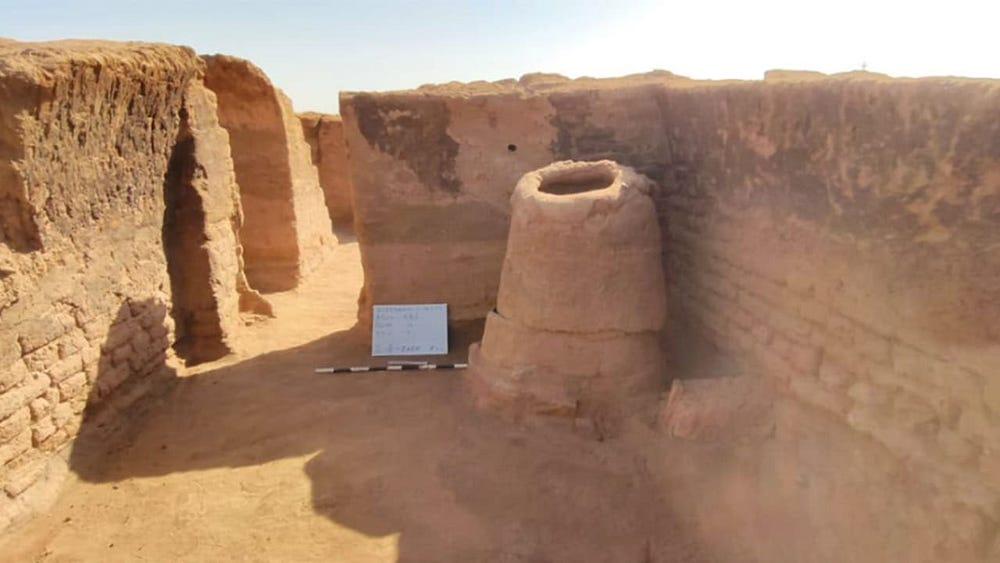
In early July 2026, Egypt’s Ministry of Tourism and Antiquities announced something pretty amazing: an entire Byzantine-era city, buried beneath the sands of the Dakhla Oasis, had been uncovered almost intact! Streets, homes, bread ovens, a fortress, and at its heart, a fourth-century basilica church. That might not seem very exciting on first glance. But this find deserves a closer look, because it puts flesh on something we usually only encounter in the abstract: what it actually looked like when Christianity took root, house by house, in an ordinary town far from the centres of imperial power. What Was Found The excavation, carried out by an Egyptian mission under the Supreme Council of Antiquities at the Ain El-Sabil site in the New Valley Governorate, roughly 185 miles west of Luxor, has been underway for several seasons. According to Hisham El Leithy, secretary-general of the Supreme Council of Antiquities, the settlement was laid out on a deliberate grid — north-south thoroughfares crossed by east-west streets, forming open squares and public spaces. This wasn’t a huddle of huts; it was a planned town. At the centre of that plan stood a basilica church dating to the mid-fourth century AD, overlooking one of the main streets. Around it, archaeologists found the remains of two watchtowers, a heavily fortified structure with thick defensive walls, and houses with spacious reception halls and vaulted roofs — complete with bread ovens, kitchens, and grinding stones for processing grain. Everyday life, preserved almost exactly as it was left. Two houses stand out that have been identified. One belonged to a man named Tisous,* identified as a church deacon, dating to the second half of the fourth century. The other belonged to a man named Tabibos. Over a thousand years later and we know the name of who owned a house and a home-church; I always find it fascinating! Archaeologists believe Tabibos’s house, which dates to the early fourth century, functioned as a house church before the basilica was ever built. A collection of coins bearing Byzantine emperors, Christian symbols and Latin inscriptions was uncovered during the excavation. (Egyptian Ministry of Tourism and Antiquities via Facebook; Dea Picture Library/De Agostini via Getty Images) There’s also a documentary find that’s easy to skim past but genuinely significant: nearly 200 ostraca — broken pieces of pottery and limestone used as everyday writing material — inscribed in Coptic and Greek. Diaa Zahran, head of the Islamic, Coptic and Jewish Antiquities Sector, described them as recording sales transactions, correspondence, and other mundane details of daily life. Things we rarely get a glimpse into as the mundane rarely makes history. Alongside these, the mission recovered a substantial haul of bronze coins bearing Byzantine emperors and Christian symbols, plus gold coins from the reign of Constantius II (337–361 AD) — coinage that anchors the site’s prosperity firmly within the fourth century. Before the Basilica: The House Church at Ain El-Sabil What makes Tabibos’s house the most theologically interesting part of this discovery is timing. If it predates the basilica and dates to the early fourth century, it sits right at — or just before — the pivot point of Roman-Egyptian Christian history: the years surrounding Constantine’s Edict of Milan in 313 AD, when Christianity moved from a persecuted minority faith to a tolerated, and increasingly favoured, one. A time of transition between a house church and a purpose-built basilica when the threat of persecution no longer loomed over the Church. We know from Paul’s letters that the earliest churches met in homes — Romans 16:5 greets “the church in [Prisca and Aquila’s] house,” and similar greetings appear in 1 Corinthians 16:19 and Colossians 4:15. If we were to imagine how a letter from Paul to this house church might...

Powered by WebBoss.io 3.7.1
Copyright © 2026 The Sacred Faith: Timeless Truths for Modern Minds. All Rights Reserved.
