
Blog Search Results


Did you mean:
creedal christians
?
115 results for creedal Christians
found
within the Blog
6 displayed out of 115 (1.99seconds)Page 15 of 20
The Coming of Jesus: Daniel's 70 Weeks
Posted by Luke J. Wilson on 16th June 2014 in Second Coming Series | Second Coming,Return of Christ,Return of Jesus,Preterism,Prophecy,Last Days,Left Behind,Part 1,Part one,Daniel,70 weeks
Daniel's 70 Weeks
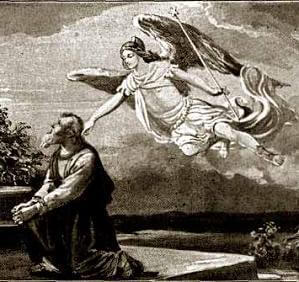
To fully understand Jesus's first, and indeed what is commonly called his "Second Coming," we need to understand the book of Daniel. This prophetic books give many details and glimpses into the future about coming kingdoms, rulers and above all, the Messiah. I'm going to be focussing on just one part of the book, chapter nine, often referred to as "Daniel's 70 Weeks". But just what is "Daniel's 70 Weeks" you might be asking as you read this. For those unfamiliar with Old Testament prophecy, it is a prophetic vision that Daniel was given from God, and interpreted by the angel Gabriel. You can read the prophecy in fu...
Exodus: Gods and Kings Review - Action epic loosely based on the Bible
Posted by Luke J. Wilson on 16th April 2015 in TV & Film | Exodus,God's and Kings,film review,biblical film
I know the film has been out for a while now, but I missed seeing it in the cinema and so have only just seen it. I'm sure there's others out there who still haven't watched this and are wondering whether it's worth the time and effort, so here goes: my review of Exodus.
The film begins with Moses later in life living in the Pharaoh's palace as his adopted son along side his half brother. Now I'm not sure if this part was based on any Jewish Midrash or if it was purely artistic license, but either way I thought it was well done to show how Moses' life could well have gone being brought up Egyptian. Apart from some pretty epic looking battle scenes, t...
Lent Day 20: Cyprian: On the Unity of the Church: 19-27
Posted by Luke J. Wilson on 23rd March 2017 in Lent | Lent,great lent,fasting,early church fathers,devotional,daily reading,Cyprian,Bishop of Carthage,unity
Day Twenty: St. Cyprian: On the Unity of the Church: 19-27
Who: Third century bishop of Carthage (in modern Tunisia), and martyr from Africa
What: A letter to encourage the unity of the church against schisms and heresy during massive Roman persecution
Why: A disturbance had happened in the church because of a priest called Novatian — a schismatic of the third century, and founder of the sect of the Novatians. Cyprian wrote to counter this and argues that there can only be one united Church, and the Novatian breakaway was a false church and that Novatian was an antipope.When: Around 249 AD
You can find today’s reading on page 102 here: lentfatherscomple...
Lent Day 27: Athanasius: Life of Anthony: Chaps. 61-70
Posted by Luke J. Wilson on 31st March 2017 in Lent | Lent,great lent,fasting,early church fathers,devotional,daily reading,Athanasius,Bishop of Alexandria,Confessor,Doctor of the Church,Anthony the Great,demons,healing,miracles,heresy,heretics,Arianism,deity of Christ
Day Twenty-seven: St. Athanasius: Life of Anthony: Chaps. 61-70
Who: Bishop of Alexandria; Confessor and Doctor of the Church; born c. 296; died 2 May, 373 AD. He was the main defender of orthodoxy in the 4th-century battle against the Arianism heresy. Certain writers received the title “Doctor” on account of the great advantage their doctrine had on the whole Church, Athanasius especially for his doctrine on the incarnation.
What: The biography of Anthony the Great’s life, which helped to spread the concept of Christian monasticism, particularly in Western Europe.
Why: From the letter’s own prologue: “The life and conversation of our holy Father...
What did Jesus actually sacrifice?
Posted by Luke J. Wilson on 18th March 2018 in Lent | Jesus,Jesus death,sacrifice,Jesus sacrifice,atheist,meme,flogging,crucifixion,Godhead,eternal consequences
Sometimes the question, or accusation/criticism maybe, is posed by atheists and critics of Christianity that Jesus didn’t really sacrifice anything because he is God and also because he got his life back three days later. So where’s the sacrifice if you know that what you give up will be given back, and given back even better than you previously had it?
It’s an interesting question, and one that should cause us to stop and think about what we, as Christians, say to non-believers in case the question is ever given to us. Most people will say Jesus gave up his life for us – but is that such a big deal if he knew he’d have it back in three days; and th...
Fasting: A spiritual and physical discipline
Posted by Luke J. Wilson on 27th May 2019 in Fasting | fasting,didache,discipline,self control,Lent,early church,early church fathers
The topic of fasting often comes up in online discussion groups that I'm a part of, more often in Protestant circles where the practice is more often sidelined in low churches. So let's take a look at the practice of fasting from a practical and historical view, as it seems to be a spiritual discipline which has been pushed aside in many churches today, with prayer, worship and bible reading taking more precedence in a Christian's life instead (not that those are bad things to do!).
Why fast?
There are many reasons to fast, and recent studies have shown a lot of health benefits that can be derived from fasting. But on the spiritual side of life, there are also...
Powered by WebBoss.io 3.7.1
Copyright © 2026 The Sacred Faith: Timeless Truths for Modern Minds. All Rights Reserved.
