
Blog Search Results


140 results for faith
found
within the Blog
6 displayed out of 140 (0.03seconds)Page 17 of 24

Biblical Inspiration and the Canon: How We Got the Bible
Posted by Luke J. Wilson on 28th February 2025 in Early Church | canon,nicea council,nicene council,myths,church history,church fathers
...ssage was faithfully recorded by the biblical writers.
What is the Canon?
The word “canon” comes from the Greek κανών (kanōn), meaning “rule” or “measuring rod.” In the context of the Bible, the canon refers to the official list of books recognised as divinely inspired and authoritative for faith and practice.
The canon developed over time as the early church recognised which writings carried divine authority. The Old Testament canon was largely settled by the time of Jesus, based on the Hebrew Scriptures used in the Jewish community. The New Testament canon, however, was formed through a process of discernment over several centuries, as th...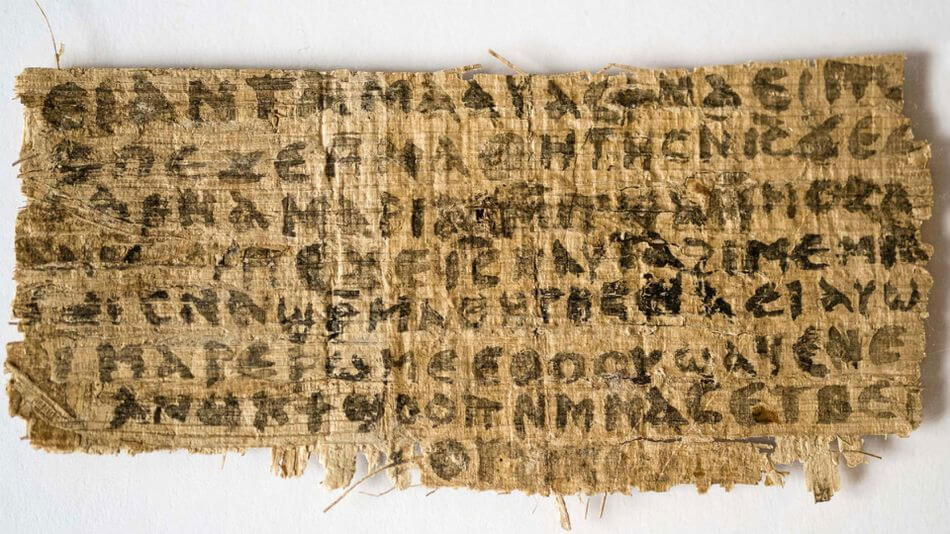
An ancient fragment mentions Jesus' wife!?
Posted by Luke J. Wilson on 10th April 2014 in General Interest | Jesus,wife,papyrus,fragment,Archaeology,Jesus wife,Gnosticism,early church
...anyone's faith in Jesus or the accuracy of the Gospels, nor does it in any way change the sacrifice Jesus made for us all....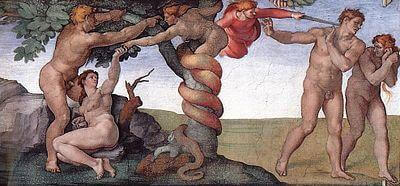
Was there death before the Fall?
Posted by Luke J. Wilson on 15th April 2014 in Death | Sheol,the Fall,Creation,Genesis,Adam and Eve,death,resurrection
...n through faith in Christ, and something we attain - not something we are born or created with (see: John 5:24; John 3:14-16; Romans 2:6-7; Romans 6:22-23; Titus 3:7; 1 Jn 2:25; Jude 1:21). In Revelation 2:7, Jesus speaks of the Tree of Life as a reward and as a way in which eternal life is given as he promised:
To everyone who conquers, I will give permission to eat from the tree of life that is in the paradise of God.
Is this how we attain our immortality? Jesus came to restore creation back to what was originally intended, and if eternal life was the plan (as it appears to be in Genesis) then it makes sense that, through Christ, we are now given ac...
What is Contemplative Prayer?
Posted by Luke J. Wilson on 9th February 2016 in Prayer | contemplation,prayer,meditate,meditation,waiting on the Lord,silence,Christian meditation,Lectio Divina
...ut ask in faith, never doubting ... for the doubter, being double-minded and unstable in every way, must not expect to receive anything from the Lord.
In all of this, we draw nearer to the Lord. And in doing so, he draws closer to us!
James 4:8Draw near to God, and he will draw near to you. Cleanse your hands, you sinners, and purify your hearts, you double-minded.
Meditate
Some people don't like the word “meditate” as it conjures up strange Eastern practices with monks sitting cross-legged saying “ommm..” repeatedly.
But that's only one type, and is so far removed from Christian meditation it shouldn't...
The Author of Life Knew Death For Our Sake!
Posted by Luke J. Wilson on 25th March 2016 in Easter | Easter,Good Friday,Holy Week,crucifixion,resurrection,reconcilliation
...nt to our faith, though only made sense of by the resurrection. This is the Gospel, the Good News, which has been preached the world over since. The Good News is that despite the One who authored Life itself being put to death on a tree (Acts 10:39-40), it is also through him that we are given eternal life and can partake in the resurrection in which Jesus was the first fruits of (1 Cor 15:20).
Irenaeus gives a concise overview of this Gospel message and draws out the dual nature of the tree, when he writes, “by means of a tree, we were made debtors to God. Likewise, by means of a tree, we can obtain the remission of our debt.”.
But what does that mean? I...
Lent Day 40: Leo the Great: Sermon LXXII: ON THE LORD'S RESURRECTION, II
Posted by Luke J. Wilson on 15th April 2017 in Lent | Lent,great lent,fasting,early church fathers,devotional,daily reading,Doctor of the Church,lectures,Leo the Great,St Leo,Pope Leo I,sermon,resurrection,easter,easter sunday
...Day Forty: St. Leo the Great: Sermon LXXII: ON THE LORD'S RESURRECTION, II
Who: Leo the Great, also known as Pope St. Leo I (the Great), was Pope from 440-61 AD. Place and date of birth unknown; died 10 November, 461. Leo's pontificate, next to that of St. Gregory I, is the most significant and important in Christian antiquity, as he tried to combat the heresies which seriously threatened church unity even in the West, such as Pelagianism.
What: A sermon on the Gospel, incarnation and resurrection of our Lord.
Why: To encourage the Church in the power of the incarnation and the true faith and the nature of Christ and to give a new meaning to Passover in lig...
Powered by WebBoss.io 3.7.1
Copyright © 2026 The Sacred Faith: Timeless Truths for Modern Minds. All Rights Reserved.
