
Blog Search Results


Did you mean:
greek
?
56 results for Greek
found
within the Blog
6 displayed out of 56 (0.03seconds)Page 2 of 10
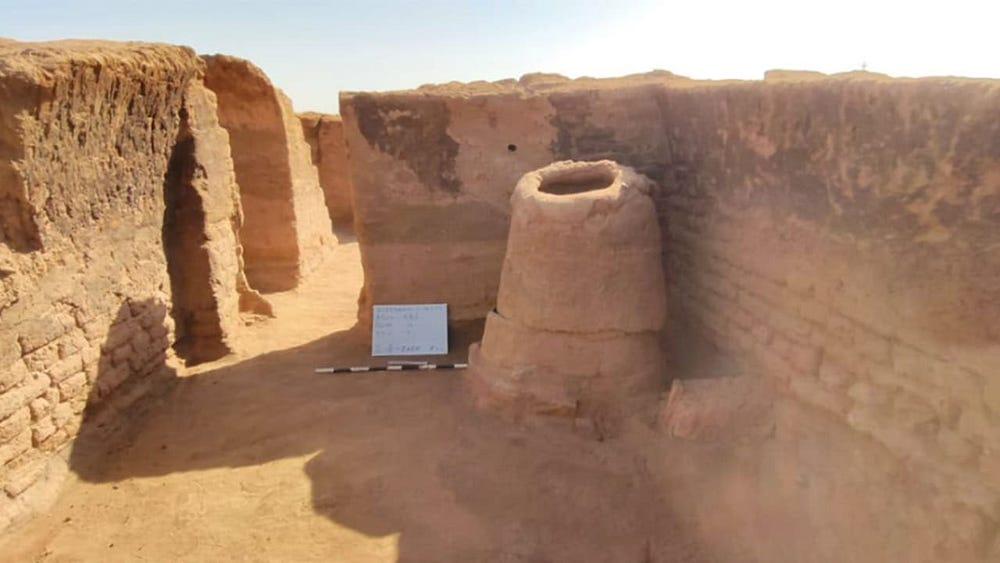
A City In The Sand: What A Fourth-Century Discovery In Egypt’s Western Desert Tells Us About The Early Church
Posted by Luke J. Wilson on 27th July 2026 in Archaeology | archaeology,early church,history
...optic and Greek. Diaa Zahran, head of the Islamic, Coptic and Jewish Antiquities Sector, described them as recording sales transactions, correspondence, and other mundane details of daily life. Things we rarely get a glimpse into as the mundane rarely makes history. Alongside these, the mission recovered a substantial haul of bronze coins bearing Byzantine emperors and Christian symbols, plus gold coins from the reign of Constantius II (337–361 AD) — coinage that anchors the site’s prosperity firmly within the fourth century.
Before the Basilica: The House Church at Ain El-Sabil
What makes Tabibos’s house the most theologically interesting part of...
The Historic Practice of Abortion and How Ancient Christians Responded
Posted by Luke J. Wilson on 1st July 2022 in Abortion | abortion,roe v wade,church history,current events,theology,politics,Why Are Christians Against Abortion?
...d. In the Greek Old Testament (the Septuagint or LXX), the creation account of man as an image of God uses the Greek work εἰκόνα where we get our English word “icon” from. This same word and concept is also seen in the New Testament, though often translated as “image”.
Paul makes it clear that while we are icons of Adam now in our fallen state, in and through Christ we shall also be icons of Jesus (1 Cor. 15:49) being renewed back to that original image we were created to be (Col. 3:10) as imagers of God because Jesus is also the icon of God — his exact character and image (Heb. 1:3).
Colossians 1:15He is the image [εἰκών] of the in...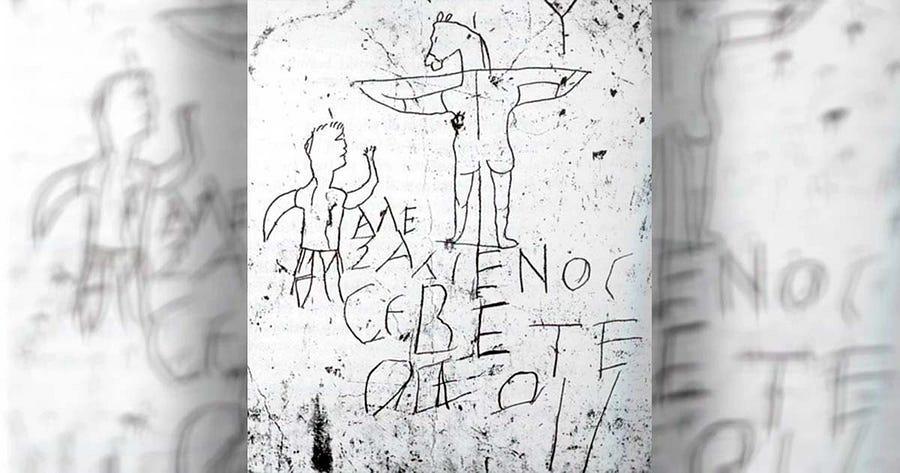
The World's Oldest Anti-Christian Meme
Posted by Luke J. Wilson on 9th March 2026 in Archaeology | Alexamenos graffito,archaeology,history
...ritten in Greek: Alexamenos worships his god.
It is, in the most literal sense, a mocking cartoon. Someone who knew a Christian named Alexamenos decided to ridicule him for his faith. The message is clear enough: your god is an animal, a criminal, a joke. You’re worshipping a crucified fool.
But here’s the thing I discovered: the donkey head wasn’t as random as I always thought it was. It wasn’t some strange personal insult conjured from nowhere. Without knowing the background, it looks bizarre, and possibly random. Why a donkey? Once you understand the cultural context, though, it makes complete sense. The person who drew it was reaching for a well-wo...
Keeping Christ in Xmas
Posted by Luke J. Wilson on 15th November 2023 in Christmas | xmas,christmas,history
...The abbreviation “Xmas” often sparks discussions about its origins and whether it diminishes the significance of Christmas. Contrary to misconceptions, the use of 'X' in "Xmas" has deep historical roots dating back to ancient Greek, where it represents the first letter of “Christ” (Χριστός). Additionally, the Chi Rho symbol, formed by superimposing the Greek letters Chi (Χ) and Rho (Ρ), is a notable Christian symbol representing Christ.
The Origins of "Xmas"
The letter ‘X’ in “Xmas” finds its roots in the Greek letter ‘Chi’ (Χ), which abbreviates the word “Christ” in Greek. This practice of using ‘X’ as an abbreviation for...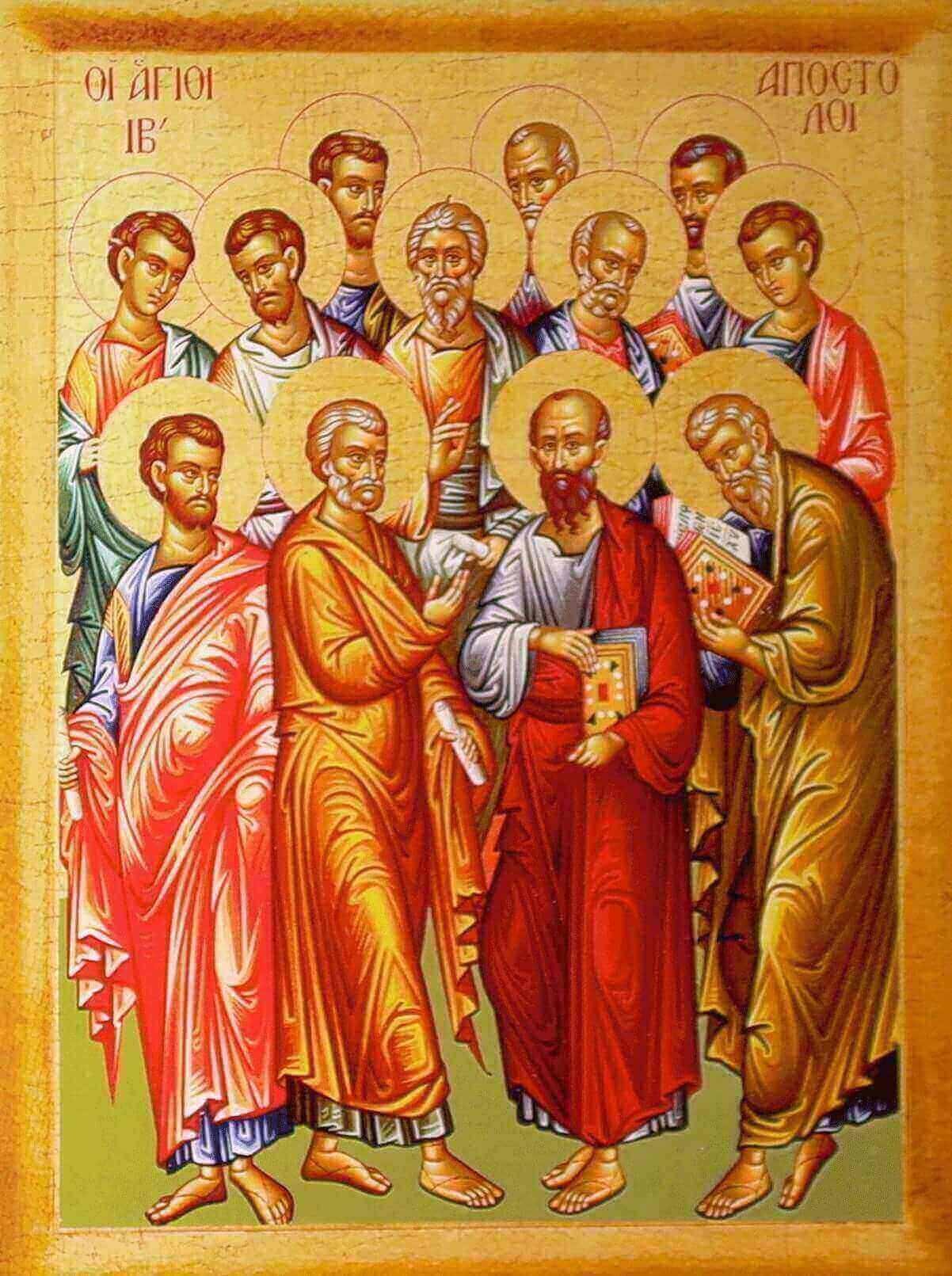
How many apostles are there in the New Testament?
Posted by Luke J. Wilson on 22nd May 2018 in Gifts of the Spirit | apostles,five fold ministry,gifts of the Spirit,Greek
...r”, the Greek word apostolon is actually “apostle” (as in other places – see endnote).
Two unnamed apostles – 2 Corinthians 8:23 Again, this is translating apostolon as "messenger" rather than “apostle”.
This should make around 21 apostles now, including the Twelve and Paul. (22 if you count Judas as an original apostle before his betrayal).
There are then potentially two more in Romans 16:7, Andronicus and Junias, who are called "prominent among the apostles". Scholars debate the meaning of the phrase here as whether that means they were "prominent apostles" or that the apostles considered them "prominent" in their work.
If we include them, it...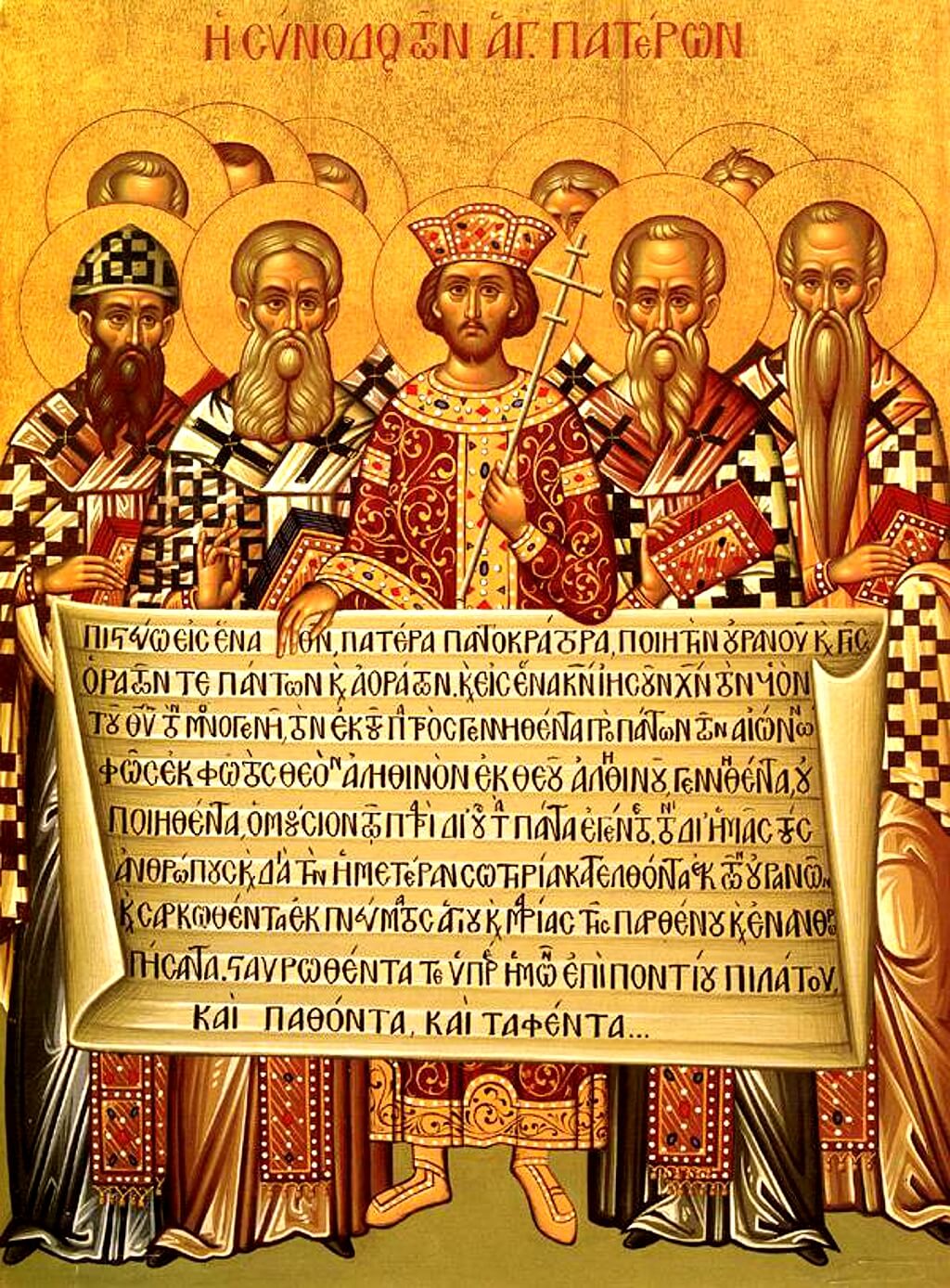
Creedal Christians: The Nicene Creed
Posted by Luke J. Wilson on 2nd June 2019 in Early Church | nicene creed,nicea council,creeds,creedal christians,creedal
...ipped the Greek-speaking East. The teaching of Arius of Alexandria were considered heretical by most bishops of the time, fearing that it would cost people their salvation. 1800 bishops were invited by Constantine (that was every bishop across the Roman Empire), but only around 250-320 turned up from across the Empire, except Britain, according to the various surviving documents from different attendees.
This Council was an extremely historic event as nothing quite like it had happened before since the Council of Jerusalem around 50 AD (Acts 15), which convened in a similar manner to counter controversial and false teaching which was upsetting the Church Body....
Powered by WebBoss.io 3.7.1
Copyright © 2026 The Sacred Faith: Timeless Truths for Modern Minds. All Rights Reserved.
