
Blog Search Results


20 results for origins
found
within the Blog
6 displayed out of 20 (0.03seconds)Page 2 of 4

Jesus, Mithras and Ancient Roman Cults: Separating Fact from Fiction
Posted by Luke J. Wilson on 25th April 2023 in Mythology | Jesus,mithras,apologetics,roman gods,atheist
Welcome to the next instalment of my series looking at the ancient mythological gods and how they compare to the life, death and resurrection of Jesus. Mithras is yet another popular ancient god that people like to compare with Jesus and make wild claims about, proposing that they are the same deities with different names. But is this even remotely true?
This article has ended up being a bit longer than anticipated as it’s one of the few ancient religions that was contemporary to the birth of Christianity which was seen as somewhat of a rival belief system, so there’s a lot of interesting things to cover!
The origins
Mithras has his roots in ancient Persi...
Does Easter Have Pagan origins?
Posted by Luke J. Wilson on 22nd March 2021 in Easter | Easter,easter sunday,early church,church history,paganism,pagan roots,Ishtar,Eostre,fertility goddess
...ching its origins, along with the Easter celebration, to see where they have their basis. Unsurprisingly, it turns out that many of the accusations against Easter and Lent as “pagan” are either fabricated or are just misinformation. So let’s examine the different aspects of Easter to see how we got from Passover to resurrection, to little bunnies and chocolate eggs!
The Lenten Fast
A forty-day fast prior to Easter has been a long-established practice within the Church, dating back to possibly within the first century. This is well established from ancient letters we still have available, such as from Irenaeus in the second century:
For some consider t...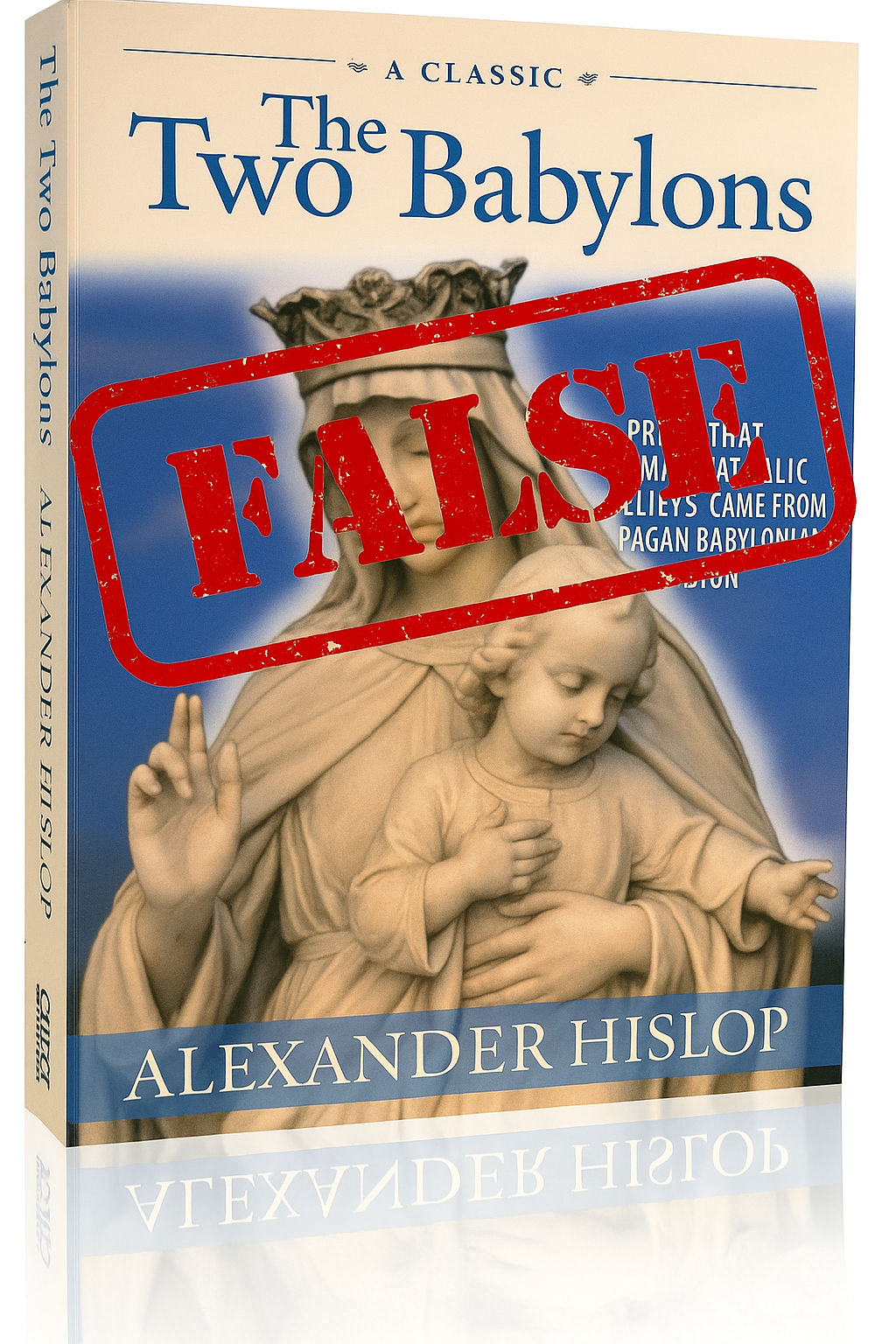
The Two Babylons Exposed: The Book That Misled Millions
Posted by Luke J. Wilson on 21st April 2025 in Easter |
...Over the years, I’ve encountered many Christians who’ve quoted from Alexander Hislop’s The Two Babylons as if it were a solid historical resource. The book claims that the Roman Catholic Church is not truly Christian but rather a continuation of ancient Babylonian religion. It’s self-assured and sweeping, and for many people, it seems to explain everything, from Marian devotion to Lent and Easter, to Christmas, as rooted in paganism. But is it accurate?
In short: no, it really isn’t.
Hislop’s work is a classic example of 19th-century pseudohistory — a polemical piece, written to prove a point, not to explore any historical truth.
Flawed Meth...When did Christians become so whiny?
Posted by Luke J. Wilson on 25th April 2014 in Christianity | persecution, news, Christians, whiny, Google, homosexuality, Early Church, Love, Church Fathers
...ave mixed origins and is largely a secular holiday just as much as a religious one.
Christmas and Easter "doodles," by Google.
How did this happen? When did this happen? One need only type into Google "why are Christians..." and it will auto-complete with "...so mean." Changing the search terms to "...so whiny" will yield many results of people asking why Christians whine about the spelling of "Xmas", or if they really are being persecuted, or various blogs about people getting sick of Christians whinging about nearly everything!
I realise the irony that I now may seem like I am whining about people whining, but this is more than that - this is a...
Great Lent: The Season of Fasting
Posted by Luke J. Wilson on 13th February 2016 in Lent | Lent,Easter,Fasting,Prayer,early church,early church fathers,paganism,pagan roots
...tting the origins of this Lent fast much earlier than when Irenaeus wrote in 180.
While there is a tentative link to the name "Easter" and a old Saxon goddess, the older root of the word simply means "East" or "dawn" in some other renditions, according to an Etymological Dictionary:
Ester and oster, the early English and German words, both have their root in aus, which means east, shine, and dawn in various forms.
But an even more primitive root is where these words derive: Auferstehung which means resurrection! That seems more fitting for the Easter season, don't you think? Other than English and German, pretty much all other languages have some word w...
Lent: Day 10 - Ignatius to the Smyrnaeans
Posted by Luke J. Wilson on 11th March 2017 in Lent | Lent,great lent,fasting,early church fathers,devotional,daily reading,Ignatius,Ignatius to the smyrnaeans
...Day Ten: St. Ignatius of Antioch: Letter to the Smyrnaeans (full text)
Who: Ignatius converted at a young age and later became Bishop of Antioch. A friend of Polycarp and fellow disciple of John, there is a long standing tradition that Ignatius was the child that Jesus held in his arms and blessed in Mark 10:13-16
What: A defence against the heresy of Docetism and an intriguing insight into the possible origins of evil spirits!
Why: Ignatius wrote a series of letters to the churches in Asia Minor whilst en route to Rome to face martyrdom by wild beasts in the Colosseum around 108 AD.
When: Around 107-108 AD
The opening chapters of this letter pulls no punc...
Powered by WebBoss.io 3.7.1
Copyright © 2026 The Sacred Faith: Timeless Truths for Modern Minds. All Rights Reserved.
