
Blog Search Results


49 results for series
found
within the Blog
6 displayed out of 49 (0.04seconds)Page 2 of 9

The Coming of Jesus: Our Future Hope - What Now?
Posted by Luke J. Wilson on 22nd January 2016 in Second Coming series | second coming,70 weeks,70ad,what now?,what next,preterism,fulfilled prophecy,eighth day
So here we are at the final part of this Coming of Jesus series. If you’re new here, you can start from the beginning by clicking here, or carry on reading as I will give a brief overview of what’s been covered so far.
This series has covered many topics and themes of eschatology, starting with Daniel’s prophecy of the Messiah’s first coming to this world, all the way through to the prophecies of another coming. It’s been a very interesting and eye-opening journey of discovery, at least for myself, if no one else. I didn’t start this study with a particular doctrine or conclusion in mind, but rather went in with the minds...
Armageddon Is Not A Battle Plan: What Revelation Actually Says — And Why It Matters Right Now
Posted by Luke J. Wilson on 12th March 2026 in Eschatology | politics,Trump,Donald Trump,evangelicalism,end times,armageddon,eschatology
...but as a series of overlapping visions, each circling the same spiritual realities from a different angle and revealing their deeper significance. Scholars call this recapitulation, and it is central to G.K. Beale’s major commentary on Revelation, arguably the most thorough treatment of the book’s structure in modern scholarship. The clearest example is Revelation 12, where the woman, the dragon, and the child caught up to God’s throne read not as a prediction of future events but as a cosmic retelling of the incarnation, crucifixion and resurrection from a heavenly vantage point. This is like a spiritual “behind the scenes” view of what was really ha...
Lent Day 40: Leo the Great: Sermon LXXII: ON THE LORD'S RESURRECTION, II
Posted by Luke J. Wilson on 15th April 2017 in Lent | Lent,great lent,fasting,early church fathers,devotional,daily reading,Doctor of the Church,lectures,Leo the Great,St Leo,Pope Leo I,sermon,resurrection,easter,easter sunday
...end this series than with a sermon on the resurrection!
“The whole of the Easter mystery, dearly-beloved, has been brought before us in the Gospel narrative”, Leo declares as the opening statement of this sermon.
What is this Easter mystery? “The cross of Christ, which was set up for the salvation of mortals” which is both a “mystery and an example” for us to follow. It's “a sacrament where by the Divine power takes effect” and “an example whereby man's devotion is excited” to be “inseparably united to” Christ, who is “the Way that is of holy living, the Truth of Divine doctrine, and the Life of eternal happiness (Jn 14:6).
Christ...
Creedal Christians: The Apostle's Creed
Posted by Luke J. Wilson on 11th October 2018 in Early Church | creedal christians,creeds,creedal,apostles,apostolic creed,apostolic tradition,rule of faith,early church fathers,early church
...t to this series, that there’s a handful of creedal statements within the New Testament, and one in particular in 1 Corinthians 15:3-8 is similar in structure to the Apostle’s Creed, though not necessarily in wording. Let's take a look at the Old Roman Creed and the Apostle’s Creed side by side to have a look at what developed and was expanded on later in time, and also to see the Apostolic link to this creedal statement from Scripture:
Old Roman Creed
The Apostle’s Creed
Scripture
I believe in God the Father almighty;
I believe in God the Father almighty, creator of heaven and earth;
Genesis 1:1; Genesis 17:1; Exodu...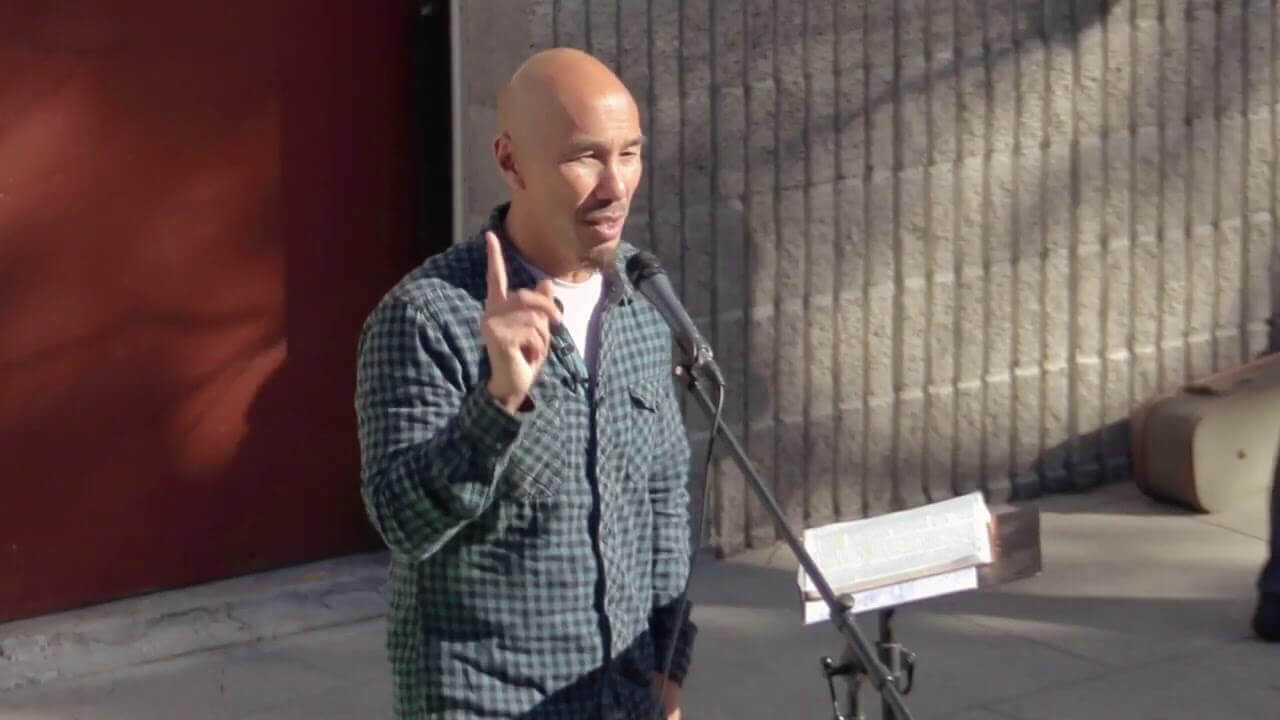
Francis Chan turns towards a more historical and ancient view of Communion
Posted by Luke J. Wilson on 14th January 2020 in General Interest | eucharist,communion,francis chan,church fathers,church history,controversy
...his BASIC series teaching on Communion from around 2012, views which have clearly moved on since then towards a more historical view.
Chan says he isn’t making any sort of “grand statement” here, and goes on to give a brief, if little distorted, overview of church history:
“I didn’t know that for the first 1,500 years of church history, everyone saw it as the literal body and blood of Christ … And it wasn’t until 500 years ago that someone popularised the thought that it’s just a symbol and nothing more. I didn’t know that. I thought, ‘Wow, that’s something to consider.’”
This part isn’t too far from reality, really, though a li...
The Coming of Jesus: Revelation Fulfilled?
Posted by Luke J. Wilson on 31st December 2015 in Second Coming series | Revelation,Second Coming,Preterism,apocalypse,armageddon,fulfilled prophecy,Return of Christ,Return of Jesus,Eschatology
...t of this series, some of the earliest writings put the New Jerusalem and Church as being one and the same, coupled with us being the temple where God now dwells to live amongst his people, therefore leaving no room for a future, physical temple to be rebuilt.
Nero fits the 666 and even the “typo” copyist error of 616 (or the Latin variant of Nero’s name), which happened early on, as Irenaeus mentions it around 180 AD.
While there was always an Emperor cult, beginning with Julius Caesar, which made the rulers act as though they had some divinity, Nero properly considered himself divine and Domitian decreed himself “lord and god” and had that printed...
Powered by WebBoss.io 3.7.1
Copyright © 2026 The Sacred Faith: Timeless Truths for Modern Minds. All Rights Reserved.
