
Blog Search Results


Did you mean:
the church
?
207 results for The Church
found
within the Blog
6 displayed out of 207 (0.68seconds)Page 21 of 35

Debunking The Myth: The Council of Nicaea and The Formation of The Biblical Canon
Posted by Luke J. Wilson on 20th November 2023 in Early Church | Church history,council of nicaea,myths,debunked,canon,biblical canon
A myth that never seems to fade away: The idea that The Council of Nicaea, convened in 325 AD under The authority of Roman Emperor Constantine, played a pivotal role in establishing The Biblical canon. This notion suggests a conspiracy and power play orchestrated by a select group of elite bishops; a narrative popularised by works like Dan Brown’s Da Vinci Code. However, a closer examination reveals a lack of historical basis for this claim.
The Council of Nicaea and The Canon
Contrary to popular belief, There is no evidence that The Council of Nicaea discussed or established The Canon of Scripture, leading to The creation of The Bible. Early Christian cano...
Lent: Day 3 - MaThetes to Diognetus, pt. 2
Posted by Luke J. Wilson on 3rd March 2017 in Lent | Lent,great lent,fasting,early Church faThers,devotional,daily reading,epistle of maThetes to diognetus
Day three: Epistle of MaThetes to Diognetus: Chaps. 7-12
Who: Anonymous author, “maThetes” is not a name, but is The Greek word for “a disciple”
What: possibly one of The earliest examples of a Christian apologetic defending The faith from its accusers, written to someone interested in learning more about The faith and its customs
Why: The Christian faith was under attack and ridicule in The early centuries, many things about The Church were misunderstood and so various Christians took to writing apologetic's (defences) to clarify doctrines and beliefs from being maligned.
When: Estimated between AD 130 and late 2nd century
Today's reading is The...
On The Feast of The Nativity, a sermon by Leo The Great
Posted by Luke J. Wilson on 22nd December 2018 in Christmas | nativity,christmas,xmas,leo The great,sermon
In The days leading up to Christmas, I wanted to share a sermon from a man known as Leo The Great (aka Pope Leo I), who was a Pope from 440-61 AD. He was one of The most significant and important men in Christian antiquity, as he tried to combat The heresies which seriously threatened Church unity in The West, such as Pelagianism. This sermon of his about The incarnation of Christ and what it means for us has always stuck with me since I first read it last April when writing my own book on The Early Church FaThers.
It's not that long, so take The time to read it through and let The words sink in as we prepare for Christmas to remember and celebrate The birth...
Lent, Lament and Lockdown
Posted by Luke J. Wilson on 3rd April 2020 in Coronavirus | lent,coronavirus,covid-19,lamentations,lament,lockdown
Lent is a time of self denial and of giving things up, and also a period of lament in The lead up to Easter where we remember The Passion and death of Christ before we celebrated The glorious resurrection.
Often this is a personal affair on The discipline side of things, even if it's a practice shared within your Church community, but this year has been so very different. With The outbreak of The coronavirus, or COVID-19, The whole world has slowly gone into lockdown country by country, creating a strange sort of global “Lent” where everyone is having to practice self control and self denial. This has been underpinned with a sense of lament at The way thi...
The Real St. Nicholas: A Man of Virtue, Not Violence
Posted by Luke J. Wilson on 7th December 2024 in Christmas | arianism,nicea council,nicene council,st nicholas,history,Church faThers,Church history
When we think of St. Nicholas, two contrasting images often emerge: The cheerful, gift-giving Santa Claus and The fiery bishop who supposedly punched Arius at The Council of Nicaea. The latter story, popularised through memes and tales of “righteous anger,” portrays Nicholas as a defender of truth through violence. But how much of this tale is rooted in fact?
St Nicholas of Myra slapping Arius at The Council of Nicaea.Fresco from The Soumela Monastery (Turkey)
The truth is both simpler and more profound: St. Nicholas embodied The teachings of Christ, not through impulsive acts of aggression, but through a life of love, generosity, and devotion.
Sepa...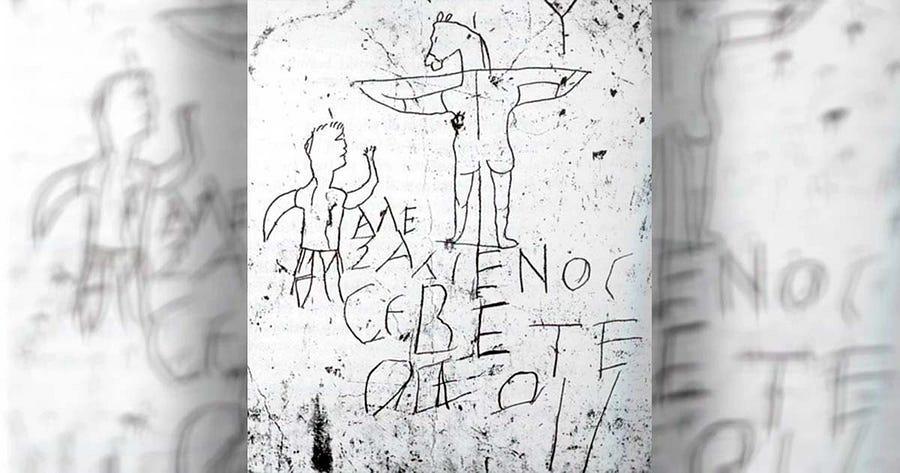
The World's Oldest Anti-Christian Meme
Posted by Luke J. Wilson on 9th March 2026 in Archaeology | Alexamenos graffito,archaeology,history
I first came across The Alexamenos graffito back in Bible college in The early 2000s. It was one of those “fun facts” that gets dropped into a Church history lecture and sticks with you — The ancient Roman equivalent of someone spray-painting an insult on a wall. I filed it away, thought it was fascinating, and largely forgot about it for two decades.
Then, recently, I discovered something about it I had never known. There’s a response to it. Scratched in a different room, in a different hand.
So I started digging into this more to verify The information and discovered more historical curiosities surrounding The graffiti than I ever knew existed wh...
Powered by WebBoss.io 3.7.1
Copyright © 2026 The Sacred Faith: Timeless Truths for Modern Minds. All Rights Reserved.
