
Blog Search Results


210 results for new heaven and earth
found
within the Blog
6 displayed out of 210 (1.05seconds)Page 22 of 35

Coffee With Jesus: Luke 22–23
Posted by Luke J. Wilson on 8th February 2023 in Devotional | Kingdom of God,crucifixion,gospels,Last Supper
Brief Thoughts From Daily Devotions
I’m going to start a new infrequent sub-series called “Coffee with Jesus”, which will be short blogs based on whatever I’m currently reading in the Bible during my morning devotions (as I drink my coffee, hence the name). They won’t necessarily be in any specific order, unless something particularly strikes me each day as I’m reading through a book of the Bible.
Today’s observation comes from Luke 22–23 concerning the Last Supper and the crucifixion of Jesus.
Reading Luke 22, something stood out to me that I hadn’t considered before: at the Passover meal, Jesus says he won’t drink wine again until the Ki...Was the omniscience of God a developed idea?
Posted by Luke J. Wilson on 21st April 2014 in The Nature of God | progressive revelation, Christocentric, Christotelic, Hermeneutics, omniscience, omnipresence, theology
Or do we retroactively place our current theology of God on God?
Consider the Garden of Eden: '[T]he Lord God called to the man, and said to him, “Where are you?”' (Gen. 3:8-10)
Now today we make it into a rhetorical question, but was this always so? In this story, God is spoken of almost in a physical-bodily sense as walking in the garden, since "they heard the sound of the Lord God walking in the garden" as he moved about, and then tried to hide themselves from his view!
Next think of the tower of Babel - "The Lord came down to see the city and the tower, which mortals had built" (Gen 11:5) - Did he not just know already? Also this story...
Lent Day 38: Leo the Great: Sermon XXI (On the Nativity Feast I)
Posted by Luke J. Wilson on 13th April 2017 in Lent | Lent,great lent,fasting,early church fathers,devotional,daily reading,Doctor of the Church,lectures,Leo the Great,St Leo,hypostatic union,deity of christ,Pope Leo I,christology,sermon
Day Thirty-eight: St. Leo the Great: Sermon XXI (On the Nativity Feast I)
Who: Leo the Great, also known as Pope St. Leo I (the Great), was Pope from 440-61 AD. Place and date of birth unknown; died 10 November, 461. Leo's pontificate, next to that of St. Gregory I, is the most significant and important in Christian antiquity, as he tried to combat the heresies which seriously threatened church unity even in the West, such as Pelagianism.
What: A sermon on the Nativity at Christmas time, about the incarnation of the Word of God.
Why: To explain the incarnation and preach the Good news of our Lord and Saviour becoming man for our sake so that we may be sav...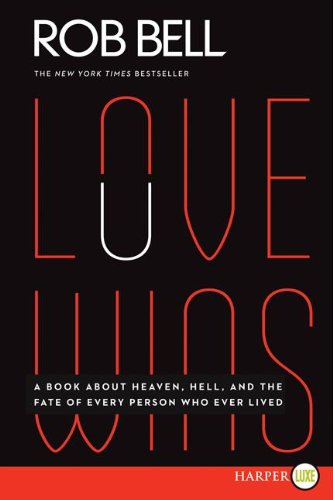
Rob Bell's “Love Wins” (Review)
Posted by Luke J. Wilson on 5th April 2014 in Hell | Rob Bell,book review
Book review on Rob Bell's “Love Wins” (originally written March 2013)
This book was quite openly condemned by some prominent Christian leaders when the book was first announced back around Spring 2011, mainly mainly accusing Bell of being a universalist and denying the existence of hell.
Lots of leaders formed opinions about the book and thus lots and laypeople took on various opinions as their own without much insight or research. The problem was that these leaders hadn't even READ the book! It wasn't released yet at the time. They decided their opinions based on the blurb and promo video which posed provocative questions about the doctrine of hell.
Th...
Lent Day 31: Cyril of Jerusalem: Catechetical Lectures: Lecture XX
Posted by Luke J. Wilson on 5th April 2017 in Lent | Lent,great lent,fasting,early church fathers,devotional,daily reading,Doctor of the Church,lectures,liturgy,catechism,Bishop of Jerusalem,baptism
Day Thirty-one: St. Cyril of Jerusalem: Catechetical Lectures: Lecture XX
Who: Bishop of Jerusalem and Doctor of the Church, born about 315; died probably 18 March, 386. Little is known of his life, except from his younger contemporaries, Epiphanius, Jerome, and Rufinus, as well as from the fifth-century historians, Socrates, Sozomen and Theodoret.
What: Each of the lectures deal with a different topic to teach converts the mysteries of the Church, particularly: rites of the renunciation of Satan and his works, of anointing with oil, of baptism, of anointing with the holy chrism, and of partaking of the body and blood of Christ.
Why: Cyril delivered to new co...
John Chau, missionary to the Sentinelese: martyr or madness?
Posted by Luke J. Wilson on 3rd December 2018 in Missions | sentinelese,John Chau,missionary,martyrdom,martyr,india,current events,tribes people
You've probably seen it in the news lately: John Chau, the American guy who tried to evangelise the secluded Sentinelese tribe off the coast of India. Much of the debate in secular media has centered around the grief of his friends and family; how he could have brought outside disease to the tribespeople and potentially killed them all (despite this not being their first contact with outsiders, with no known ill effect), or that he ventured there completely in ignorance with no preparation or wisdom — something which the missionary agency, All Nations, has recently debunked.
But the question I want to look at is this: was Chau's mission total madness or is...
Powered by WebBoss.io 3.7.1
Copyright © 2026 The Sacred Faith: Timeless Truths for Modern Minds. All Rights Reserved.
