
Rob Bell's “Love Wins” (Review)

Book review on Rob Bell's “Love Wins” (originally written March 2013)
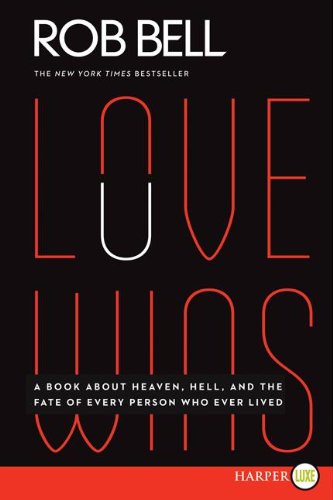 This book was quite openly condemned by some prominent Christian leaders when the book was first announced back around Spring 2011, mainly mainly accusing Bell of being a universalist and denying the existence of hell.
Lots of leaders formed opinions about the book and thus lots and laypeople took on various opinions as their own without much insight or research. The problem was that these leaders hadn't even READ the book! It wasn't released yet at the time. They decided their opinions based on the blurb and promo video which posed provocative questions about the doctrine of hell.
The book starts up asking lots of questions concerning salvation and how are you “attain” it and the consequences if you don't – while the same time pointing out the flaws in modern theology and general beliefs held by many in the Church today.
He then presents a lot more question to get you thinking and quotes Jesus' words, and a few other scriptures, which leads to more questions. Therein lies the purpose of this book – not for Rob to push you to believe what he does, but to get you to question and really think about the things we say we believe.
Bell then moves on to heaven. Unless you've really studied the Bible on Heaven, this chapter will likely smash a lot of cultural ideas you hold without you really realising it – the same can be said about the the chapter after which deals with hell.
Prepare for an eye-opener, and a lot of "Gospel Truth" that has somehow got lost, changed, misrepresented and mixed up in Medieval tradition and imagery over the last few centuries.
Anyone who is aware of the controversy that was/is surrounding this book and who heard that that Rob Bell "doesn't believe in hell" can rest assured that this isn't the case.
To quote the book, Bell writes:
"There is a hell now, and there is a hell later, and Jesus teaches us to take both seriously." (pg. 79)
It's not only that he believes in hell "later" (i.e. after death), but also that because of our freedom of will in this life we can, and do, create hell on earth through our actions and sins.
Likewise, we can also create heaven on earth in the same way. This is what Jesus referred to when he prayed "Your will be done on earth as in heaven" – bringing the kingdom of God to the here and now.
The book then continues on from what is explained in these chapters to explore the rest of our theology and doctrines on salvation, the cross and the hereafter, often taking our contemporary doctrines (which aren't always as scripturally based as we may think) to their sometimes extreme logical conclusions; which often shows up the absurdities in them that we can overlook.
The book ends by examining the Good News, explaining that "it's better" than we first imagine; that God has done so much more through Jesus on the cross than we can comprehend at times – God's reconciliation is, literally, awesome and that ultimately, one way or another, love wins.
Whatever your thoughts or opinions on Rob Bell, whatever your beliefs about heaven, hell and everything in between, I highly recommend this book. Go in without an agenda – read it with an open mind and a willingness to learn and let the Spirit guide you. You may not come out agreeing with everything written, but if you at least question and think about your views on hell and who goes there and, more importantly, why you think that – then I believe this book has served purpose.
Five stars – Well-written, easy to read and a thought-provoking book that everyone who takes Jesus' Gospel seriously should read at least once, even if they think they'll disagree.
Leave a comment Like Back to Top Seen 2K times Liked 0 times

Enjoying this content?
Support my work by becoming a patron on Patreon!
By joining, you help fund the time, research, and effort that goes into creating this content — and you’ll also get access to exclusive perks and updates.
Even a small amount per month makes a real difference. Thank you for your support!
x
Subscribe to Updates
If you enjoyed this, why not subscribe to free email updates and join over 890 subscribers today!
My new book is out now! Order today wherever you get books
Subscribe to Blog updates
Alternatively, you can subscribe via RSS 
All email subscriptions must be confirmed to comply with GDPR.
Related Posts
Luke J. Wilson | 15th December 2025 | Hell
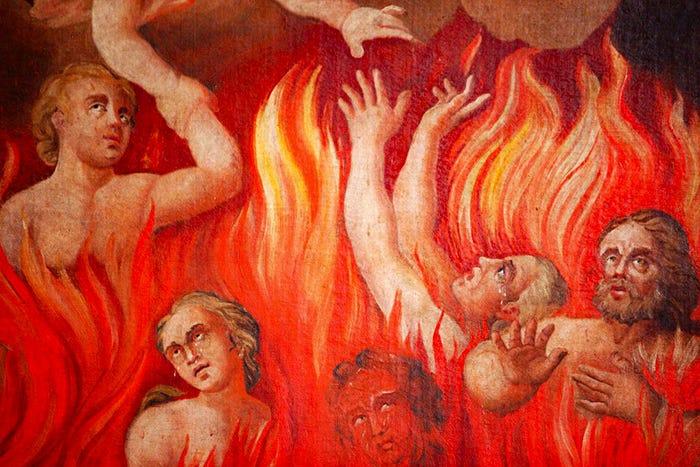
Christian conversations about hell have never been especially calm, but the recent online reaction to Kirk Cameron’s comments in favour of annihilationism has been particularly revealing. Social media has erupted with accusations of heresy, doctrinal collapse, and theological compromise. It’s the “Rob Bell Incident” all over again (if anyone remembers that). The infamous John Piper tweet about Rob Bell A lot of comments I saw were wondering what Ray Comfort thinks of this, as he and Kirk worked closely together in ministry for about 25 years, and while Ray wasn’t as dismissive as John Piper was of Rob Bell, he still calls out Kirk’s new views as “erroneous”: While we believe Kirk is sincere, we believe that conditional mortality and annihilationism are erroneous views, and that the Bible’s clear teaching on hell is known as eternal conscious torment. We firmly believe that this is the only correct biblical view. (source) Yet beneath the noise of social media grinding its gears is something far more ordinary and far more Christian: a believer wrestling seriously with Scripture, or as some would say, “being a Berean” (Acts 17:11). This is something we all should be doing, forming our views and doctrines from Scripture, not out-of-context social media video snippets and memes. Whether one agrees with Cameron’s conclusions or not, what is happening is not the abandonment of orthodoxy, but the resurfacing of a long-standing and legitimate theological discussion. Annihilationism, or, more precisely, Conditional Immortality — is neither novel nor liberal, nor is it an attempt to make Christianity and hell more palatable, as many people presume. It is a position grounded in Scripture, represented throughout Church history, and held by Christians who take divine judgement every bit as seriously as their eternal-torment counterparts. This is not a debate invented by Twitter (or “𝕏” as it’s called now…). It’s been around for a long, long, time. Watch Kirk’s video in full here before forming an opinion Immortality Is Assumed, Not Taught One of the quiet assumptions behind Eternal Conscious Torment (ECT) is the idea that all human souls are inherently immortal, and therefore must exist forever somewhere. Once that premise is accepted, eternal suffering becomes unavoidable. The difficulty is that Scripture does not teach innate human immortality. In fact, it repeatedly teaches the opposite. Immortality is consistently presented as a gift, not a default state. Eternal life is something God grants, not something humans naturally possess (Rom. 6:23). In Genesis, humanity is barred from the tree of life precisely so that they might not “live for ever” in a fallen state (Gen. 3:22–24). In the New Testament, immortality is something Christ “brings to light through the gospel” (2 Tim. 1:10), and something believers “put on” at the resurrection (1 Cor. 15:53–54). Conditional Immortality simply takes that biblical theme seriously. It argues that only those united to Christ are granted immortality, while the wicked ultimately perish. Judgement is real, severe, and final — but it does not require endless conscious suffering. This distinction matters, because much of the outrage directed at annihilationism is based on inherited philosophical assumptions, which come from Plato, rather than careful exegesis. Biblical Language: Death Means Death One of the most compelling aspects of conditionalism is the sheer consistency of biblical language concerning the fate of the wicked. Scripture repeatedly speaks in terms of: Death — “The soul that sins shall die” (Ezek. 18:4) Perishing — “God so loved the world… that everyone who believes in him may not perish” (John 3:16) Destruction — “They will suffer the punishment of eternal destruction” (2 Thess. 1:9) Being consumed or brought to an end —â...
Luke J. Wilson | 03rd July 2021 | Hell

Welcome to Part Two of my study and examination of Conditional Immortality (aka Annihilationism). If you missed part one, you can read that one here. As with part one, this will be a long post as there is still much ground to cover before we can really grasp the bigger picture about what Scripture teaches. So with that said, I’ll pick right up where we left off. In part one, I covered a lot of New Testament texts, a few Old Testament passages, plus a look at what some of the earliest church leaders also wrote on the topic to the early church. In this one, we will be looking at a few more Old Testament examples and how they relate to the imagery used in Revelation, amongst other things. Unquenchable Fire and Undying Worms What of unquenchable fire and undying worms? Do these phrases really mean that the fuel of the fire and the worms must last forever and ever? We have a few references to shed some light on the meaning of these phrases which we can examine below: Ezekiel 20:46–48Mortal, set your face toward the south, preach against the south, and prophesy against the forest land in the Negeb; say to the forest of the Negeb, Hear the word of the Lord: Thus says the Lord God, I will kindle a fire in you, and it shall devour every green tree in you and every dry tree; the blazing flame shall not be quenched, and all faces from south to north shall be scorched by it. All flesh shall see that I the Lord have kindled it; it shall not be quenched. So, in our first example, Ezekiel was obviously not prophesying that the forests of Negeb would burn forever and never go out. Instead, fire that “shall not be quenched” is used to mean fire that cannot be interrupted or stopped in its destructive purpose. No one is able to stop a fire like this until it has run its course, or it is stopped by something greater, which is what the word “quench” actually means. It is an action performed by something external which stops the flames — what it doesn’t mean is a fire burning out naturally once it consumes its fuel. The fire will continue regardless. Jeremiah 17:27But if you do not listen to me, to keep the sabbath day holy, and to carry in no burden through the gates of Jerusalem on the sabbath day, then I will kindle a fire in its gates; it shall devour the palaces of Jerusalem and shall not be quenched. Here is another reference to an unquenchable fire consuming something and not being stopped even after the object of destruction has been “devour[ed]”. The image is one of a fire which rages on and on, even after everything in it is burnt up and destroyed. Now let’s move onto the “undying worms” and see how that phrase is used. In the New Testament we see this phrase used in Mark 9:47–48, which originally comes from Isaiah, and also a similar theme in Jeremiah. Isaiah 66:24And they shall go out and look at the dead bodies of the people who have rebelled against me; for their worm shall not die, their fire shall not be quenched, and they shall be an abhorrence to all flesh. A little earlier in Isaiah 66 (v.16) we see that God executes judgement with fire and “by his sword, on all flesh”, and that the dead will be many, ending the chapter with the verse quoted above. Jeremiah picks up on a similar theme of God’s judgement, people being killed to such an extent there won’t be room to bury them. This is also where we find a reference to Gehenna, or the valley of the son of Hinnom, as its name means (also called Topheth), in chapters 7 and 19. The concept of Gehenna as a place of punishment is then picked up by Jesus in Matthew 10:28, which he uses in a more eschatological sense. Jeremiah 7:32–33Therefore, the days are surely coming, says the Lord, when it will no more be called Topheth, or the valley of the son of Hinnom, but the valley of Slaughter: for they will bury in Topheth until there is no more room. The corpses of this people will be food for the birds of the air, and for the animals of ...
Luke J. Wilson | 25th May 2020 | Hell
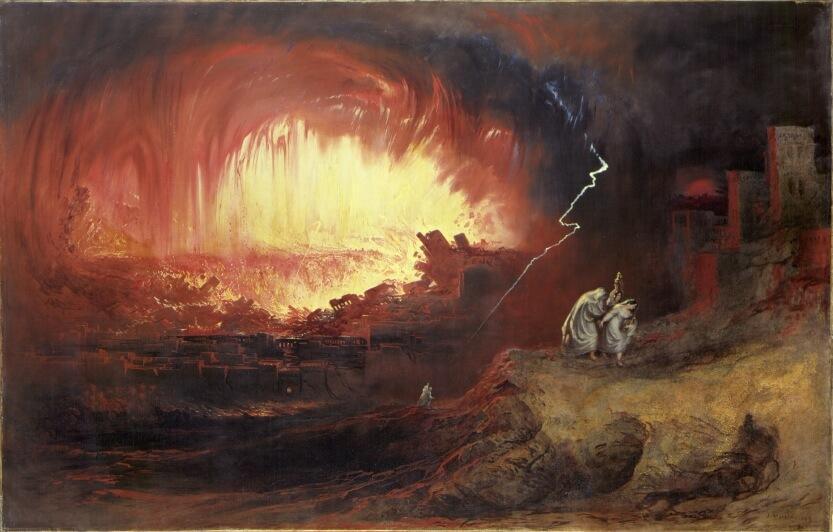
I know that "Conditional Immortality" is quite a divisive topic, and one you may have come across before (sometimes referred to as “Annihilationism”); and have been told outright that it’s “heresy” or false, or that it’s an emotional argument people want to believe because it ‘sounds nicer’ than the doctrine of Eternal Conscious Torment (ECT). Or maybe you’ve never even heard of this before and you didn’t realise there were alternative interpretations and views on hell. If you are new to this, in brief it means that “the wicked” will be removed from existence after judgement and finite torment, rather than living forever in torment. Any discussion on “hell” is going to cover a lot of ground, and refer to many, many places throughout Scripture; so with that said, this will be a long one, so get comfy! I will do this in two parts as it will become too lengthy for one blog post. This article will just focus on the Scriptural basis for the position of Annihilationism, as opposed to ECT, but to begin with I’ll define some terms as words like “hell” have become quite loaded with extra and unbiblical meaning over the centuries. What is hell, anyway? If you read through the Old and New Testament in older translations like the KJV, you’ll see the word “hell” a lot more often than in more recent Bible translations, which will most likely transliterate the Greek words instead. Not all the words get this treatment, and some still get presented as the word hell in English, for example, the NIV and NRSV will convert the word Gehenna into “hell”, but keep the Greek word Hades as-is (see: Matt. 5:22; 11:23). The etymology of “hell” and its origins and how it became the word we know today in English, would take more time than I have space for here, but in short, there are three main Greek words which often get translated as the word “hell”, even though they are each different words with different underlying meanings: GehennaLiterally means “valley of Hinnom”, which is a place near Jerusalem where children were once sacrificed to Baal (see Jer. 19:5–6). Due to its history, it took on a more eschatological/spiritual meaning as a place of judgement and destruction. Hades (Sheol)This is the Greek form of the Hebrew Sheol found in the Old Testament, usually (and properly) translated as “grave”, or meaning the general place of the dead (similar to the place of the same name in Greek mythology). TartarusThis only appears once in the New Testament in 2 Peter 2:4 and is used in relation to the angels who sinned and were put in chains. Interestingly, it’s another word borrowed from Greek mythology, for the prison where the Titans were sent as punishment. If you are interested in how we got the word “hell” in our English language, and more importantly, into our Bibles, I highly recommend that you read this study: The Real Hell. A Case for Conditional Immortality (aka Annihilationism) We are often taught that our souls, human souls, are inherently immortal. But where does this idea come from, because it’s never actually stated in Scripture that this is so. This is an Hellenistic philosophical assumption brought into the text (mainly from Plato’s influence) which can taint our interpretations. If we look at 1 Timothy 6:16 we can see that it is God alone who is immortal: It is he [God] alone who has immortality and dwells in unapproachable light, whom no one has ever seen or can see; to him be honour and eternal dominion. Amen. Any other mention of immortality or eternal life is only ever spoken of as a gift given to us by Jesus, and is often contrasted with the alternative: death, perishing and/or destruction. Romans 6:23For the wages of sin is death, but the free gift of God is eternal life in Christ Jesus our Lord. 2 Timothy 1:10…but it has now been revealed through the appearing of our Savior Christ Jesus, who abolished death and brought life and immortality to...
Luke J. Wilson | 14th February 2019 | Book Review

This short little book on the Reformation and some of the leading men who helped to kick-start it and continue to fan its flames has been very enjoyable to read. It really is a “sound bite history” as the chapters are short and snappy, and really only cover the absolute basics of each of the Reformers lives. The book has seven chapters, with six of them dedicated to an individual who had a pivotal role in the beginnings of the Reformation: Martin Luther, John Wycliffe, John Huss, John Calvin, Hugh Latimer and George Whitefield. The Reformation:A Sound-bite History I found it to be very educational and easy to read and digest; gleaning just enough information to be easily remembered without it feeling like a heavy and dull historical study. Though, it being written by someone who is a Baptist, if you're well read enough in church history you will likely notice some of the Baptist bias towards certain doctrines that are mentioned as being held by some of the Reformers which grate against typical Baptist views. For example, the frequent implication that anyone who still held to some form of “real presence” in the Eucharist hadn't come to the 'pure Gospel truth' yet (despite this being consistent with historical Christianity prior to the Roman Catholic Church’s specific doctrine of transubstantiation). "Widespread ignorance of church history of one reason why the church often falls into errors which it has fallen into before." But aside from those minor issues, the book did well to not feel like it was pushing a certain viewpoint on you and was just trying to give a decent overview of the historical settings and people involved. Well worth a read, whether you are a Protestant OR a Roman Catholic! I gave this book four stars. Buy the book here....
Luke J. Wilson | 30th January 2019 | Book Review

Straight off, this book will challenge you in your thinking and quite possibly in your practice and outworking of life as a Christian—especially if you are from an evangelical/Baptist/non-denominational background. Will the Real HereticsPlease Stand Up The book starts of taking you carefully through some of the practices and beliefs of the early church and those who knew the Apostles personally. It all feels very hopeful and like you're being led onward in a journey towards a certain goal, much of which I'm sure you'll find agreeable in what Bercot points out as discrepancies between early Christianity and today. Then we get to a few points about the Reformation. Some of the critique I think was a little harsh and not necessarily accurate, painting a fairly negative picture of Martin Luther. Some of the points raised were a fair statement against some of the doctrine and theology that came out of the Reformation period (such as Luther being heavily influenced by Augustine's theology more than earlier church fathers). After the high of the first few chapters, these chapters came as a bit of a punch in the gut. I would also recommend looking up all of Bercot's claims as there does sometimes seem like there is a strong bias of opinion coming through certain chapters, which takes away from the feel of the book trying to give an objective look at the topic at hand. But that aside, Bercot leads you back on this journey, aiming to uplift you once again with hope as he takes you towards a positive look at the Anabaptists. I knew before reading the book that Bercot is an Anabaptist himself, so I was wary that this book might just end up being advertisement for that denominational group as the new modern answer for getting back to early Christian practices. Whilst there are positive points made for the early Anabaptist movement being as close as possible to the early second century church, Bercot isn't shy to criticise the group in its modern form as having lost their zeal and passion for the Gospel. After trying to re-inspire you with the hope that it is somewhat possible to restore early Christianity, as the Anabaptists did, before the Church “married itself to the world” as Bercot claims (and I agree with), he finishes off by asking the reader the question of “what now?” and whether we restore the Church to its former glory. Bercot seems to believe so if only the Church would return to simplicity of holiness and pick up its cross and revolutionary banners again “from where the early martyrs left them”. This book is definitely a call to arms in the holiest sense; a call for us all to re-examine ourselves and our churches to see if what were living, believing and practicing is still in line with the New Testament church which the early Christmas bore witness to. Well worth the read for anyone who takes their faith seriously. Buy the book here. Bonus: Francis Chan's "Letters to the Church" Letters to the Church I've also just finished reading this book by Francis Chan before starting Real Heretics. Although it's not dealing with the Early Church aspect of looking at the primitive Church, it still looks at similar questions of how can we get back to a simpler, more pure faith that the Apostles and Jesus began. It's definitely a challenging book and had struck me right where I needed it to. It's helped verbalise some of the questions and issues I've had for the last few years myself any the current form and format of "church". Though Chan is primarily speaking to an American Evangelical audience, much of his points and criticisms still speak well to my British/UK Evangelical experience. If you've felt disgruntled or at odds with how we "do" church in some places, this book may well inspire you to see things differently and to maybe even enact some changes yourself in your local community — even more so if you are a local church leader in some capacity. Well worth the read, and works well to read befo...
Luke J. Wilson | 16th April 2015 | TV & Film
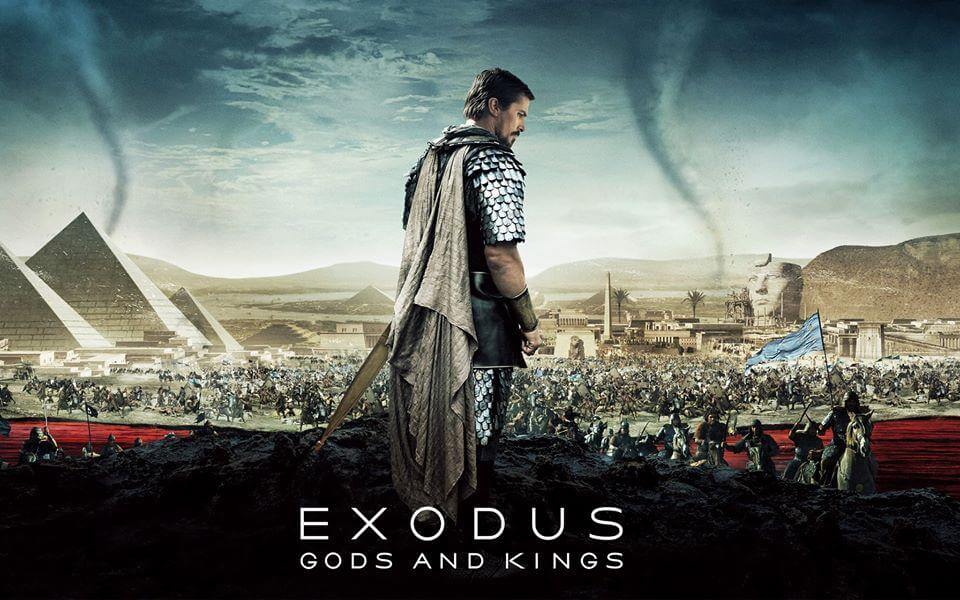
I know the film has been out for a while now, but I missed seeing it in the cinema and so have only just seen it. I'm sure there's others out there who still haven't watched this and are wondering whether it's worth the time and effort, so here goes: my review of Exodus. The film begins with Moses later in life living in the Pharaoh's palace as his adopted son along side his half brother. Now I'm not sure if this part was based on any Jewish Midrash or if it was purely artistic license, but either way I thought it was well done to show how Moses' life could well have gone being brought up Egyptian. Apart from some pretty epic looking battle scenes, this is where much of my enjoyment of the film ended. As far as I'm aware, the film wasn't written or produced by Christians or Jews. Nor did I hear or read anything about the film makers consulting Biblical or traditional sources for this, (as did happen with Noah) other than for the obvious storyline – although Bale did read the Torah and some other sources to get into his role as Moses. I do remember reading an interview with Christian Bale (Moses) in which he basically said he didn't believe anything miraculous about the Exodus, so don't go into this film expecting to see a Moses you recognise or can relate back to the Old Testament story you probably know. Moses' character turns out to be quite the opposite of what you may expect and isn't really anything close to a strong leader or confident and bold man of faith. He's a strong and confident Egyptian army general in the beginning and then becomes an argumentative and stubborn man when God tells him of His intentions with the plagues. Definitely not the man who requested his brother Aaron to speak on his behalf which, incidentally, didn't occur in the film. Aaron always seemed to be lurking in the background when Moses spoke with God, afraid to approach. He also couldn't see God, that was something only Moses had the ability to do. Speaking of God, this was another portrayal I initially liked at first, in part at least. God appears throughout this film as a child. I admit, at first I didn't like the depiction. But then when the first miraculous event happened at the simple nod of this apparent child, it made me rethink my view and I saw the portrayal as maybe a clever way to show that God doesn't need to look like some burly old man with muscles and a beard to be seen as strong and powerful. But as the film progressed, each encounter with God made him seem more and more like a petulant child stomping his feet in a strop with the Egyptians. At one point Moses even yells at God saying his plan is no more than just revenge. The film is also peppered with subtle unbelief. Despite showing the Egyptian gods fail to help them against the Hebrew's God, the advisers to the Pharaoh are shown explaining away each miraculous event in some naturalistic way. Even Moses tells God that he disagrees with his plans and methods of dealing with Egypt, saying he'll have no part in it. I will say though, that watching this did make me want to re-read the actual Exodus story again, so maybe some good will come of this film and inspire others to read it for the first time. I could go on, but I think I've said enough. If you're looking for a fairly decent action film, with some nice battles and special effects based loosely on a biblical story, then I'd say go for it. But if you're looking for an accurate portrayal of the Exodus account, you're probably better of giving this a miss. Rating: 3/5...
Recent Posts
Luke J. Wilson | 25th August 2026 | William Lane Craig

If you’ve been on Christian social media this week, you’ve probably seen it: William Lane Craig — one of the most respected Protestant apologists of our time— flatly denying a core line of the Nicene Creed. In his own words, he does not believe or confess that the Son is eternally begotten from the Father in his divine nature. Human nature, yes. But divine? Nope. For a lot of readers, that’s a jarring sentence. Isn’t “eternally begotten of the Father” literally in the Creed we recite? How can someone who has spent decades defending the resurrection and the existence of God turn around and reject something so central? I want to walk through what’s actually going on here, because it’s more interesting — and older — than a single viral clip suggests. What Craig is actually rejecting The doctrine in question is called eternal generation: the idea that the Son is eternally derived from the Father, “begotten, not made,” sharing the Father’s nature without there ever being a time he didn’t exist. It’s not saying the Son had a beginning; it’s saying the Son’s very being is eternally from the Father, the way light is eternally from the sun. Craig has argued for years, most fully in his paper Is God the Son Begotten in His Divine Nature? (2019), that this idea owes more to Greek philosophical categories borrowed by the second-century Apologists than to anything the biblical writers themselves teach. He calls it a vestige of “Logos Christology” and prefers a model where Father, Son, and Spirit are simply co-equal and co-eternal, without one eternally generating another. William Lane Craig disavows the Nicene Creed Why I think this gets the history backwards Here’s where I’d push back, and where I think this whole debate needs a bit more historical texture than a viral post can give it. Long before Nicaea formalised its language, the earliest post-apostolic Christians were already working with something like what’s called the Monarchy of the Father (or Monarchical Trinitarianism) — a framework that takes the Father’s monarchia (his unique, self-existent source of divinity, or autotheos) seriously as the fountainhead from which the Son is begotten and the Spirit proceeds. This is worth distinguishing carefully from Monarchianism, the second/third-century heresy that collapsed the persons of the Trinity into one another to protect God’s oneness — the Monarchy of the Father is the orthodox opposite of that, affirming three distinct, co-eternal persons while still honouring the Father as their singular source. On this reading, the Son and Spirit aren’t lesser, but they do find the very source of their divinity in the Father — not as effects of a philosophical system layered onto scripture, but as a way of taking John’s own language (the Word who was with God and was God, yet distinct from “the Father”) with full seriousness. That’s the thing I think gets lost when eternal generation gets dismissed as a “leftover.” Logos Christology isn’t an embarrassing accretion — it’s arguably what John 1 is doing from verse one. The Church didn’t import that idea to explain the text; the text seems to be why the Church needed the idea. None of this makes Craig any less serious a thinker, and it’s worth saying plainly: this isn’t the first time he’s stepped outside Nicene orthodoxy — he’s made similar moves on Christ’s two wills (dyothelitism) in the past. But it is, I think, a real departure, not just a “minor unorthodoxy.” Why it matters beyond the argument It would be easy to turn this into another “gotcha” moment — ‘look, even the great apologist gets it wrong!’ I don’t think that’s the right response. Craig has done more than most to defend the reasonableness of the Christian faith to a sceptical world, and disagreeing with him on this doesn’t erase that. But it is a good reminder that ev...
Guest Author | 31st July 2026 | Prayer

Guest Post By Fiach OBroin-Molloy My own roots lie in the Catholic tradition, but my workbench has brought me into contact with Christians whose devotional lives differ from mine. I make Catholic rosaries, Anglican prayer beads and other forms of devotional beads by hand. That work has not taught me that distinctions between traditions do not matter. It has taught me that, beneath those distinctions, many of us know the same difficulty: we want to pray, but our attention is restless. I have travelled, lived and worked in a number of countries, from parts of Africa to countries further east. Again and again, I encountered beads or knotted cords held, counted or carried in prayer. The words, beliefs and purposes were not the same, and I would not flatten them into one vague spirituality. What stayed with me was the recurring human instinct to give devotion rhythm and weight—to let the body help the mind and heart remain present. For a Christian, however, that instinct is gathered into a particular faith—the faith confessed in the creeds. Our prayer is addressed to the God made known as Father, Son and Holy Spirit. It is shaped by Scripture and centred on Jesus Christ, the Word made flesh, crucified and risen. Prayer beads do not broaden that confession into something less definite. At their best, they help us stay with it. A faith that takes flesh seriously Christian prayer is never only an activity of the mind. We speak and sing. We stand, kneel and bow. We fold our hands, make the sign of the cross, and receive bread and wine. The Christian faith does not ask us to escape being embodied creatures. At its centre is the astonishing declaration that the Word became flesh and dwelt among us (John 1:14). Material things are not God, but they can serve our attention to God. That is the modest place in which I understand prayer beads. They do not create faith, improve the words of Scripture or make prayer more sincere. They simply give the hands something quiet to do while the heart and mind try to remain present. As a maker, I think about weight, texture, spacing and movement. A bead should pass naturally beneath the thumb. The cord or chain should be strong enough to be returned to repeatedly. A good set of prayer beads should not continually demand admiration for itself. Its purpose is to become quiet in the hand. Over time, beads polish, wood darkens and metal takes on the small marks of use. I rarely know the prayers that have been said with something I have made, but sometimes its wear tells me that it has been held often. That is a different kind of beauty from newness: not decoration, but evidence of return. What the hands bring to Scripture Lectio Divina invites us to read Scripture slowly and receptively. Luke J. Wilson has written much more fully about its four movements—reading, meditation, prayer and contemplation—and I would not try to redefine that teaching here. What interests me as a maker is the point at which a reader’s hand might support that attention. Most of us have become highly practised at moving quickly through words. We skim messages, headlines and pages, often looking for the next piece of information before we have received the one in front of us. Sacred reading asks something different. It asks us to stay. A bead introduces a small resistance to speed. It marks a pause and gives us somewhere to return when the mind has already hurried ahead. The Anglican prayer beads I make contain a cross, an invitatory bead, four cruciform beads and four groups of seven, often called weeks. I know that structure first through the work of my hands, not because I would presume to tell Anglicans how they ought to pray. What strikes me about it is its spaciousness: there are landmarks, passages and repeated opportunities to return to the cross. One possible practice would be to choose a short passage from the Gospels. At the cross, the reader might remember that Christ is the centre of the reading. ...
Luke J. Wilson | 29th July 2026 | Faith & Reason

��Pilate asked him, ‘What is truth?’ (John 18:38) What is “truth”? A question famously asked by Pilate to Jesus during his trial. Ironically, Pilate was speaking to the embodiment of Truth itself. John 14:6Jesus said to him, ‘I am the way, and the truth, and the life.’ Here’s a little ‘riddle’ to think about while you read this; see if you agree or not: “all truth is fact, but not all facts are truth”. I’ll explain it at the end if you’re confused. Jesus is the ultimate Truth, but in a world and society that is becoming increasingly more relative, how do we test the truth and know what’s real or not? Especially with the sudden rise of AI video and photos getting more and more realistic, that old adage “the camera never lies” is completely false now. This makes sifting and filtering facts from fiction on social media all the more difficult. Memes and images are shared stating claims bluntly and authoritatively as truth, which people just assume are accurate and then share it hundreds of thousands of times. Truth has been replaced by opinion masquerading as truth. “Your truth”, “my truth”, “their truth”. But we can’t just blindly accept everything we see and are told. We must use our brains, check the sources and use our reasoning. God gave us intellect and reasoning to be used. In Isaiah 1:18, God invites us to come and reason together with him. We don’t follow a blind faith, we’re never asked to believe “just because”. The Old Testament is full of times when the historical examples of God’s actions are used as an anchor and reason for faith, and the same is true in the New Testament where we have the Gospels as eyewitness accounts, rooted in history. Paul writes to say that 500 people saw the risen Christ and that many are still alive so you can go and verify it for yourself and that he is passing on what he received from trusted people. The resurrection itself is grounded in it being a real event that if shown otherwise would make our faith “futile” and that we would be people to be most pitied. 1 Corinthians 15:17“If Christ has not been raised, your faith is futile and you are still in your sins.” So with this in mind about our faith being grounded, all the more we should aim to do the same in other aspects of our lives. “Do your own research” is a common mantra online, but that in itself isn’t just Googling something and taking the first result that pops up. Especially now as most search engines give an AI overview first, which is just a compilation of the top results, not anything verified or fact-checked. And top results don’t always mean best results, or even accurate results. It typically just means the best keyworded and SEO-optimised result, which could be anything. To properly research, you must know which are trusted sources, reputable websites as well as looking up people who are experts and authorities in their fields. Now this doesn’t always mean they are right but at least you’ll be better informed to make up your own mind and make decisions based on well-researched information, rather than the first blog you find online, or the most viewed YouTube video with someone yelling “facts” at you. Doing your own research means doing the leg-work in tracing down sources and footnotes and citations to see who said what and where it originated to ensure its faithful and trustworthy, and used in context. The answer and example of the riddle The “Black Swan Problem” Strictly speaking, it highlights the difference between observed facts and absolute truth: The “Fact” (at the time): For thousands of years, every recorded, verified observation of a swan in Europe was white. As far as European zoologists were concerned, “all swans are white” was a well-documented, empirically backed fact. The Truth: Millions of black swans were happily swimming around in Western Australia. The truth was always that black swan...
Luke J. Wilson | 27th July 2026 | Archaeology
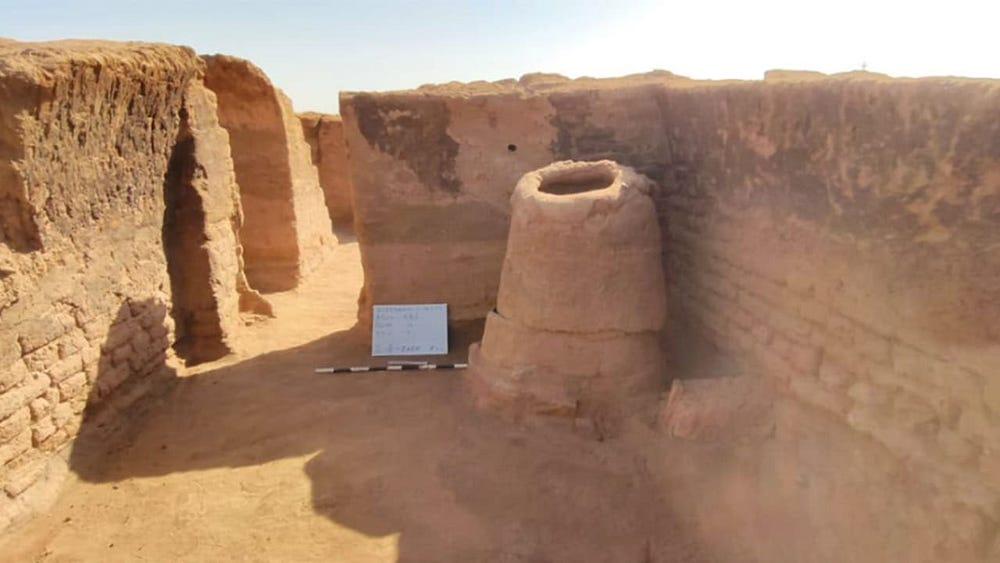
In early July 2026, Egypt’s Ministry of Tourism and Antiquities announced something pretty amazing: an entire Byzantine-era city, buried beneath the sands of the Dakhla Oasis, had been uncovered almost intact! Streets, homes, bread ovens, a fortress, and at its heart, a fourth-century basilica church. That might not seem very exciting on first glance. But this find deserves a closer look, because it puts flesh on something we usually only encounter in the abstract: what it actually looked like when Christianity took root, house by house, in an ordinary town far from the centres of imperial power. What Was Found The excavation, carried out by an Egyptian mission under the Supreme Council of Antiquities at the Ain El-Sabil site in the New Valley Governorate, roughly 185 miles west of Luxor, has been underway for several seasons. According to Hisham El Leithy, secretary-general of the Supreme Council of Antiquities, the settlement was laid out on a deliberate grid — north-south thoroughfares crossed by east-west streets, forming open squares and public spaces. This wasn’t a huddle of huts; it was a planned town. At the centre of that plan stood a basilica church dating to the mid-fourth century AD, overlooking one of the main streets. Around it, archaeologists found the remains of two watchtowers, a heavily fortified structure with thick defensive walls, and houses with spacious reception halls and vaulted roofs — complete with bread ovens, kitchens, and grinding stones for processing grain. Everyday life, preserved almost exactly as it was left. Two houses stand out that have been identified. One belonged to a man named Tisous,* identified as a church deacon, dating to the second half of the fourth century. The other belonged to a man named Tabibos. Over a thousand years later and we know the name of who owned a house and a home-church; I always find it fascinating! Archaeologists believe Tabibos’s house, which dates to the early fourth century, functioned as a house church before the basilica was ever built. A collection of coins bearing Byzantine emperors, Christian symbols and Latin inscriptions was uncovered during the excavation. (Egyptian Ministry of Tourism and Antiquities via Facebook; Dea Picture Library/De Agostini via Getty Images) There’s also a documentary find that’s easy to skim past but genuinely significant: nearly 200 ostraca — broken pieces of pottery and limestone used as everyday writing material — inscribed in Coptic and Greek. Diaa Zahran, head of the Islamic, Coptic and Jewish Antiquities Sector, described them as recording sales transactions, correspondence, and other mundane details of daily life. Things we rarely get a glimpse into as the mundane rarely makes history. Alongside these, the mission recovered a substantial haul of bronze coins bearing Byzantine emperors and Christian symbols, plus gold coins from the reign of Constantius II (337–361 AD) — coinage that anchors the site’s prosperity firmly within the fourth century. Before the Basilica: The House Church at Ain El-Sabil What makes Tabibos’s house the most theologically interesting part of this discovery is timing. If it predates the basilica and dates to the early fourth century, it sits right at — or just before — the pivot point of Roman-Egyptian Christian history: the years surrounding Constantine’s Edict of Milan in 313 AD, when Christianity moved from a persecuted minority faith to a tolerated, and increasingly favoured, one. A time of transition between a house church and a purpose-built basilica when the threat of persecution no longer loomed over the Church. We know from Paul’s letters that the earliest churches met in homes — Romans 16:5 greets “the church in [Prisca and Aquila’s] house,” and similar greetings appear in 1 Corinthians 16:19 and Colossians 4:15. If we were to imagine how a letter from Paul to this house church might...

Powered by WebBoss.io 3.7.1
Copyright © 2026 The Sacred Faith: Timeless Truths for Modern Minds. All Rights Reserved.
