
Blog Search Results


214 results for spirit and truth
found
within the Blog
6 displayed out of 214 (0.67seconds)Page 22 of 36

Why Read The Early Church Fathers?
Posted by Luke J. Wilson on 8th December 2017 in Early Church | church history,daily devotional,daily reading,early church,early church fathers,new book,amazon
Why read the Early Church Fathers?
Maybe for some of you reading this, the question might better be phrased as: who are the Church Fathers?
No doubt you will be familiar with some of their names: Augustine, Jerome, Clement, Ignatius, Polycarp, Justin Martyr et al. You may have even read portions or quotes by some of these men. But that still doesn't really explain to you who they are and why you should care, much less actually read any of their works.
My new book deals with a selection of some of the most influential Early Church Fathers, sometimes also referred to as the Apostolic Fathers (if they lived between AD 70-150), or collectively as the Ante Nicene...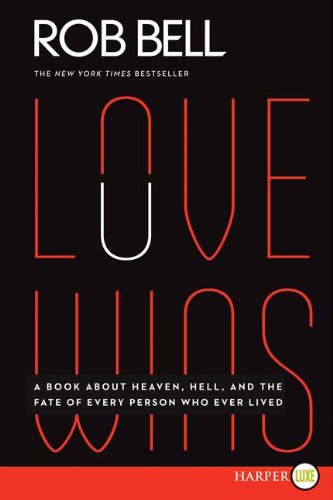
Rob Bell's “Love Wins” (Review)
Posted by Luke J. Wilson on 5th April 2014 in Hell | Rob Bell,book review
Book review on Rob Bell's “Love Wins” (originally written March 2013)
This book was quite openly condemned by some prominent Christian leaders when the book was first announced back around Spring 2011, mainly mainly accusing Bell of being a universalist and denying the existence of hell.
Lots of leaders formed opinions about the book and thus lots and laypeople took on various opinions as their own without much insight or research. The problem was that these leaders hadn't even READ the book! It wasn't released yet at the time. They decided their opinions based on the blurb and promo video which posed provocative questions about the doctrine of hell.
Th...
Lent Day 38: Leo the Great: Sermon XXI (On the Nativity Feast I)
Posted by Luke J. Wilson on 13th April 2017 in Lent | Lent,great lent,fasting,early church fathers,devotional,daily reading,Doctor of the Church,lectures,Leo the Great,St Leo,hypostatic union,deity of christ,Pope Leo I,christology,sermon
Day Thirty-eight: St. Leo the Great: Sermon XXI (On the Nativity Feast I)
Who: Leo the Great, also known as Pope St. Leo I (the Great), was Pope from 440-61 AD. Place and date of birth unknown; died 10 November, 461. Leo's pontificate, next to that of St. Gregory I, is the most significant and important in Christian antiquity, as he tried to combat the heresies which seriously threatened church unity even in the West, such as Pelagianism.
What: A sermon on the Nativity at Christmas time, about the incarnation of the Word of God.
Why: To explain the incarnation and preach the Good News of our Lord and Saviour becoming man for our sake so that we may be sav...
Losing a Loved One: A Few Ways to Find Solace
Posted by Lucille Rosetti on 29th January 2020 in Death | death,loss,grieving,grief,bereaved
This is a guest post by Lucille Rosetti from thebereaved.org. The views are that of the author and don't necessarily reflect the views of That Ancient Faith.
This week I have a guest post by Lucille Rosetti from thebereaved.org looking at the hard topic of death. As Christians we shouldn't fear death, and ought to look on it with a paradoxical hope, since we know that through Christ death has lost its "sting" (1 Cor 15:55-57) and that we look forward to the Resurrection and life to come. But even with that in mind, the physical and earthly loss is still hard and something we need to process and deal with, and the following guest post aims to help with the...Was the omniscience of God a developed idea?
Posted by Luke J. Wilson on 21st April 2014 in The Nature of God | progressive revelation, Christocentric, Christotelic, Hermeneutics, omniscience, omnipresence, theology
Or do we retroactively place our current theology of God on God?
Consider the Garden of Eden: '[T]he Lord God called to the man, and said to him, “Where are you?”' (Gen. 3:8-10)
Now today we make it into a rhetorical question, but was this always so? In this story, God is spoken of almost in a physical-bodily sense as walking in the garden, since "they heard the sound of the Lord God walking in the garden" as he moved about, and then tried to hide themselves from his view!
Next think of the tower of Babel - "The Lord came down to see the city and the tower, which mortals had built" (Gen 11:5) - Did he not just know already? Also this story...
How many apostles are there in the New Testament?
Posted by Luke J. Wilson on 22nd May 2018 in Gifts of the spirit | apostles,five fold ministry,gifts of the spirit,Greek
Often in any discussion on the gifts of the spirit and whether they are still active today (Cessationism vs Continuationism), the topic of Apostles comes up and whether the gift/office is still active today in the Church. Detractors of the Continuationist position will often quip that ‘if there were modern-day apostles, they would be world famous!’ – though I’m not sure why. Even the original Twelve weren’t “world famous” in the sense that they mean. But I digress. This isn't a question of practice, or opinion, but to examine the Scriptures to see what they say about the gift.
Scripture gives us an indication that this gift, or role, wasn’t jus...
Powered by WebBoss.io 3.7.1
Copyright © 2026 The Sacred Faith: Timeless Truths for Modern Minds. All Rights Reserved.
