
Blog Search Results


165 results for new book
found
within the Blog
6 displayed out of 165 (0.20seconds)Page 24 of 28

Lent Day 36: Ambrose of Milan: Concerning the Mysteries: 5-9
Posted by Luke J. Wilson on 11th April 2017 in Lent | Lent,great lent,fasting,early church fathers,devotional,daily reading,Doctor of the Church,lectures,liturgy,catechism,Eucharist,Bishop of Milan,St Ambrose,mysteries,treatise,baptism,transubstantiation,real presence
Day Thirty-six: St. Ambrose of Milan: Concerning the Mysteries: 5-9
Who: Bishop of Milan from 374 to 397; born probably 340, at Trier, Arles, or Lyons; died 4 April, 397. He was one of the most illustrious Fathers and Doctors of the Church.
What: The treatise was composed for use during the latter part of Lent, for the benefit of those about to be baptised, the rites and meaning of that Sacrament, as well as of Confirmation and the Holy Eucharist. For all these matters were treated with the greatest reserve in the Early Church, for fear of being misused by unbelievers.
Why: Ambrose states that after the explanations he has already given of holy living (in pre...
What did Jesus actually sacrifice?
Posted by Luke J. Wilson on 18th March 2018 in Lent | Jesus,Jesus death,sacrifice,Jesus sacrifice,atheist,meme,flogging,crucifixion,Godhead,eternal consequences
Sometimes the question, or accusation/criticism maybe, is posed by atheists and critics of Christianity that Jesus didn’t really sacrifice anything because he is God and also because he got his life back three days later. So where’s the sacrifice if you know that what you give up will be given back, and given back even better than you previously had it?
It’s an interesting question, and one that should cause us to stop and think about what we, as Christians, say to non-believers in case the question is ever given to us. Most people will say Jesus gave up his life for us – but is that such a big deal if he knew he’d have it back in three days; and th...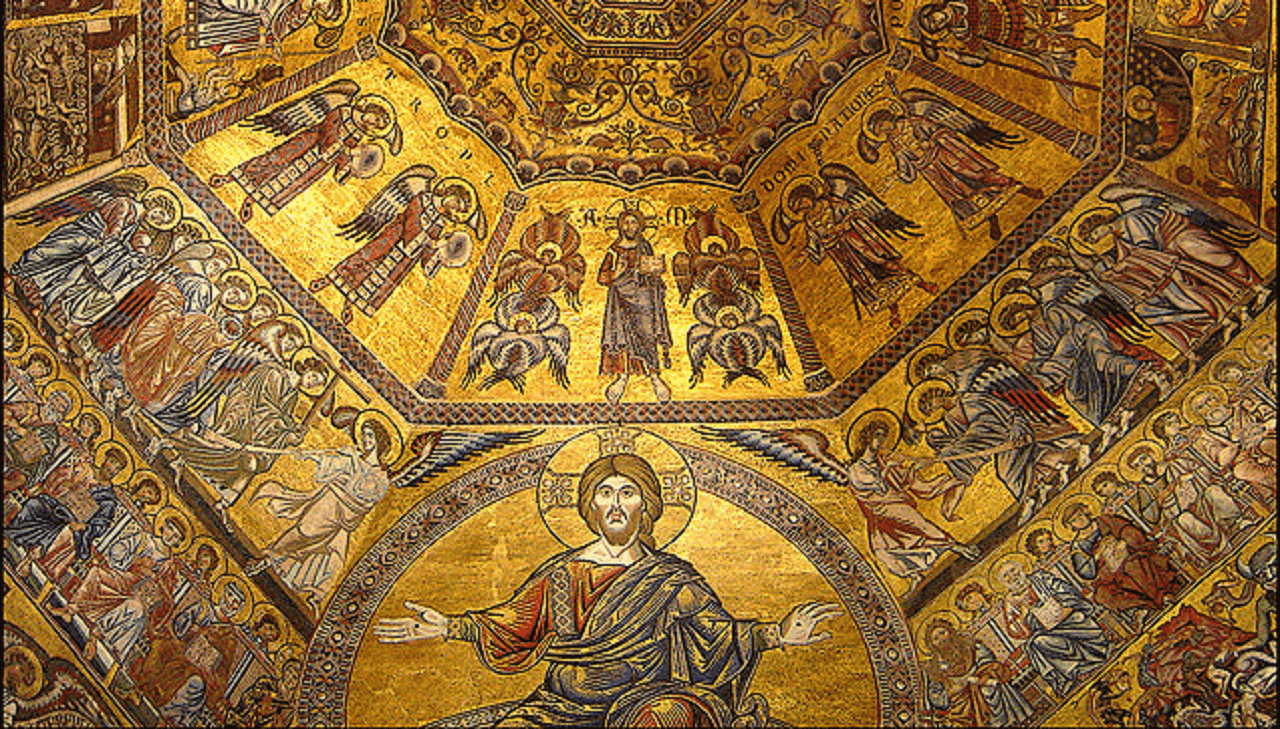
What are the Seraphim, and was the devil one of them?
Posted by Luke J. Wilson on 23rd April 2020 in Angels | devil,satan,angels,seraphim,heaven
Have you ever wondered about what the devil is — or was, pre-Fall? You’ve probably been told that he used to be an angel with God, so then why is he often described as a snake, serpent or dragon?
Though there isn’t a great deal given away in Scripture as to the nature of angels, or the heavenly realms in general, we get some glimpses from the visions of the prophets. But what we can also look at is the words which the Bible uses; some of which aren’t translated and so lose their original meaning in English.
The Seraphim
The word “seraphim” is a transliteration of a Hebrew word, rather than a translation, so in English we often will miss the me...
The Neuroscience Of Resisting Temptation
Posted by Luke J. Wilson on 23rd January 2025 in Science | Science,temptation,neuroscience,self control
Have you ever wondered why God asks us to resist temptation and practise self-control? At first glance, it might seem like God is just trying to limit our enjoyment of life, especially when the world tells us to “follow your heart” and “give in to what feels good.” But what if I told you that resisting temptation is not about taking away your joy, but about protecting and blessing your life — spiritually, emotionally, and even mentally?
I was recently watching a TV series with my wife (called Perception, if you’re interested) about a neuroscience professor who consults for the FBI. The series often gives some interesting facts about the brain...
A Historic Easter Change Is Coming — But Will Protestants Get On Board?
Posted by Luke J. Wilson on 29th January 2025 in Easter | current events,easter,history,ecumenical,roman catholic,eastern orthodox,Anglican
Pope Francis has recently expressed the Catholic Church’s willingness to accept a unified date for Easter, a move aimed at fostering greater Christian unity, particularly with the Orthodox Church. This long-standing issue arises from the different calendars used by Western and Eastern Christian traditions — the Gregorian and Julian calendars — leading to discrepancies in Easter celebrations. Talks between Catholic and Orthodox leaders have intensified, hoping a common date could be agreed upon. However, this raises important questions for Protestant denominations regarding whether they would adopt the unified date or risk falling out of alignment w...Are There Levels of Sin?
Posted by Luke J. Wilson on 5th April 2014 in Sin | sin, judgement, punishment, hell, last judgement
"All sins are equal." "Sin is sin." "All sin is the same in God's eyes."
You may have heard these phrases said before (you may even have said them before!). But is all sin really equal? I do, and don't, think so.
Let me clarify: All sin is equal in the sense that all illegal activities are crimes; but even crimes have degrees of severity and punishment, and it would seem to me that the new Testament also supports this concept in regards to sin.
Lets look at a few examples:
If you can blaspheme the Holy Spirit and never be forgiven (Matt 12:31), then it's a sin definitely not on par with others.
If being sexually immoral is seen as something to shun more...
Powered by WebBoss.io 3.7.1
Copyright © 2026 The Sacred Faith: Timeless Truths for Modern Minds. All Rights Reserved.
