
Blog Search Results


158 results for man made tradition
found
within the Blog
6 displayed out of 158 (0.79seconds)Page 26 of 27

What was so good about Good Friday?
Posted by Luke J. Wilson on 18th April 2014 in Easter | Good Friday,Jesus,crucifixion,forgiveness,sin,Easter,Holy Week,Christmas
I remember when I was growing up, this was a question I would often wonder about and ask. People would say "because Jesus died on the cross!", which was of little help to me as I would then think, why was Jesus dying a good thing?
But this is a question I'm sure many people will have asked themselves when they consider the name of their Bank Holiday, and probably a question they got an unsatisfactory answer to - if they got one at all!
Really though, this holiday time should be more well-known and recognised than Christmas. While the birth of Jesus is important, it isn't actually central to the Faith, nor is it really emphasised much in the New Testament...
Biblical Inspiration and the Canon: How We Got the Bible
Posted by Luke J. Wilson on 28th February 2025 in Early Church | canon,nicea council,nicene council,myths,church history,church fathers
The Bible is often described as “God-breathed,” a phrase taken from 2 Timothy 3:16: “All scripture is inspired by God and is useful for teaching, for reproof, for correction, and for training in righteousness.” But what does it mean for Scripture to be “inspired,” and how did the books of the Bible come to be recognised as part of the canon — the authoritative collection of writings that make up the Bible? Were they really “decided” at the Council of Nicaea, as some popular myths claim?
Table of Contents
Understanding Biblical Inspiration
What is the Canon?
The Septuagint and the Deuterocanonical Books
How Were the Books of the Bi...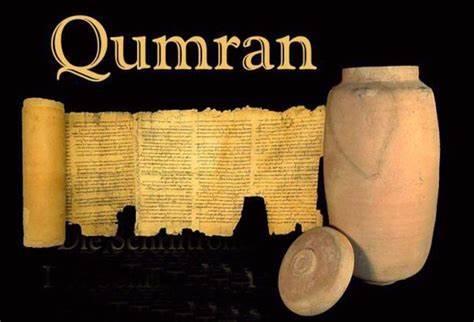
Did the Qumran community predict the coming of Jesus?
Posted by Luke J. Wilson on 28th April 2015 in General Interest | Qumran,Dead Sea Scrolls,Messianic,4Q521,prophecy,Christ
I'm going to start a new category here for "General Interest" which will be for things I see or read about that I think are interesting or informative about the Bible, Christianity or the Faith in general; but which aren't necessarily topics I could, or would need to, write a full blog post about.
I'll kick off this new venture with an brief look at something I read the other day from the Dead Sea scrolls which is very interesting – Qumran text 4Q521. It gives us a glimpse of early Jewish expectations of the coming Messiah from the time before Jesus arrived, and shows just how Jesus did actually meet those expectations.
For example, when John asks his disci...
Lent: Day 6 - Ignatius to the Magnesians
Posted by Luke J. Wilson on 7th March 2017 in Lent | Lent,great lent,fasting,early church fathers,devotional,daily reading,Ignatius,Ignatius of Antioch: Letter to the Magnesians
Day Six: St. Ignatius of Antioch: Letter to the Magnesians (full text)
Who: Ignatius converted at a young age and later became Bishop of Antioch. A friend of Polycarp and fellow disciple of John, there is a long standing tradition that Ignatius was the child that Jesus held in his arms and blessed in Mark 10:13-16
What: Ignatius urges the church to continue in unity, to honour their leadership and to avoid Judaizers who may try to bring false teaching. This letter also gives some valuable insight to early church hierarchy.
Why: Ignatius wrote a series of letters to the churches in Asia Minor whilst en route to Rome to face martyrdom by wild beasts in the Col...
Lent: Day 7 - Ignatius to the Trallians
Posted by Luke J. Wilson on 8th March 2017 in Lent | Lent,great lent,fasting,early church fathers,devotional,daily reading,Ignatius,Ignatius of Antioch: Letter to the Trallians,Docetism
Day Seven: St. Ignatius of Antioch: Letter to the Trallians (full text)
Who: Ignatius converted at a young age and later became Bishop of Antioch. A friend of Polycarp and fellow disciple of John, there is a long standing tradition that Ignatius was the child that Jesus held in his arms and blessed in Mark 10:13-16
What: Ignatius urges the church to continue in unity and to honour their leadership. This letter also gives a defence against certain heresies.
Why: Ignatius wrote a series of letters to the churches in Asia Minor whilst en route to Rome to face martyrdom by wild beasts in the Colosseum around 108 AD.
When: Around 107-108 AD
The letter to the Tr...
Lent: Day 8 - Ignatius to the Romans
Posted by Luke J. Wilson on 9th March 2017 in Lent | Lent,great lent,fasting,early church fathers,devotional,daily reading,Ignatius,Ignatius of Antioch: Letter to the Romans,martyrdom
Day Eight: St. Ignatius of Antioch: Letter to the Romans (full text)
Who: Ignatius converted at a young age and later became Bishop of Antioch. A friend of Polycarp and fellow disciple of John, there is a long standing tradition that Ignatius was the child that Jesus held in his arms and blessed in Mark 10:13-16
What: A challenging letter in which Ignatius pours himself out to the Roman church about his impending martyrdom.
Why: Ignatius wrote a series of letters to the churches in Asia Minor whilst en route to Rome to face martyrdom by wild beasts in the Colosseum around 108 AD.
When: Around 107-108 AD
On reading the introduction to this letter my first th...
Powered by WebBoss.io 3.7.1
Copyright © 2026 The Sacred Faith: Timeless Truths for Modern Minds. All Rights Reserved.
