
Blog Search Results


211 results for luke j. wilson
found
within the Blog
6 displayed out of 211 (0.55seconds)Page 28 of 36

Ancient Amulet Rewrites History Of Christianity In Europe
Posted by luke j. wilson on 18th December 2024 in Archaeology | archaeology,amulet,discovery,current events,protection amulet
New discovery proclaims Jesus as “Son of God” a century earlier than previously thought.
An exciting archaeological discovery has recently come to light: researchers have unearthed an 1800-year-old silver amulet in Frankfurt, Germany. This amulet provides the earliest known evidence of Christianity north of the Alps and disrupts previously held ideas about the spread of the faith, namely that Christianity didn’t get to the German region around the fourth century.
The amulet, dating from approximately 230 to 270 AD, was found in 2018 beneath the chin of a man’s skeleton during excavations at a Roman burial site near the former town of Nida, now part o...
From Paradise to Presents: The Christian Story Behind the Christmas Tree
Posted by luke j. wilson on 23rd December 2024 in Christmas | history,St Boniface,christmas,christmas tree
The Christmas tree is one of the most recognisable symbols of the festive season, adorning homes, churches, and public spaces with its evergreen beauty. But where did this tradition originate, and how did it become a central feature of Christmas celebrations? Looking into the history of the Christmas tree has turned out to be a fascinating historical story woven from various cultural and theological strands.
The Paradise Tree and the Feast of Adam and Eve
The connection between the Christmas tree and the Feast of Adam and Eve offers a large clue into its origins. In medieval Europe, December 24th was observed as the feast day of Adam and Eve, a commemoration t...
The Reformation: A Sound-Bite History (Book Review)
Posted by luke j. wilson on 14th February 2019 in Book Review | book review,reformation,church history
This short little book on the Reformation and some of the leading men who helped to kick-start it and continue to fan its flames has been very enjoyable to read. It really is a “sound bite history” as the chapters are short and snappy, and really only cover the absolute basics of each of the Reformers lives. The book has seven chapters, with six of them dedicated to an individual who had a pivotal role in the beginnings of the Reformation: Martin Luther, John Wycliffe, John Huss, John Calvin, Hugh Latimer and George Whitefield.
The Reformation:A Sound-bite History
I found it to be very educational and easy to read and digest; gleaning just enough info...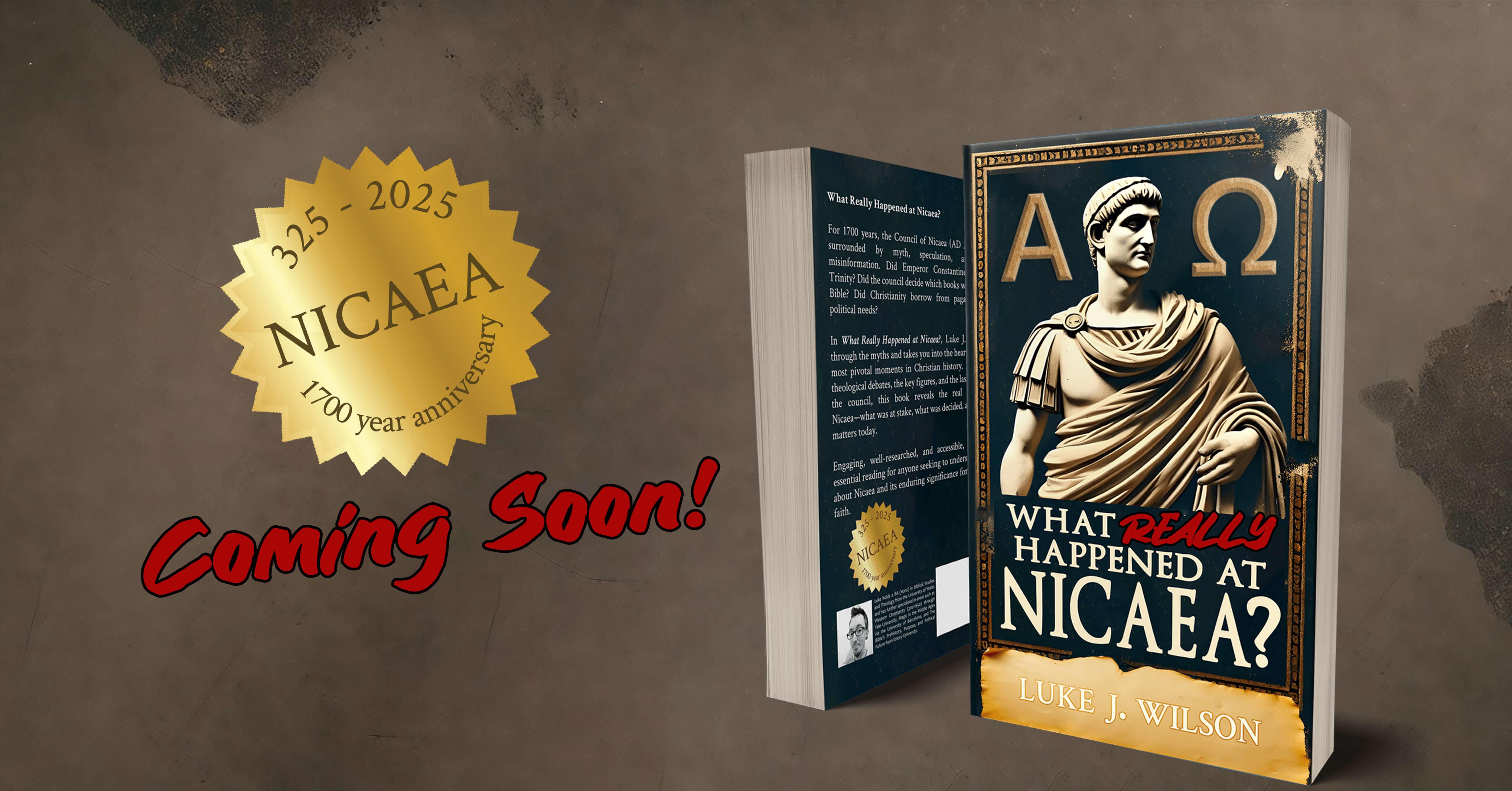
Announcing My New Book: What Really Happened at Nicaea?
Posted by luke j. wilson on 23rd February 2025 in Book Release | nicene council,nicene creed,controversy,constantine,book release
For 1700 years, the Council of Nicaea has been surrounded by myths, misunderstandings, and outright fabrications. From claims that Constantine “invented” the Trinity to the idea that the council decided the books of the Bible, there’s no shortage of misinformation floating around.
That’s why I’m excited to announce my upcoming book, What Really Happened at Nicaea? This book sets the record straight, taking you inside the actual events of 325 AD—what was debated, what was decided, and why it still matters today.
If you’ve ever wondered:✅ Did Constantine rewrite Christianity?✅ Was Jesus’ divinity really up for debate?✅ Did Nicaea creat...
From Dust to Redemption: The Meaning of Ash Wednesday
Posted by luke j. wilson on 5th March 2025 in Lent |
Ash Wednesday marks the beginning of Lent, a season of repentance, fasting, and preparation for Easter in the Christian calendar. It is observed by many Western Christian traditions, including the Roman Catholic Church, Anglican Communion, Lutheran churches, and some Methodist and Reformed communities. The day falls 46 days before Easter Sunday and is always on a Wednesday.
Origins and Historical Development
The practice of Ash Wednesday can be traced back to the early centuries of Christianity, though its formal observance developed over time. The use of ashes as a sign of repentance has deep biblical roots, appearing frequently in the Old Testament. People w...
Does Easter Have Pagan Origins?
Posted by luke j. wilson on 22nd March 2021 in Easter | Easter,easter sunday,early church,church history,paganism,pagan roots,Ishtar,Eostre,fertility goddess
Much like any major Christian holiday, there are the usual arguments and accusations about how it’s all just pagan festivities with a “Christian mask”. Easter is no different, and usually gets hit the hardest over its so-called “pagan roots”, or in the month or so preceding it, Lent being some “invention of the Catholic Church”.
Table of Contents
The Lenten Fast
The Easter controversy and why we celebrate it when we do
Is the Name “Easter” really the Anglo-Saxon goddess Eostre?
Chocolate eggs and bunnies?
Concluding Thoughts
Further Reading and Sources
I like to try and observe Lent, as it is one of the most ancient custom...
Powered by WebBoss.io 3.7.1
Copyright © 2026 The Sacred Faith: Timeless Truths for Modern Minds. All Rights Reserved.
