
Blog Search Results


Did you mean:
genesis
?
23 results for Genesis
found
within the Blog
6 displayed out of 23 (0.03seconds)Page 3 of 4
Was the omniscience of God a developed idea?
Posted by Luke J. Wilson on 21st April 2014 in The Nature of God | progressive revelation, Christocentric, Christotelic, Hermeneutics, omniscience, omnipresence, theology
...urate!
Genesis 18:20-21
Then the Lord said, “How great is the outcry against Sodom and Gomorrah and how very grave their sin! I must go down and see whether they have done altogether according to the outcry that has come to me; and if not, I will know.”
This next one may be a stretch, but it comes to mind anyhow: "For the eyes of the Lord range throughout the entire earth" (2 Chron 16:9).
Other translations say God's eyes "roam" or "run to and fro" throughout the earth. Maybe it's just a poetic way of saying "God sees all", but does it mean he sees all simultaneously — as an all-knowing God should/would? Or is this in keeping with the...
Creedal Christians: The Nicene Creed
Posted by Luke J. Wilson on 2nd June 2019 in Early Church | nicene creed,nicea council,creeds,creedal christians,creedal
...rth,
Genesis 1:1; John 1:1; Isaiah 44:24
maker of all things visible and invisible;
and of all things visible and invisible.
Colossians 1:16; Romans 1:20
and in one Lord Jesus Christ,
And in one Lord Jesus Christ,
Romans 10:9; Eph 4:5,6
the Son of God, the only-begotten of his Father,
the only-begotten Son of God,
John 3:16; Matthew 16:16
begotten of His Father before all worlds,
John 1:2
God of God, Light of Light, very God of very God,
Light of Light, very God of very God,
John 17:22; John 8:12; John 1:1; Colossians 2:9
begotten (γεννηθέντα)...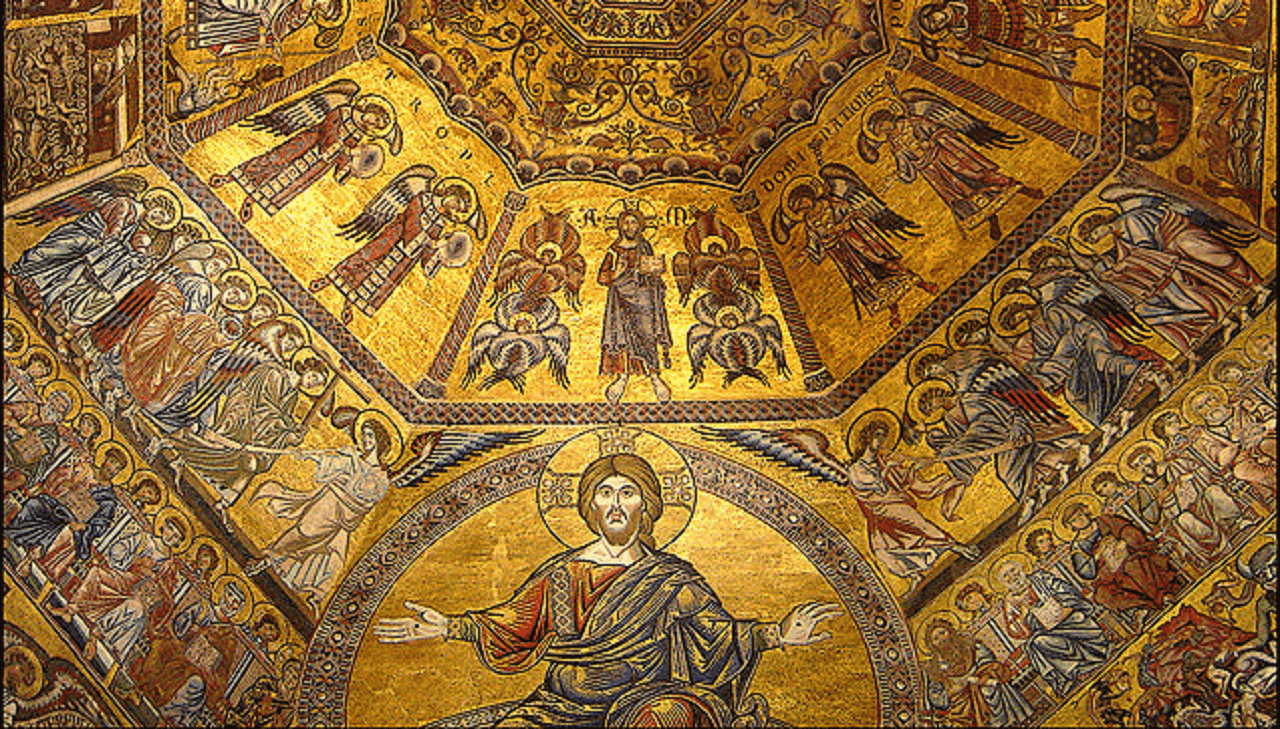
What are the Seraphim, and was the devil one of them?
Posted by Luke J. Wilson on 23rd April 2020 in Angels | devil,satan,angels,seraphim,heaven
...d used in Genesis 3 for the serpent isn’t the same as the word for seraphim — it uses the word nachash [נָחָשׁ] for serpent instead. But looking through the word usage between saraph and nachash the two can get translated in similar ways, though the latter word seems to get the most used, even in conjunction with “fiery serpents” as well as being translated as “fleeing serpents”, and it also has implications towards the Leviathan mentioned in Isaiah 27. Interestingly too, the word nachash also has instances where it gets translated as “divination”, giving the word a deeper and more mystical meaning into the nature of it. It also has a...
Women should be silent?
Posted by Luke J. Wilson on 8th April 2014 in Women | women,silence,1 Corinthians,1 Timothy,authority,doctrine,marriage
...ic on the Genesis creation order - which would surely apply universally. We can see this in the very next verse and sentence in 1 Tim 2:
For Adam was formed first, then Eve; and Adam was not deceived, but the woman was deceived and became a transgressor.
So if Paul's logic and subsequent command comes from creation-order, then either everyone is subject to it in every situation, or they aren't at all.
You can't say "do it this way because Adam and Eve, God said so" and tag it with "but only here, here and here" if the argument it based on how God originally designed everything to be. The whole marriage debate is also based on a creation-order logic th...
The Temptations of Jesus: Worship and Glory
Posted by Luke J. Wilson on 25th February 2018 in Lent | temptation,wilderness,desert,worship,glory,devil,satan,forty days,lent
...oment:
Genesis 3:6
So when the woman saw that the tree was good for food, and that it was a delight to the eyes, and that the tree was to be desired to make one wise, she took of its fruit and ate; and she also gave some to her husband, who was with her, and he ate.
Contrast that with what John writes in his first epistle:
1 John 2:15-16
The love of the Father is not in those who love the world; for all that is in the world—the desire of the flesh, the desire of the eyes, the pride of life (or in riches) comes not from the Father but from the world.
The sin that separated Adam and Eve from God in the beginning is the same in essence as what Jo...
Slavery in the Bible – Does God Condone Slavery?
Posted by Joshua Spaulding on 15th September 2020 in Slavery | slavery,bond-servant,Philemon
...for good (Genesis 50:20) to show people their wickedness and the results of going the wrong way. He also allows wicked things to happen in order to bring people to the point where they realize they need Him, that they may come to Christ to be saved, by grace through faith (Eph. 2:8-9).
In summary, there are at least two types of slavery in the Bible: a forced slavery that God condemns and a willful slavery which, to a certain extend, God does not condemn, and in fact gives guidelines commanding that those servants should be treated right.
Have you been freed from the slavery of sin?
The Bible tells us that before we are born again we are slaves to sin (...
Powered by WebBoss.io 3.7.1
Copyright © 2026 The Sacred Faith: Timeless Truths for Modern Minds. All Rights Reserved.
