
Blog Search Results


Did you mean:
jews
?
36 results for Jews
found
within the Blog
6 displayed out of 36 (0.03seconds)Page 3 of 6

Lent: Day 16 - Justin Martyr: First Apology, Chaps. 48-59
Posted by Luke J. Wilson on 18th March 2017 in Lent | Lent,great lent,fasting,early church fathers,devotional,daily reading,Justin Martyr,apologetics
...on by the Jews Foretold
Isaiah 65:1-3
And the words are spoken as from the person of Christ; and they are these "I was manifest to them that asked not for Me; I was found of them that sought Me not: I said, Behold Me, to a nation that called not on My name. I spread out My hands to a disobedient and gainsaying people, to those who walked in a way that is not good, but follow after their own sins; a people that provoketh Me to anger to My face." For the Jews having the prophecies, and being always in expectation of the Christ to come, did not recognise Him; and not only so, but even treated Him shamefully.
His Humiliation Predicted
Isaiah 52:13-15, Isai...
It's no longer about land!
Posted by Luke J. Wilson on 16th August 2014 in Israel | Israel,war,politics,current events,Hamas,Gaza,promised land,New Covenant,spirit and truth,worship,new creation
..., but you Jews say only in Jerusalem – which is right?' Jesus gives an answer which just flips it all up on its head and effectively says "neither and both". Neither, because a time was coming where things were about to change, where physical, geographical Israel was no longer the focus, yet both, because in that new time it would allow believers to worship God wherever they wanted to! A new and spiritual movement was coming and being brought about by Jesus; it was no longer about being in the right place, or performing the correct rituals – it was soon to be all about worshipping in spirit and truth.
As Jo...
Lent: Day 2 - Mathetes to Diognetus, pt. 1
Posted by Luke J. Wilson on 3rd March 2017 in Lent | Lent,great lent,fasting,early church fathers,devotional,daily reading,epistle of mathetes to diognetus
...at of the Jews too. What I do find odd is how in this book (and others I've read) Jewish beliefs are often called “Jewish superstitions” which the writer relates to meaning much of the traditional practices of the Jews we'd recognise from the Old Testament. Maybe superstition meant something else back then than it does today?
This reading then finishes with a description of how Christians live and intermingle with society, yet are distinct from the world around them. I found this challenging and wondered if the description still applies to what we see today in the Church?
[The Christians] display to us their wonderful and confessedly striking method of l...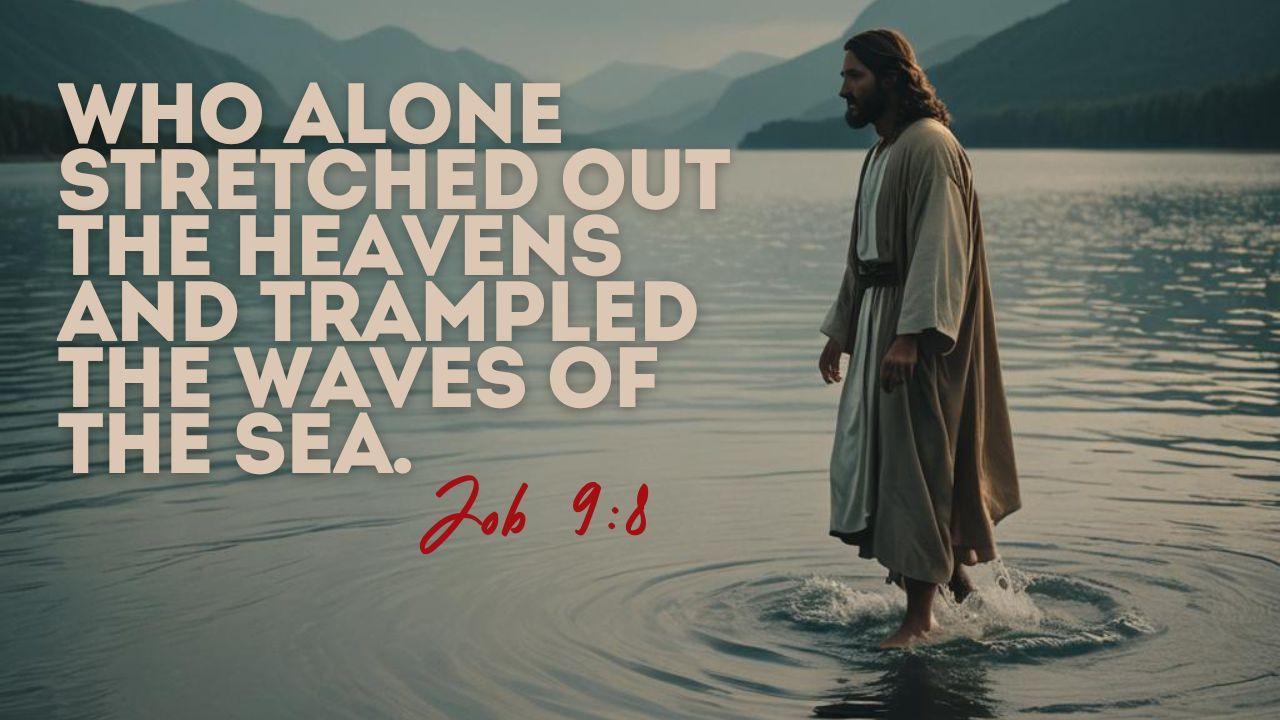
Jesus, Yahweh, And The Power Over The Storm
Posted by Luke J. Wilson on 29th July 2024 in Deity of Christ | Jesus,deity of christ,Yahweh,old testament,elements
...t century Jews (and likely modern Jews and anyone else very familiar with the Old Testament).
Theological Implications
The parallels between these passages are not coincidental. They invite us to recognise Jesus not merely as a teacher or prophet but as God incarnate. In Jewish understanding, control over the chaotic forces of nature was a clear attribute of Yahweh. By calming the storm with a word and walking on water, Jesus demonstrates the same authority, revealing His divine nature.
This connection is further reinforced in other Gospel accounts — Luke 8:22–25 and Matthew 8:23–27 — where Jesus’ mastery over the elements is consistently po...
Does Easter Have Pagan Origins?
Posted by Luke J. Wilson on 22nd March 2021 in Easter | Easter,easter sunday,early church,church history,paganism,pagan roots,Ishtar,Eostre,fertility goddess
...with the Jews”, as it would be “unworthy” to follow their customs concerning Passover! Seems a shame really if it truly does deviate from apostolic tradition.
But what this does show for certain is that Christians have been celebrating (and debating) Easter/Passover since at least AD 150, long before Constantine or even any other “pagan” influence could take hold.
Is the Name “Easter” really the Anglo-Saxon goddess Eostre?
In short: no.
There’s also no link between “Ishtar” and “Easter” either. Ishar was an ancient Near Eastern fertility goddess, but just because the names sound somewhat similar in English, it doesn’t mean there is...
How Old Was Jesus When He Died? A Fresh Look At The Historical Clues
Posted by Luke J. Wilson on 9th April 2025 in History | history,church fathers,church history,Jesus,crucifixion
...Then the Jews said to him, ‘You are not yet fifty years old, and have you seen Abraham?’
…would only make sense if Jesus were already in his forties (or at the very least, close to that age). If Jesus had been just thirty, Irenaeus reasons, they would have said, “You are not yet forty” (Adv. Hae. 2.22.5). Although it’s a minority view in the early church, John Chrysostom also appears to agree with Irenaeus. In the fourth century, commenting on verse 57 in his Homily 55 on the Gospel of John, Chrysostom makes a simple, yet profound, statement:
So that we conclude that Christ was nearly forty.
And just like that, one of the heavyweights of the Pat...
Powered by WebBoss.io 3.7.1
Copyright © 2026 The Sacred Faith: Timeless Truths for Modern Minds. All Rights Reserved.
