
It's no longer about land!
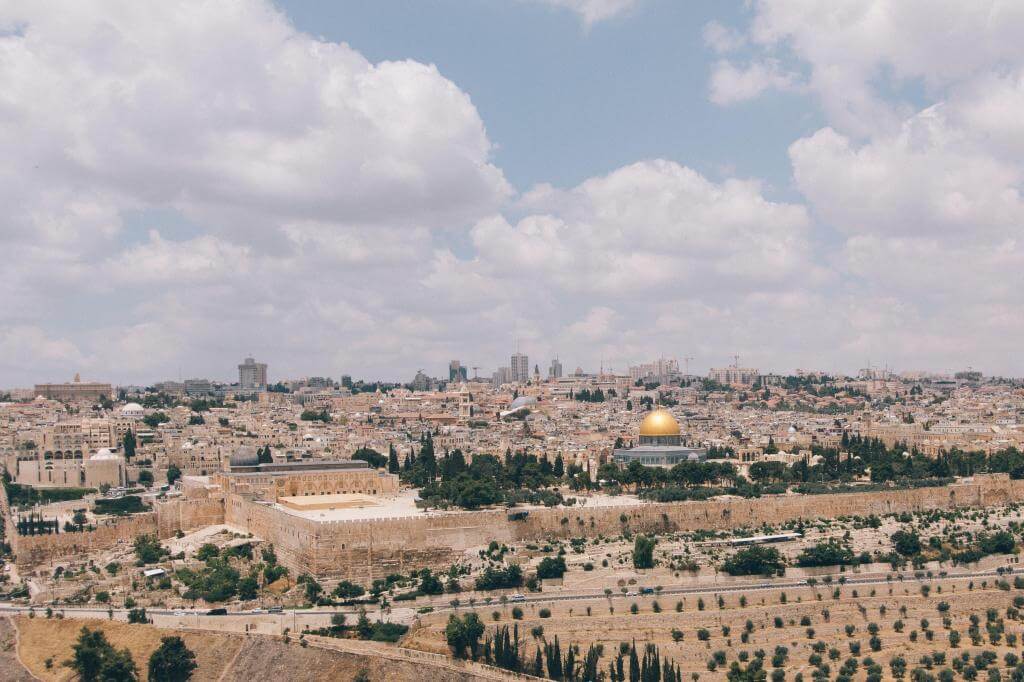
Header Image: Mount of Olives, Jerusalem by Rob Bye (unsplash.com)
As I've been thinking more about the Israel situation, and reading and hearing the responses and debates on my last article, and the issue in general, it seems to me that people can't help but get stuck in the mindset of a geo-political debate. Yes, there's a place called "Israel" in the middle-east, and yes there's a war going on which is terrible for all involved — but from a New Testament Christian perspective, that shouldn't be our focus when it comes to thinking about the true Israel!

If you want to "support Israel" because you believe they are in the right or have 'just cause', then fine – just don't call it a God-sanctioned war or prophecy fulfillment and claim that others are "anti-Israel/Semitic" and unChristian for not pledging some kind of allegiance to a political situation like you do. Although, while you are out there "supporting Israel", maybe you should get a little perspective on the land mass of Gaza using this nifty little web app I came across earlier today: Gaza Everywhere.
But I want to take your attention away from a geographical mindset for the moment.
Israel the land isn't the point.
It's not about land anymore!
WDJS? (What Did Jesus Say?)
Let's look at what Jesus had to say about having a special place for worshipping God when a Samaritan woman asked him about where the proper place to meet with God was:
John 4:21,24
Jesus said to her, “Woman, believe me, the hour is coming when you will worship the Father neither on this mountain nor in Jerusalem ... God is spirit, and those who worship him must worship in spirit and truth.”
The woman says to Jesus, 'our ancestors worshipped here, but you Jews say only in Jerusalem – which is right?' Jesus gives an answer which just flips it all up on its head and effectively says "neither and both". Neither, because a time was coming where things were about to change, where physical, geographical Israel was no longer the focus, yet both, because in that new time it would allow believers to worship God wherever they wanted to! A new and spiritual movement was coming and being brought about by Jesus; it was no longer about being in the right place, or performing the correct rituals – it was soon to be all about worshipping in spirit and truth.
As John 1:17 says, "The law indeed was given through Moses; grace and truth came through Jesus Christ." Jesus is that truth we must worship in, and only by the empowering of the new birth can we do that fully and thus worship in Spirit and Truth (John 3:1-10; 1 Peter 1:3-5).
"It's not a religion, it's a relationship..."
I've often heard that said in churches, and I was inclined to agree with it, but recently I think that I want to redefine that a little. While it's true that Christianity should be more than mere religion, and about a real relationship with the living God, I would also now say that it's even more than that.
Christianity is a new race. A new people group — a new creation in Christ.
The new creation isn't (just?) some far off future event, but was and is a current thing which happens right now! As far as Paul was concerned, once you were in Christ, the old was gone and the new had come already:
2 Corinthians 5:16-17
From now on, therefore, we regard no one from a human point of view; even though we once knew Christ from a human point of view, we know him no longer in that way. So if anyone is in Christ, there is a new creation: everything old has passed away; see, everything has become new!
Galatians 6:15
For neither circumcision nor uncircumcision is anything; but a new creation is everything!
As Peter also wrote, those who believe in and follow Christ Jesus are "a chosen race, a royal priesthood, a holy nation, God’s own people" (1 Peter 2:9-10), Israel was once the vine and symbolically referred to as such (Ps 80:8-9; Joel 1:7) but we are now grafted into the true vine which is Jesus (Jn 15:1; Rom 11:17).
If the vine represented Israel, and Jesus says he is the "true vine", then Jesus is true Israel and we are grafted in as spiritual Jews (Romans 2:28-29) as a new creation through him, which now has no physical, social or religious boundaries (Galatians 3:28-29)!
But we can only be in a race or people group by birth naturally, and spiritually it is no different – hence why we must be "born from above" by the Holy Spirit (John 3:5-7).
The Kingdom of God is a new creation of a new people group, birthed by God's own Spirit and not by natural means. To be "born again" means the old has to go; it has to die, which is precisely what Jesus and the Apostles taught (Jn 12:24; Luke 9:23-24; Mat 10:38; Gal 5:24; Col 3:1-7; Rom 6:11). We do this through faith in Jesus by putting away earthly things and desires which hinder our walk with God and life in the Spirit until such a time that we physically die and go to new life eternal.
Until then though, we should strive to "regard no one from a human point of view" as Paul wrote, and remember that we are a new people group in Christ.
Our home is God's kingdom; our culture is Heaven's culture; our family is Christ's family, which is why we are all brothers and sisters, adopted into the family of God as children and joint heirs with Christ (Titus 3:6-7; Eph 1:5; Eph 3:5-6; Galatians 3:29; Romans 8:16-17)!
Our focus needs to be less on where we fit in this world, or where we come from, or what social status we have, and should be more on living out our life in Christ, showing his love to all and welcoming any and all into the Kingdom. Likewise, our focus should be less about where others are from or where they fit into society.
Our Kingdom is a new society, and race of people filled and led by the Spirit to conquer this world and it's corrupt systems with the power of God's love and Spirit within us! The small mustard seed which grows into something large, overshadowing all else.
As Christians it is no longer about physical boundaries, race or nation for we are all one in Christ, born again into a new creation — a new race and people of God to worship in spirit and in truth!
Leave a comment Like Back to Top Seen 1.3K times Liked 0 times

Enjoying this content?
Support my work by becoming a patron on Patreon!
By joining, you help fund the time, research, and effort that goes into creating this content — and you’ll also get access to exclusive perks and updates.
Even a small amount per month makes a real difference. Thank you for your support!
x
Subscribe to Updates
If you enjoyed this, why not subscribe to free email updates and join over 897 subscribers today!
My new book is out now! Order today wherever you get books
Subscribe to Blog updates
Alternatively, you can subscribe via RSS 
All email subscriptions must be confirmed to comply with GDPR.
Related Posts
Luke J. Wilson | 11th October 2015 | Israel

If you've read my previous two articles on Israel, then this will probably seem familiar. This is a combination of the previous two combined into one study, focussing more on who Israel is under the New Covenant rather than the geopolitical/war situation of the Middle East. So Who is Israel? No doubt what I'm about to say will cause some knee-jerk reactions, but to properly understand the New Covenant, we need to address the issue of who is Israel, Biblically speaking? Yes, there is a modern nation known as "Israel" now since 1948, but is that the same Israel of the Bible? The same Israel to whom God made his promises? If so, does that mean God's plans were on hiatus while there was no nation of Israel from AD 70 when Rome destroyed them, until 1948? How many chosen people are there? So I'm just going to say it: the nation of Israel in the Middle East which we know of today, is not the same Israel of the New Covenant. So who is Israel then, according to the New Testament? In a word: Jesus. Galatians 3:16 Now the promises were made to Abraham and to his offspring; it does not say, “And to offsprings,” as of many; but it says, “And to your offspring,” that is, to one person, who is Christ. That promise to Abraham of his offspring blessing the earth was not speaking of the Jewish people as a whole, but their culmination in being the lineage to which the Messiah would come! What about the nation of Israel? There are some internet memes which are still doing the rounds every so often, quoting Gen 12:3 ("I will bless those who bless [Israel], and the one who curses [Israel] I will curse") and by implication, putting guilt on anyone who dares say a bad word against the nation of Israel. Yes, all the families of the earth shall be blessed — but not by national Israel, but Jesus who IS the true Israel; the one in whom all the promises to the people of Israel are found complete (2 Cor 1:19-20). It is now through faith in Jesus that we are grafted into the true Israel of God, and because of that, we are blessed! The true Israel of God now are those who believe in the promise that was given to Abraham, which was the Gospel, and not his earthly/natural descendants. Don't take my word for it though, read for yourself how the Apostle Paul understood this: Galatians 3:6-9 Just as Abraham “believed God, and it was reckoned to him as righteousness,” so, you see, those who believe are the descendants of Abraham. And the scripture, foreseeing that God would justify the Gentiles by faith, declared the gospel beforehand to Abraham, saying, “All the Gentiles shall be blessed in you.” For this reason, those who believe are blessed with Abraham who believed. This passage from Galatians is an echo of what God said in Gen 12:3, and also Gen 22:18, which Peter also refers to as well in Acts 3:25-26. Opponents to this view (a view often called "Replacement Theology" or "Fulfillment Theology") say that this means that God somehow failed in his plans with physical Israel and needed a "Plan B" as it were, hence, the Church. Sometimes it will be stated that there is a "dual-covenant" in which the Mosaic Law still applies to Jews, but not to non-Jews, and that this is how the Jewish people attain salvation separate from Jesus. But I can't see how this is possible, given what the New Testament says. To be clear though, I'm not saying the Church replaced Israel, but rather it is the continuation of what Israel was always meant to be, and so will be the people group in whom the promises from God will be made complete. It's no longer about land or race, but Jesus's righteousness and faithfulness and an expanded plan to include all people – not simply the Jews. God didn't fail in his promises to bless the nations, his plan was just bigger than anyone first imagi...
Luke J. Wilson | 09th August 2014 | Israel

"We interrupt your regularly scheduled programme to bring you this..." Sorry if you were waiting for part 3 of the Coming of Jesus series, but what with all that's going on in the news lately, I felt that this needed to be written first. "Support Israel's right to defend itself from terror." Images like this really don't help anything. If you've been on Facebook, or any other social media no doubt, I'm sure you will have seen (or even said) words to this effect in status' or memes. I keep seeing memes and images posted by people, often from Christians, about "supporting Israel" and each time it makes me stop and question that statement and/or sentiment. I question its accuracy, how biased or not the sources were, whether it's propaganda rather than truth. It makes me wonder about what view of God and theology that person holds to that enables Israel to get a 'free pass' as it were. There's images and videos being posted from both sides, but it seems that when there is something negative against Israel, it's called "propaganda" and staged/fake etc, but the other way around it is terrorism and self-defense by Israel. Then there's those who play the racism card, such as the image to the right, making people feel guilty of Anti-Semitism for not being a die-hard Zionist. But what I'd really like to know is when did Christian's begin supporting any kind of violence or war? I realise the church has a long and bloody history - but is that really the Jesus way - Jesus the "prince of peace" (Isaiah 9:6)? How about we do what Jesus taught and support efforts for peace, and not war; praying for our enemies and those who persecute, and not take sides, you know, like we're supposed to as Christ-followers. "But I say to you, Love your enemies and pray for those who persecute you, so that you may be children of your Father in heaven; for he makes his sun rise on the evil and on the good, and sends rain on the righteous and on the unrighteous." – Matt 5:44-45 "Do not be overcome by evil, but overcome evil with good." – Rom 12:21 In the midst of all this though, there is one meme I've seen which seems to go against the grain, and which I would feel most comfortable sharing online, which I will do here too: This, I can agree with. Memes aside, what does the Scriptures say on the matter of Israel, war and support for violence? Being against the war that is being waged isn't the same as condoning the actions of terrorists or racism or killing children. The arguments just become emotional knee-jerkers when you throw in "the children" rather than looking at the situation as a whole and realising than killing anyone - whether babies, full grown adult or somewhere in between, is wrong (#6 of the 10 Commandments, anyone?). Consider this from 1 Peter 2:21 For to this you have been called, because Christ also suffered for you, leaving you an example, so that you should follow in his steps. And Romans 12:17-21, Do not repay anyone evil for evil, but take thought for what is noble in the sight of all.If it is possible, so far as it depends on you, live peaceably with all. Beloved, never avenge yourselves, but leave room for the wrath of God; for it is written, “Vengeance is mine, I will repay, says the Lord.” No, “if your enemies are hungry, feed them; if they are thirsty, give them something to drink; for by doing this you will heap burning coals on their heads.” Do not be overcome by evil, but overcome evil with good. The New Covenant, under Jesus, presents an interesting tension of non-violence and justice. A tension which Paul continues in Romans 12 in the context of governing authorities and their role in the world, but I think this quote from John Stott sums it up quite well: “If my house is burglarized one night and I catch the thief, it may well be my duty to sit him down and give him something to eat and drink, while at the same time telephoning the police.” Then you have the C...
Luke J. Wilson | 25th August 2026 | William Lane Craig
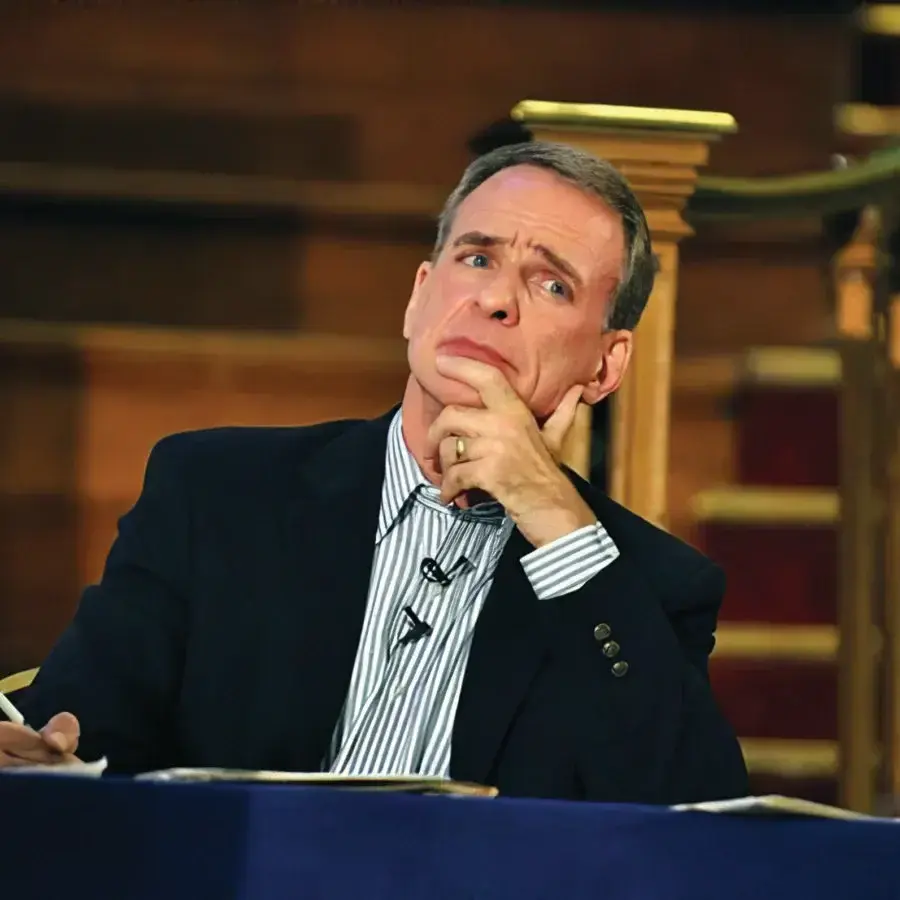
If you’ve been on Christian social media this week, you’ve probably seen it: William Lane Craig — one of the most respected Protestant apologists of our time— flatly denying a core line of the Nicene Creed. In his own words, he does not believe or confess that the Son is eternally begotten from the Father in his divine nature. Human nature, yes. But divine? Nope. For a lot of readers, that’s a jarring sentence. Isn’t “eternally begotten of the Father” literally in the Creed we recite? How can someone who has spent decades defending the resurrection and the existence of God turn around and reject something so central? I want to walk through what’s actually going on here, because it’s more interesting — and older — than a single viral clip suggests. What Craig is actually rejecting The doctrine in question is called eternal generation: the idea that the Son is eternally derived from the Father, “begotten, not made,” sharing the Father’s nature without there ever being a time he didn’t exist. It’s not saying the Son had a beginning; it’s saying the Son’s very being is eternally from the Father, the way light is eternally from the sun. Craig has argued for years, most fully in his paper Is God the Son Begotten in His Divine Nature? (2019), that this idea owes more to Greek philosophical categories borrowed by the second-century Apologists than to anything the biblical writers themselves teach. He calls it a vestige of “Logos Christology” and prefers a model where Father, Son, and Spirit are simply co-equal and co-eternal, without one eternally generating another. William Lane Craig disavows the Nicene Creed Why I think this gets the history backwards Here’s where I’d push back, and where I think this whole debate needs a bit more historical texture than a viral post can give it. Long before Nicaea formalised its language, the earliest post-apostolic Christians were already working with something like what’s called the Monarchy of the Father (or Monarchical Trinitarianism) — a framework that takes the Father’s monarchia (his unique, self-existent source of divinity, or autotheos) seriously as the fountainhead from which the Son is begotten and the Spirit proceeds. This is worth distinguishing carefully from Monarchianism, the second/third-century heresy that collapsed the persons of the Trinity into one another to protect God’s oneness — the Monarchy of the Father is the orthodox opposite of that, affirming three distinct, co-eternal persons while still honouring the Father as their singular source. On this reading, the Son and Spirit aren’t lesser, but they do find the very source of their divinity in the Father — not as effects of a philosophical system layered onto scripture, but as a way of taking John’s own language (the Word who was with God and was God, yet distinct from “the Father”) with full seriousness. That’s the thing I think gets lost when eternal generation gets dismissed as a “leftover.” Logos Christology isn’t an embarrassing accretion — it’s arguably what John 1 is doing from verse one. The Church didn’t import that idea to explain the text; the text seems to be why the Church needed the idea. None of this makes Craig any less serious a thinker, and it’s worth saying plainly: this isn’t the first time he’s stepped outside Nicene orthodoxy — he’s made similar moves on Christ’s two wills (dyothelitism) in the past. But it is, I think, a real departure, not just a “minor unorthodoxy.” Why it matters beyond the argument It would be easy to turn this into another “gotcha” moment — ‘look, even the great apologist gets it wrong!’ I don’t think that’s the right response. Craig has done more than most to defend the reasonableness of the Christian faith to a sceptical world, and disagreeing with him on this doesn’t erase that. But it is a good reminder that ev...
Luke J. Wilson | 27th July 2026 | Archaeology
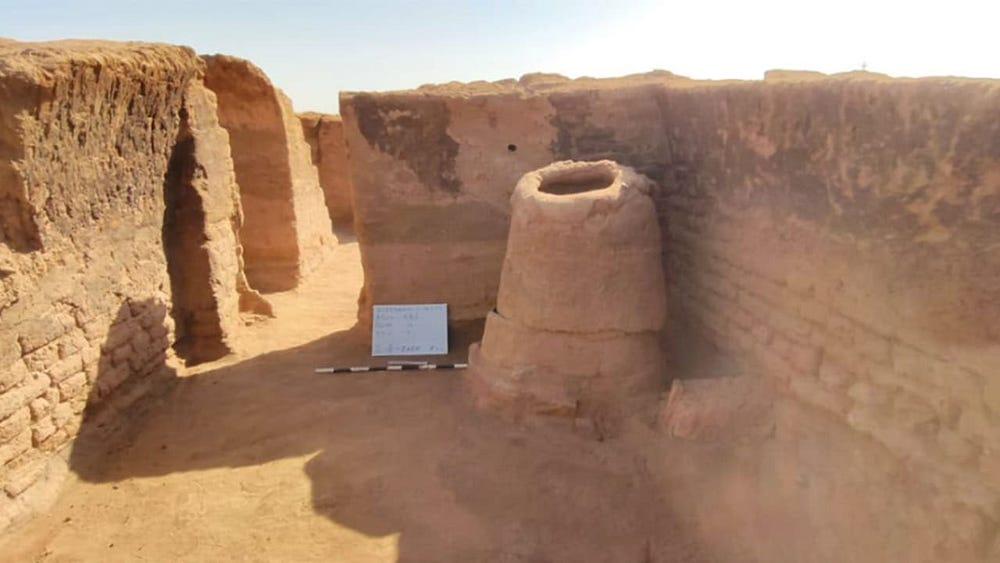
In early July 2026, Egypt’s Ministry of Tourism and Antiquities announced something pretty amazing: an entire Byzantine-era city, buried beneath the sands of the Dakhla Oasis, had been uncovered almost intact! Streets, homes, bread ovens, a fortress, and at its heart, a fourth-century basilica church. That might not seem very exciting on first glance. But this find deserves a closer look, because it puts flesh on something we usually only encounter in the abstract: what it actually looked like when Christianity took root, house by house, in an ordinary town far from the centres of imperial power. What Was Found The excavation, carried out by an Egyptian mission under the Supreme Council of Antiquities at the Ain El-Sabil site in the New Valley Governorate, roughly 185 miles west of Luxor, has been underway for several seasons. According to Hisham El Leithy, secretary-general of the Supreme Council of Antiquities, the settlement was laid out on a deliberate grid — north-south thoroughfares crossed by east-west streets, forming open squares and public spaces. This wasn’t a huddle of huts; it was a planned town. At the centre of that plan stood a basilica church dating to the mid-fourth century AD, overlooking one of the main streets. Around it, archaeologists found the remains of two watchtowers, a heavily fortified structure with thick defensive walls, and houses with spacious reception halls and vaulted roofs — complete with bread ovens, kitchens, and grinding stones for processing grain. Everyday life, preserved almost exactly as it was left. Two houses stand out that have been identified. One belonged to a man named Tisous,* identified as a church deacon, dating to the second half of the fourth century. The other belonged to a man named Tabibos. Over a thousand years later and we know the name of who owned a house and a home-church; I always find it fascinating! Archaeologists believe Tabibos’s house, which dates to the early fourth century, functioned as a house church before the basilica was ever built. A collection of coins bearing Byzantine emperors, Christian symbols and Latin inscriptions was uncovered during the excavation. (Egyptian Ministry of Tourism and Antiquities via Facebook; Dea Picture Library/De Agostini via Getty Images) There’s also a documentary find that’s easy to skim past but genuinely significant: nearly 200 ostraca — broken pieces of pottery and limestone used as everyday writing material — inscribed in Coptic and Greek. Diaa Zahran, head of the Islamic, Coptic and Jewish Antiquities Sector, described them as recording sales transactions, correspondence, and other mundane details of daily life. Things we rarely get a glimpse into as the mundane rarely makes history. Alongside these, the mission recovered a substantial haul of bronze coins bearing Byzantine emperors and Christian symbols, plus gold coins from the reign of Constantius II (337–361 AD) — coinage that anchors the site’s prosperity firmly within the fourth century. Before the Basilica: The House Church at Ain El-Sabil What makes Tabibos’s house the most theologically interesting part of this discovery is timing. If it predates the basilica and dates to the early fourth century, it sits right at — or just before — the pivot point of Roman-Egyptian Christian history: the years surrounding Constantine’s Edict of Milan in 313 AD, when Christianity moved from a persecuted minority faith to a tolerated, and increasingly favoured, one. A time of transition between a house church and a purpose-built basilica when the threat of persecution no longer loomed over the Church. We know from Paul’s letters that the earliest churches met in homes — Romans 16:5 greets “the church in [Prisca and Aquila’s] house,” and similar greetings appear in 1 Corinthians 16:19 and Colossians 4:15. If we were to imagine how a letter from Paul to this house church might...
Luke J. Wilson | 12th March 2026 | Eschatology

Something bizarre happened in the White House Oval Office this week. Photographs circulated on social media showing President Donald Trump seated at his desk, surrounded by approximately twenty Christian pastors from across the country, their hands extended towards him in prayer. The image provoked sharply divided reactions: some saw it as a moving expression of faith; others found it deeply unsettling. Whatever one makes of the optics, it arrived at a charged moment. Trump held a prayer meeting in the Oval Office after his administration admitted the war with Iran will likely last weeks longer than promised | Credit: Dan Scavino's X account Days earlier, reports emerged that a military commander had told troops that the current US war with Iran is “all part of God’s divine plan,” and that President Trump had been “anointed by Jesus to light the signal fire in Iran to cause Armageddon and mark his return to Earth.” These were not fringe internet rumours. They were filed as formal complaints with the Military Religious Freedom Foundation (MRFF) by an anonymous non-commissioned officer acting on behalf of fifteen service members — the majority of whom were themselves Christians. By Tuesday of that week, MRFF had logged more than two hundred similar complaints across fifty military installations, covering every branch of the armed forces. More than two dozen Democratic members of Congress have since called for a Department of Defense Inspector General investigation, citing what they describe as “glaring Constitutional concerns” and potential violations of DoD regulations on religious neutrality. The political questions about separation of church and state in the US are for others to address. What I want to do here is something more straightforward: examine what Revelation actually says, because the theology driving these claims does not hold up under scrutiny. And that matters here a lot; not as a partisan point, but as a question of biblical faithfulness. First, a Word About Context If you have read my previous article on Revelation some of what follows will be familiar ground. But it bears repeating, because the misunderstanding at the heart of this story is so widespread that it has taken on the feel of settled orthodoxy in many circles. The Book of Revelation is commonly thought to be written in the late first century ~95 AD, during or around the reign of Emperor Domitian. Though there is internal evidence that it was possibly written during Nero’s reign prior to 70 AD. Both of these emperors were most aggressive proponents of the imperial cult in Rome’s history. Domitian required that he be addressed as “lord and god,” had this title printed on coinage, and expected acts of religious reverence towards the Emperor as a demonstration of political loyalty. To refuse was to invite economic exclusion, marginalisation, and worse. Rome on seven hills It is into that precise context that John of Patmos writes. He is not composing a coded forecast of twenty-first century geopolitics. He is writing resistance literature — what scholars call apocalyptic literature — a well-established Jewish and early Christian genre which uses vivid symbolic imagery to pull back the curtain on earthly power and name it for what it truly is. The seven-headed beast of Revelation is Rome. The seven heads are the seven hills of Rome, an identification so widely acknowledged in early church scholarship that it barely requires argument. The mark of the beast, calculated through Hebrew gematria to 666 (or 616 in some early manuscripts), points directly to Nero Caesar (transliterated into Hebrew as נרון קסר, “nrwn qsr”) — the Emperor who became the archetype of anti-Christian persecution due to the levels of evilness he enacted. The second beast, which looks like a lamb but speaks for the dragon, performs signs to deceive, enforces the mark, and compels worship of the first beas...
Luke J. Wilson | 22nd November 2025 | Persecution

Every now and then something happens in this country that feels small on the surface but carries a deeper spiritual weight beneath it. In this case it comes from a Labour council just outside of London when in March of this year, Rushmoor Borough Council attempted to criminalise Christian street preaching. The injunction has thankfully been paused (for now) as Christians rallied, prayed, and pushed back. But the implications of what nearly happened, and could still happen, should give all of us pause. Because once one council tries something like this, others start paying attention. A precedent has been set — not necessarily in law, but in what could be. Someone, somewhere, will look at Rushmoor’s attempt and think, perhaps this is the way to make Christianity quiet again. The Quiet Re-emergence of Old Hostilities We tend to imagine persecution as something ancient or foreign. Lions, arenas, emperors, gulags, terror attacks in far off countries. And sure, we here in the UK are not shedding literal blood for the Gospel, but that doesn’t mean persecution has vanished. It has simply changed shape. Instead of swords and prisons, we face restrictions and injunctions. Instead of mobs dragging believers through the streets, councils draft documents that treat prayer, worship, and evangelism as public threats. The methods have changed, but the intent remains strangely familiar: to push the Gospel to the margins, to confine it to the private sphere, and to make public displays of faith something suspicious, weird, and even harmful. If Rushmoor’s injunction had gone through, it would have made praying with someone in town square, even holding out a leaflet, something punishable by fines or prison time. No blood shed, but freedom restricted and removed. No martyrdom, but the same coercive pressure to be silent. Succumb to Caesar (the local council) or face death (prison/fines etc). History Teaches Us Something the Councils Have Forgotten Whenever authorities have attempted to stifle Christianity, something remarkable has happened: the Church has not faded away, but grown. Opposition has never extinguished faith; instead, it has refined it, purified it, strengthened it. Tertullian famously wrote, “The blood of the martyrs is the seed of the Church.” And while no one in Britain today is being asked to spill blood for Christ, the principle still holds. Pressure produces depth. Threats produce courage. Restrictions produce creativity. This is where real faith takes hold and grows! When believers are told to stop preaching, they remember why they preach. When prayer is threatened, prayer increases. When the gospel is pushed out of the public square, Christians step back into it with clarity and resolve. It’s ironic, really. When the world tries to silence the Church, it ends up drawing attention to the very message it wants to suppress. The Real Danger: Not the Injunction Itself, But What Comes Next The paused injunction in Rushmoor is not the end of the story. If anything, it is the prologue. Because we are now entering a season where councils and governments — pressured by secular expectations and political anxieties — may test the boundaries of religious freedom in ways that would have been unthinkable twenty years ago. Once you try to criminalise prayer in public, the next attempt becomes easier. And we’ve already seen examples of this with the so-called “buffer zones” around abortion clinics. Once preaching is labelled “hateful,” more restrictions feel reasonable. A few street preachers have already been arrested this year already. Once a council decides that worship and prayer is “distressing”, others will wonder if they should follow suit. This is how liberties are lost: not in a single moment, but through a drip-feed of small decisions that gradually reshape what is considered normal. That is why Christians cannot afford to shrug this off as a local issue. It is a signpost...
Recent Posts
Luke J. Wilson | 25th August 2026 | William Lane Craig
If you’ve been on Christian social media this week, you’ve probably seen it: William Lane Craig — one of the most respected Protestant apologists of our time— flatly denying a core line of the Nicene Creed. In his own words, he does not believe or confess that the Son is eternally begotten from the Father in his divine nature. Human nature, yes. But divine? Nope. For a lot of readers, that’s a jarring sentence. Isn’t “eternally begotten of the Father” literally in the Creed we recite? How can someone who has spent decades defending the resurrection and the existence of God turn around and reject something so central? I want to walk through what’s actually going on here, because it’s more interesting — and older — than a single viral clip suggests. What Craig is actually rejecting The doctrine in question is called eternal generation: the idea that the Son is eternally derived from the Father, “begotten, not made,” sharing the Father’s nature without there ever being a time he didn’t exist. It’s not saying the Son had a beginning; it’s saying the Son’s very being is eternally from the Father, the way light is eternally from the sun. Craig has argued for years, most fully in his paper Is God the Son Begotten in His Divine Nature? (2019), that this idea owes more to Greek philosophical categories borrowed by the second-century Apologists than to anything the biblical writers themselves teach. He calls it a vestige of “Logos Christology” and prefers a model where Father, Son, and Spirit are simply co-equal and co-eternal, without one eternally generating another. William Lane Craig disavows the Nicene Creed Why I think this gets the history backwards Here’s where I’d push back, and where I think this whole debate needs a bit more historical texture than a viral post can give it. Long before Nicaea formalised its language, the earliest post-apostolic Christians were already working with something like what’s called the Monarchy of the Father (or Monarchical Trinitarianism) — a framework that takes the Father’s monarchia (his unique, self-existent source of divinity, or autotheos) seriously as the fountainhead from which the Son is begotten and the Spirit proceeds. This is worth distinguishing carefully from Monarchianism, the second/third-century heresy that collapsed the persons of the Trinity into one another to protect God’s oneness — the Monarchy of the Father is the orthodox opposite of that, affirming three distinct, co-eternal persons while still honouring the Father as their singular source. On this reading, the Son and Spirit aren’t lesser, but they do find the very source of their divinity in the Father — not as effects of a philosophical system layered onto scripture, but as a way of taking John’s own language (the Word who was with God and was God, yet distinct from “the Father”) with full seriousness. That’s the thing I think gets lost when eternal generation gets dismissed as a “leftover.” Logos Christology isn’t an embarrassing accretion — it’s arguably what John 1 is doing from verse one. The Church didn’t import that idea to explain the text; the text seems to be why the Church needed the idea. None of this makes Craig any less serious a thinker, and it’s worth saying plainly: this isn’t the first time he’s stepped outside Nicene orthodoxy — he’s made similar moves on Christ’s two wills (dyothelitism) in the past. But it is, I think, a real departure, not just a “minor unorthodoxy.” Why it matters beyond the argument It would be easy to turn this into another “gotcha” moment — ‘look, even the great apologist gets it wrong!’ I don’t think that’s the right response. Craig has done more than most to defend the reasonableness of the Christian faith to a sceptical world, and disagreeing with him on this doesn’t erase that. But it is a good reminder that ev...
Guest Author | 31st July 2026 | Prayer

Guest Post By Fiach OBroin-Molloy My own roots lie in the Catholic tradition, but my workbench has brought me into contact with Christians whose devotional lives differ from mine. I make Catholic rosaries, Anglican prayer beads and other forms of devotional beads by hand. That work has not taught me that distinctions between traditions do not matter. It has taught me that, beneath those distinctions, many of us know the same difficulty: we want to pray, but our attention is restless. I have travelled, lived and worked in a number of countries, from parts of Africa to countries further east. Again and again, I encountered beads or knotted cords held, counted or carried in prayer. The words, beliefs and purposes were not the same, and I would not flatten them into one vague spirituality. What stayed with me was the recurring human instinct to give devotion rhythm and weight—to let the body help the mind and heart remain present. For a Christian, however, that instinct is gathered into a particular faith—the faith confessed in the creeds. Our prayer is addressed to the God made known as Father, Son and Holy Spirit. It is shaped by Scripture and centred on Jesus Christ, the Word made flesh, crucified and risen. Prayer beads do not broaden that confession into something less definite. At their best, they help us stay with it. A faith that takes flesh seriously Christian prayer is never only an activity of the mind. We speak and sing. We stand, kneel and bow. We fold our hands, make the sign of the cross, and receive bread and wine. The Christian faith does not ask us to escape being embodied creatures. At its centre is the astonishing declaration that the Word became flesh and dwelt among us (John 1:14). Material things are not God, but they can serve our attention to God. That is the modest place in which I understand prayer beads. They do not create faith, improve the words of Scripture or make prayer more sincere. They simply give the hands something quiet to do while the heart and mind try to remain present. As a maker, I think about weight, texture, spacing and movement. A bead should pass naturally beneath the thumb. The cord or chain should be strong enough to be returned to repeatedly. A good set of prayer beads should not continually demand admiration for itself. Its purpose is to become quiet in the hand. Over time, beads polish, wood darkens and metal takes on the small marks of use. I rarely know the prayers that have been said with something I have made, but sometimes its wear tells me that it has been held often. That is a different kind of beauty from newness: not decoration, but evidence of return. What the hands bring to Scripture Lectio Divina invites us to read Scripture slowly and receptively. Luke J. Wilson has written much more fully about its four movements—reading, meditation, prayer and contemplation—and I would not try to redefine that teaching here. What interests me as a maker is the point at which a reader’s hand might support that attention. Most of us have become highly practised at moving quickly through words. We skim messages, headlines and pages, often looking for the next piece of information before we have received the one in front of us. Sacred reading asks something different. It asks us to stay. A bead introduces a small resistance to speed. It marks a pause and gives us somewhere to return when the mind has already hurried ahead. The Anglican prayer beads I make contain a cross, an invitatory bead, four cruciform beads and four groups of seven, often called weeks. I know that structure first through the work of my hands, not because I would presume to tell Anglicans how they ought to pray. What strikes me about it is its spaciousness: there are landmarks, passages and repeated opportunities to return to the cross. One possible practice would be to choose a short passage from the Gospels. At the cross, the reader might remember that Christ is the centre of the reading. ...
Luke J. Wilson | 29th July 2026 | Faith & Reason

��Pilate asked him, ‘What is truth?’ (John 18:38) What is “truth”? A question famously asked by Pilate to Jesus during his trial. Ironically, Pilate was speaking to the embodiment of Truth itself. John 14:6Jesus said to him, ‘I am the way, and the truth, and the life.’ Here’s a little ‘riddle’ to think about while you read this; see if you agree or not: “all truth is fact, but not all facts are truth”. I’ll explain it at the end if you’re confused. Jesus is the ultimate Truth, but in a world and society that is becoming increasingly more relative, how do we test the truth and know what’s real or not? Especially with the sudden rise of AI video and photos getting more and more realistic, that old adage “the camera never lies” is completely false now. This makes sifting and filtering facts from fiction on social media all the more difficult. Memes and images are shared stating claims bluntly and authoritatively as truth, which people just assume are accurate and then share it hundreds of thousands of times. Truth has been replaced by opinion masquerading as truth. “Your truth”, “my truth”, “their truth”. But we can’t just blindly accept everything we see and are told. We must use our brains, check the sources and use our reasoning. God gave us intellect and reasoning to be used. In Isaiah 1:18, God invites us to come and reason together with him. We don’t follow a blind faith, we’re never asked to believe “just because”. The Old Testament is full of times when the historical examples of God’s actions are used as an anchor and reason for faith, and the same is true in the New Testament where we have the Gospels as eyewitness accounts, rooted in history. Paul writes to say that 500 people saw the risen Christ and that many are still alive so you can go and verify it for yourself and that he is passing on what he received from trusted people. The resurrection itself is grounded in it being a real event that if shown otherwise would make our faith “futile” and that we would be people to be most pitied. 1 Corinthians 15:17“If Christ has not been raised, your faith is futile and you are still in your sins.” So with this in mind about our faith being grounded, all the more we should aim to do the same in other aspects of our lives. “Do your own research” is a common mantra online, but that in itself isn’t just Googling something and taking the first result that pops up. Especially now as most search engines give an AI overview first, which is just a compilation of the top results, not anything verified or fact-checked. And top results don’t always mean best results, or even accurate results. It typically just means the best keyworded and SEO-optimised result, which could be anything. To properly research, you must know which are trusted sources, reputable websites as well as looking up people who are experts and authorities in their fields. Now this doesn’t always mean they are right but at least you’ll be better informed to make up your own mind and make decisions based on well-researched information, rather than the first blog you find online, or the most viewed YouTube video with someone yelling “facts” at you. Doing your own research means doing the leg-work in tracing down sources and footnotes and citations to see who said what and where it originated to ensure its faithful and trustworthy, and used in context. The answer and example of the riddle The “Black Swan Problem” Strictly speaking, it highlights the difference between observed facts and absolute truth: The “Fact” (at the time): For thousands of years, every recorded, verified observation of a swan in Europe was white. As far as European zoologists were concerned, “all swans are white” was a well-documented, empirically backed fact. The Truth: Millions of black swans were happily swimming around in Western Australia. The truth was always that black swan...
Luke J. Wilson | 27th July 2026 | Archaeology
In early July 2026, Egypt’s Ministry of Tourism and Antiquities announced something pretty amazing: an entire Byzantine-era city, buried beneath the sands of the Dakhla Oasis, had been uncovered almost intact! Streets, homes, bread ovens, a fortress, and at its heart, a fourth-century basilica church. That might not seem very exciting on first glance. But this find deserves a closer look, because it puts flesh on something we usually only encounter in the abstract: what it actually looked like when Christianity took root, house by house, in an ordinary town far from the centres of imperial power. What Was Found The excavation, carried out by an Egyptian mission under the Supreme Council of Antiquities at the Ain El-Sabil site in the New Valley Governorate, roughly 185 miles west of Luxor, has been underway for several seasons. According to Hisham El Leithy, secretary-general of the Supreme Council of Antiquities, the settlement was laid out on a deliberate grid — north-south thoroughfares crossed by east-west streets, forming open squares and public spaces. This wasn’t a huddle of huts; it was a planned town. At the centre of that plan stood a basilica church dating to the mid-fourth century AD, overlooking one of the main streets. Around it, archaeologists found the remains of two watchtowers, a heavily fortified structure with thick defensive walls, and houses with spacious reception halls and vaulted roofs — complete with bread ovens, kitchens, and grinding stones for processing grain. Everyday life, preserved almost exactly as it was left. Two houses stand out that have been identified. One belonged to a man named Tisous,* identified as a church deacon, dating to the second half of the fourth century. The other belonged to a man named Tabibos. Over a thousand years later and we know the name of who owned a house and a home-church; I always find it fascinating! Archaeologists believe Tabibos’s house, which dates to the early fourth century, functioned as a house church before the basilica was ever built. A collection of coins bearing Byzantine emperors, Christian symbols and Latin inscriptions was uncovered during the excavation. (Egyptian Ministry of Tourism and Antiquities via Facebook; Dea Picture Library/De Agostini via Getty Images) There’s also a documentary find that’s easy to skim past but genuinely significant: nearly 200 ostraca — broken pieces of pottery and limestone used as everyday writing material — inscribed in Coptic and Greek. Diaa Zahran, head of the Islamic, Coptic and Jewish Antiquities Sector, described them as recording sales transactions, correspondence, and other mundane details of daily life. Things we rarely get a glimpse into as the mundane rarely makes history. Alongside these, the mission recovered a substantial haul of bronze coins bearing Byzantine emperors and Christian symbols, plus gold coins from the reign of Constantius II (337–361 AD) — coinage that anchors the site’s prosperity firmly within the fourth century. Before the Basilica: The House Church at Ain El-Sabil What makes Tabibos’s house the most theologically interesting part of this discovery is timing. If it predates the basilica and dates to the early fourth century, it sits right at — or just before — the pivot point of Roman-Egyptian Christian history: the years surrounding Constantine’s Edict of Milan in 313 AD, when Christianity moved from a persecuted minority faith to a tolerated, and increasingly favoured, one. A time of transition between a house church and a purpose-built basilica when the threat of persecution no longer loomed over the Church. We know from Paul’s letters that the earliest churches met in homes — Romans 16:5 greets “the church in [Prisca and Aquila’s] house,” and similar greetings appear in 1 Corinthians 16:19 and Colossians 4:15. If we were to imagine how a letter from Paul to this house church might...

Powered by WebBoss.io 3.7.1
Copyright © 2026 The Sacred Faith: Timeless Truths for Modern Minds. All Rights Reserved.
