
Blog Search Results


23 results for passover lamb
found
within the Blog
6 displayed out of 23 (0.36seconds)Page 3 of 4

Does Christmas have pagan origins?
Posted by Luke J. Wilson on 19th December 2019 in Christmas | christmas,xmas,origins,pagan,pagan roots,church fathers,church history,Saturnalia,Epiphany,Annunciation,Tertullian,Origen,john chrysostom,incarnation,liturgical calendar,church calendar,festivals
For most people, the question of the origins of Christmas is probably far from their minds. Some may recognise and give a cursory glance towards the Biblical narrative on the birth of Jesus as something to do with it (although a 2017 study showed that almost 1 in 20 Brits thought Easter was the birth of Jesus!);—but in some Christian circles the question (accusation?) that “Christmas is pagan” is at the forefront of their minds.
Table of Contents
When was December 25th celebrated?
The Christian Calendar
Concluding Thoughts
Bonus Information
Further Reading & Sources:
As time goes on and we move further and further into the future,...
An Examination of Conditional Immortality (Part Two)
Posted by Luke J. Wilson on 3rd July 2021 in Hell | hell,theology,conditional immortality,annihilationism
Welcome to Part Two of my study and examination of Conditional Immortality (aka Annihilationism). If you missed part one, you can read that one here.
As with part one, this will be a long post as there is still much ground to cover before we can really grasp the bigger picture about what Scripture teaches. So with that said, I’ll pick right up where we left off. In part one, I covered a lot of New Testament texts, a few Old Testament passages, plus a look at what some of the earliest church leaders also wrote on the topic to the early church. In this one, we will be looking at a few more Old Testament examples and how they relate to the imagery used in Revela...
Lent: Day 16 - Justin Martyr: First Apology, Chaps. 48-59
Posted by Luke J. Wilson on 18th March 2017 in Lent | Lent,great lent,fasting,early church fathers,devotional,daily reading,Justin Martyr,apologetics
Day Sixteen: St. Justin Martyr: First Apology, Chaps. 48-59
Who: Justin Martyr was a Philosopher who converted to Christianity and became a tireless evangelist and apologist. Justin wrote more Christianity than any other person prior to his time. He is classified herein as Eastern, since he a native of Samaria and his thought patterns were Eastern. However, he spent the last years of his life in Rome, where he was executed as a martyr (c. 165).
What: An apologetic (defence) essay to explain what Christians believe and do.
Why: Justin is demanding the Emperor to investigate accusations and unjust persecution against Christians so that they at least may face...
Lent Day 30: Cyril of Jerusalem: Catechetical Lectures: Lecture XIX
Posted by Luke J. Wilson on 4th April 2017 in Lent | Lent,great lent,fasting,early church fathers,devotional,daily reading,Doctor of the Church,lectures,liturgy,catechism,Bishop of Jerusalem
Day Thirty: St. Cyril of Jerusalem: Catechetical Lectures: Lecture XIX
Who: Bishop of Jerusalem and Doctor of the Church, born about 315; died probably 18 March, 386. Little is known of his life, except from his younger contemporaries, Epiphanius, Jerome, and Rufinus, as well as from the fifth-century historians, Socrates, Sozomen and Theodoret.
What: Each of the lectures deal with a different topic to teach converts the mysteries of the Church, particularly: rites of the renunciation of Satan and his works, of anointing with oil, of baptism, of anointing with the holy chrism, and of partaking of the body and blood of Christ.
Why: Cyril delivered to new conve...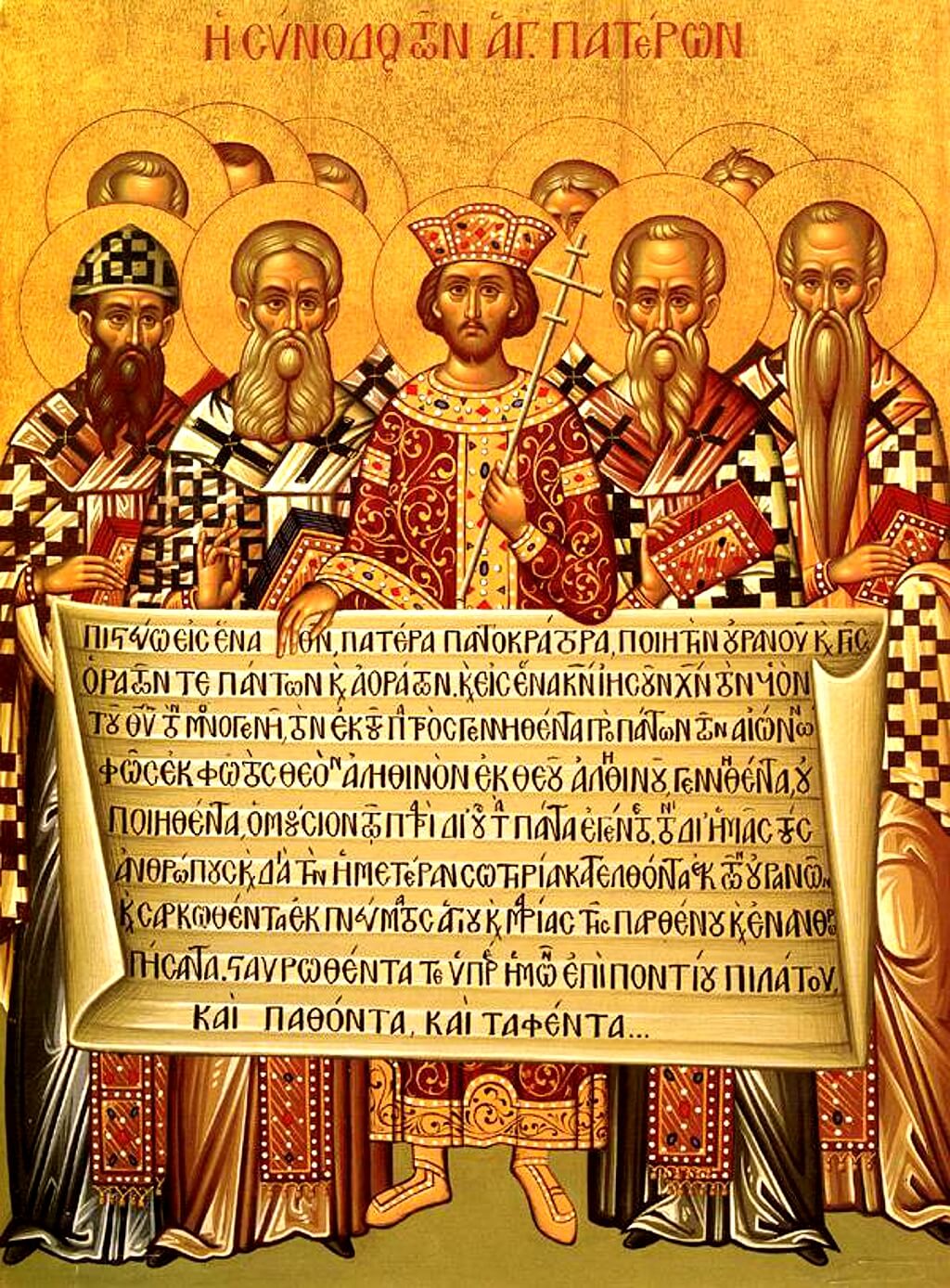
Creedal Christians: The Nicene Creed
Posted by Luke J. Wilson on 2nd June 2019 in Early Church | nicene creed,nicea council,creeds,creedal christians,creedal
The Nicene Creed — what is it and why is it called that?
This creed gets its name from a time and place: the first ecumenical Church council held at Nicaea, which is now known as İznik in northwestern Turkey, in 325 AD.
Now that may raise another question for you: what is an ecumenical council? Well, to explain more about the Nicene Creed, we are going to have to take a look at The First Council of Nicaea in order to better understand why this creed was written.
First things first though; an “ecumenical council” is ideally a Church-wide meeting where all the Bishops from all across the Church come together to hold a very large and very important meetin...
The Coming of Jesus: The Olivet Discourse – Part 1
Posted by Luke J. Wilson on 19th October 2014 in Second Coming Series | Second Coming,Return of Christ,Return of Jesus,Preterism,Prophecy,Last Days,Left Behind,Eschatology,Matthew 24,Olivet Discourse,birth pangs,Josephus,history
Hello again, it's been a while since I've wrote anything, and longer since getting back to this series on the Second Coming of Jesus. This isn't for lack of motivation, but rather because this is such a huge topic that I've been reading and thinking about this next part for a very long time to make sure I know what I'm saying, and am well read enough to do the topic justice. Having said that, there will always be far more to say on this than I can give time for here, but I hope to give enough of an overview to expound this prophecy faithfully without being too technical as to cause confusion! You can also catch up on the previous parts...
Powered by WebBoss.io 3.7.1
Copyright © 2026 The Sacred Faith: Timeless Truths for Modern Minds. All Rights Reserved.
