
Blog Search Results


43 results for tradition
found
within the Blog
6 displayed out of 43 (0.04seconds)Page 3 of 8

How Old Was Jesus When He Died? A Fresh Look At The Historical Clues
Posted by Luke J. Wilson on 9th April 2025 in History | history,church fathers,church history,Jesus,crucifixion
...solely on tradition and assumptions, and piece together what the Gospels, early Church Fathers, historical data, and even astronomy can tell us about the potential age of Jesus and the length of his ministry.
What follows is a deeper, richer look at the life and death of Jesus and what we can learn by following the evidence.
The Gospel of Luke: “About Thirty”
Luke 3:23 tells us plainly:
Jesus was about thirty years old when he began his work.
This statement has historically been the anchor point for dating Jesus’ ministry. Most take this to mean he was around 30 at his baptism, which marked the beginning of his public ministry. Something to bear i...
Does Christmas have pagan origins?
Posted by Luke J. Wilson on 19th December 2019 in Christmas | christmas,xmas,origins,pagan,pagan roots,church fathers,church history,Saturnalia,Epiphany,Annunciation,Tertullian,Origen,john chrysostom,incarnation,liturgical calendar,church calendar,festivals
...the pagan traditions dedicated to idols?
We may not join in their feasts, which are celebrated in honour of demons. — Apostolic Constitutions, ~390 AD
The Christian Calendar
So what was this calendar which Tertullian mentioned? Well, it was something fairly well-established before this point in time, as Christians had been celebrating Easter (or Pascha) and Pentecost pretty much since the birth of the Church.
If the apostle has erased all devotion absolutely of “seasons, days, months and years”, why do we celebrate Easter by an annual rotation in the first month? Why in the fifty ensuing days do we spend our time in all exultation? Why do we …...
The Coming of Jesus: Revelation Fulfilled?
Posted by Luke J. Wilson on 31st December 2015 in Second Coming Series | Revelation,Second Coming,Preterism,apocalypse,armageddon,fulfilled prophecy,Return of Christ,Return of Jesus,Eschatology
...istorical tradition and writings saying that Paul was martyred under Nero’s reign around 67 or 68 AD, which means if he followed “his predecessor” John, Revelation must have been written before 70 AD!
There’s also one other reference which offers some insight (though is quite hard to find many sources on), in which the Syriac Vulgate Bible from the sixth century has an opening title to Revelation as follows: "The Apocalypse of St. John, written in Patmos, whither John was sent by Nero Caesar."
The late date theory is mainly due to a single quote by Irenaeus (plus a couple of other historical references about John which indirectly impact the early d...
Great Lent: The Season of Fasting
Posted by Luke J. Wilson on 13th February 2016 in Lent | Lent,Easter,Fasting,Prayer,early church,early church fathers,paganism,pagan roots
...Fasting
A spiritual and physical discipline
If you are looking for a Lenten reading plan, make sure to check out my book, 40 Days with the Fathers: A Journey Through Church History, which will take you through the first 400 years of church history in forty days!
Lent is upon us once again (according to Western tradition), and so I thought it’d be good to write something on the discipline of fasting, which is often neglected or overlooked in many Protestant churches.
And much like any major holiday, there is the usual arguments and accusations about how it's all just pagan festivities with a "Christian mask". Easter is no different, and usually gets hit...
From Dust to Redemption: The Meaning of Ash Wednesday
Posted by Luke J. Wilson on 5th March 2025 in Lent |
...Ash Wednesday marks the beginning of Lent, a season of repentance, fasting, and preparation for Easter in the Christian calendar. It is observed by many Western Christian traditions, including the Roman Catholic Church, Anglican Communion, Lutheran churches, and some Methodist and Reformed communities. The day falls 46 days before Easter Sunday and is always on a Wednesday.
Origins and Historical Development
The practice of Ash Wednesday can be traced back to the early centuries of Christianity, though its formal observance developed over time. The use of ashes as a sign of repentance has deep biblical roots, appearing frequently in the Old Testament. People w...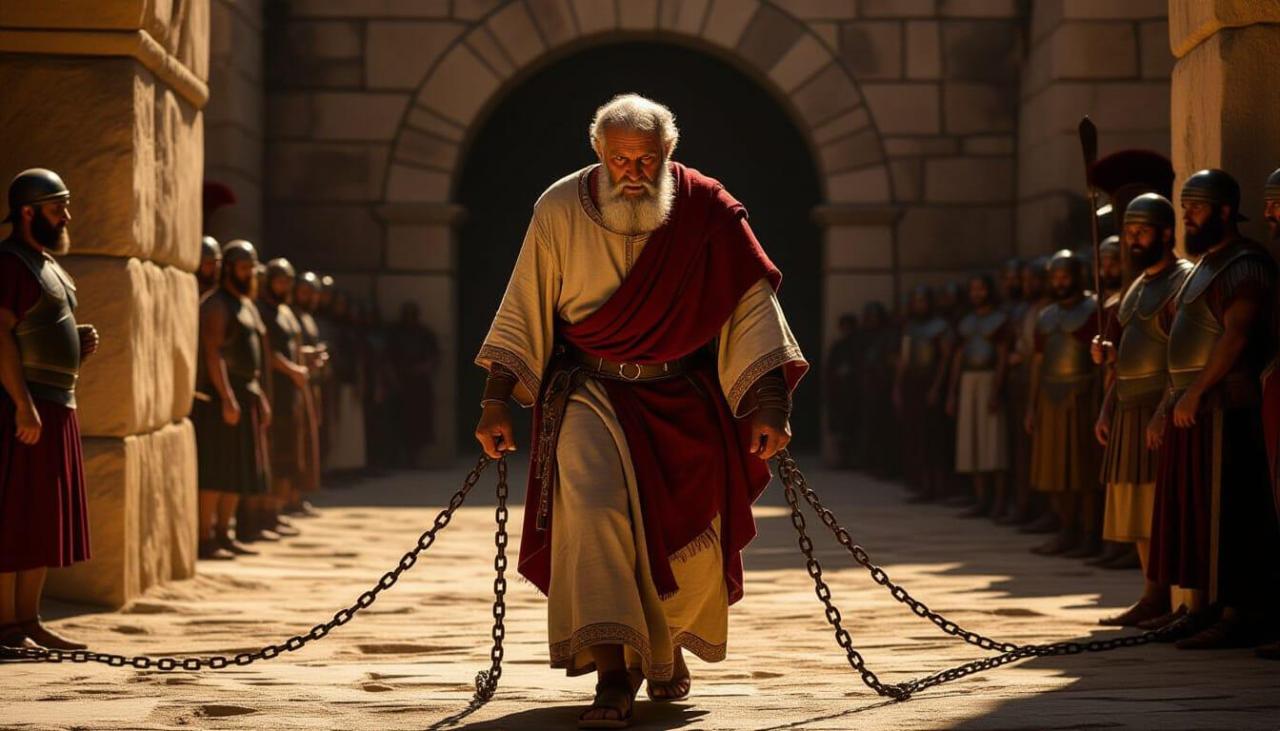
Before The Pumpkins: The Road To The Lions
Posted by Luke J. Wilson on 20th October 2025 in Halloween | ignatius,Ignatius of antioch,martyrdom,martyr,religion,halloween
...ustworthy tradition 4tells us that he was a disciple of the Apostle John, and this lineage can be felt in his writings. His letters echo the same themes and emphasis on Christ as John does in his Gospel around the incarnation, never failing to highlight the physical nature of Jesus as well as his divine which can be seen with such statements like “Jesus Christ our God” (Epistle to the Ephesians).
During the reign of Emperor Trajan (around AD 107), Christians were increasingly viewed as enemies of the Roman order. Refusing to worship the emperor was seen as defiance, and Ignatius, as one of the most visible leaders of the Church, became a prime target. He wa...
Powered by WebBoss.io 3.7.1
Copyright © 2026 The Sacred Faith: Timeless Truths for Modern Minds. All Rights Reserved.
