
Blog Search Results


52 results for worship
found
within the Blog
6 displayed out of 52 (0.03seconds)Page 3 of 9
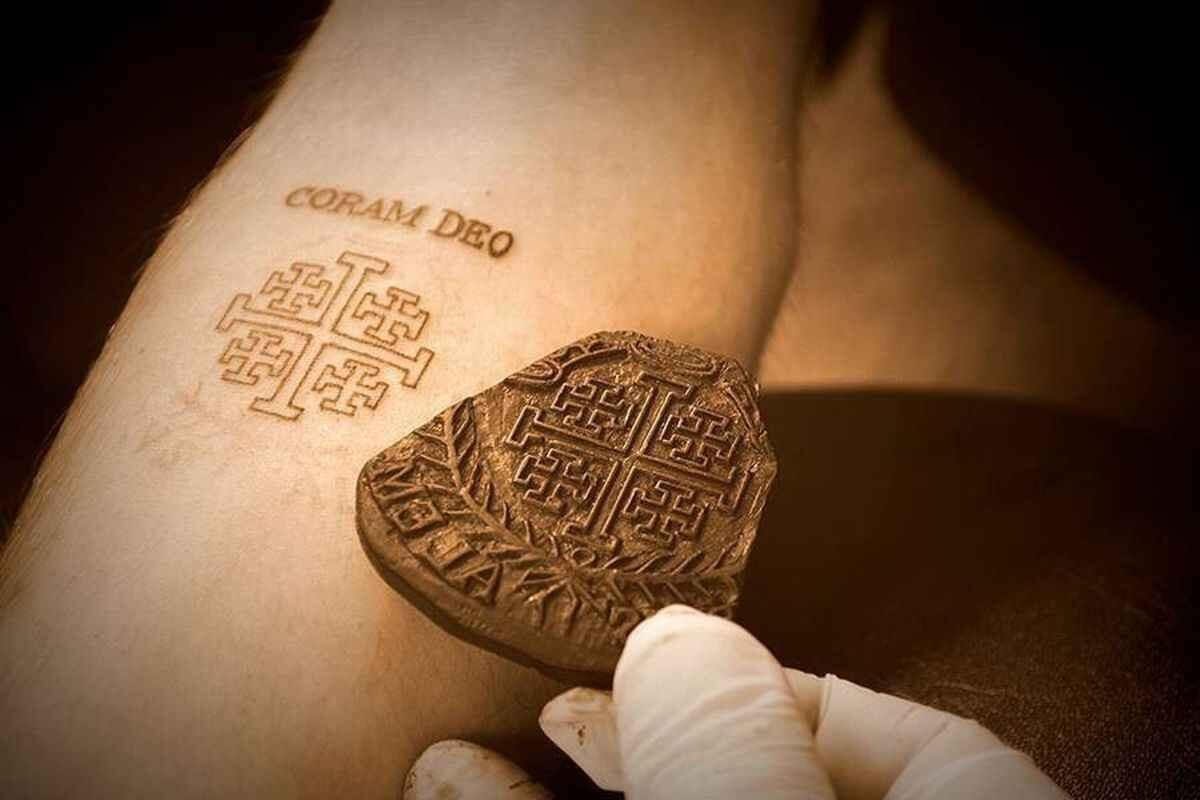
Should Christians get tattoos, and is it Biblical?
Posted by Luke J. Wilson on 31st August 2019 in Tattoos | tattoos,church history,Basil the Great,Leviticus,Old Testament
...s part of worship, as we see with the Baal priests who went up against Elijah in 1 Kings 18). The language used in these other passages of Scripture throughout the Old Testament is similar to that of Leviticus 19 and so we begin to see a theme here which the Law book was most likely also speaking against, rather than just being against body decoration in general.
So can a Christian get a tattoo?
Having said all that, and much of this restriction is from an Old Testament Law perspective, where does that leave Christians today? Since the prohibitions from the Law were in relation to pagan worship and mourning rituals, tattoos for God’s glory and worship shoul...
Does Christmas have pagan origins?
Posted by Luke J. Wilson on 19th December 2019 in Christmas | christmas,xmas,origins,pagan,pagan roots,church fathers,church history,Saturnalia,Epiphany,Annunciation,Tertullian,Origen,john chrysostom,incarnation,liturgical calendar,church calendar,festivals
...vertently worshipping “the birthday of the Unconquered Sun” (Dies Natalis Solis Invicti) when you celebrate on the 25th of December?
Let’s trace a little bit of history and see how the early church viewed these festivals, as they were still happening in full force whilst the Church was still young and were a contemporary concern, and what date they pinned the birth of Christ on to.
Much of the earliest references to the Nativity occur in a passing way as a commentary on the event rather than anything celebratory about it. Justin Martyr in his First Apology (~160 AD) mentions that Jesus was born 150 years before him, in the time of Quirinius (or Cyrenius...
Did the Early Church invent the Trinity?
Posted by Luke J. Wilson on 4th January 2022 in Trinity | early church,trinity,church fathers,theology,council of nicaea,nicea council
...easonably worship Him, having learned that He is the Son of the true God Himself, and holding Him in the second place, and the prophetic Spirit in the third, we will prove. For they proclaim our madness to consist in this, that we give to a crucified man a place second to the unchangeable and eternal God, the Creator of all… — First Apology 13:5–6, ~A.D. 150
Martyrdom Of Polycarp (c. 155)
[Christ] who is the Son of God, we worship, but the martyrs we love as disciples and imitators of the Lord — Martyrdom Of Polycarp 17:3, ~ A.D. 155
Theophilus of Antioch (c. 170)
In like manner also the three days which were before the luminaries, are ty...
Melchizedek to Jesus: The Divine Thread of Bread and Wine
Posted by Luke J. Wilson on 27th June 2024 in Eucharist | eucharist,Melchizedek,bread of life
...esent-day worship. Despite the number of kings fighting all across Canaan, Melchizedek doesn’t appear to be a part of these conflicts and only enters the scene when it’s all over, and Abram has rescued Lot and subdued the king who captured Sodom. Then “the king of Sodom went out to meet [Abram] at the Valley of Shaveh, that is, the King’s Valley.” (Gen 14:17), which is modern-day Kidron Valley, just outside of Jerusalem. So the meeting was local and close to Melchizedek, but still doesn’t explain what happens next to Abram:
Genesis 14:18–20And King Melchizedek of Salem brought out bread and wine; he was priest of God Most High. He blessed him and...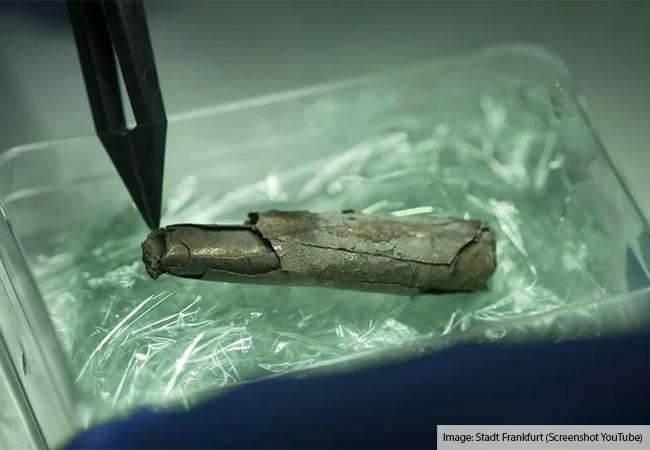
Implications Of The Frankfurt Silver Amulet: Insights Into Early Christian Practice And Belief
Posted by Luke J. Wilson on 6th January 2025 in Archaeology | amulet,liturgy,history,current events,early church
...Christian worship in the 4th and 5th centuries, with practices such as the commemoration of martyrs, the dedication of churches to saints, and the belief in their intercessory power. The earliest documented evidence of this practice, including the veneration of relics and the dedication of feast days, often centres on martyrs who bore witness to their faith during times of persecution.
However, the invocation of St. Titus in the “Frankfurt Silver Inscription” predates these later developments by over a century, suggesting that the practice of seeking the intercession or spiritual protection of saints may have roots earlier than traditionally believed. This...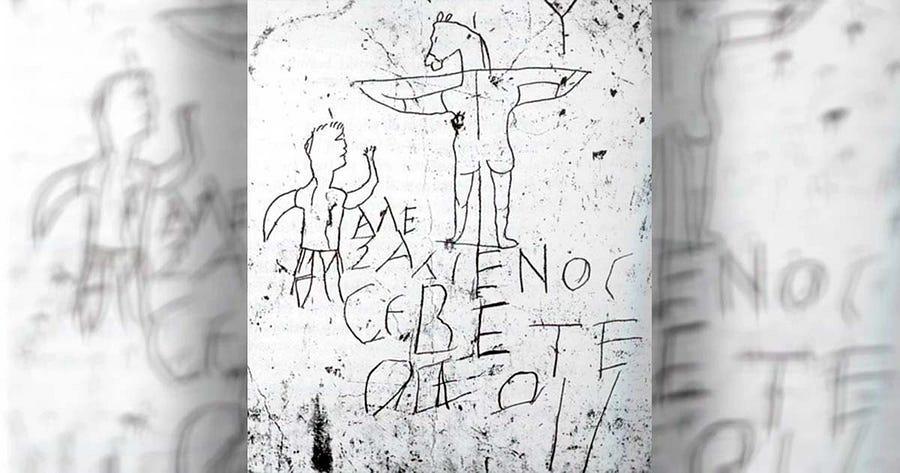
The World's Oldest Anti-Christian Meme
Posted by Luke J. Wilson on 9th March 2026 in Archaeology | Alexamenos graffito,archaeology,history
...esture of worship. Before him is a cross. And on that cross is a crucified figure with the head of a donkey.
Below it, written in Greek: Alexamenos worships his god.
It is, in the most literal sense, a mocking cartoon. Someone who knew a Christian named Alexamenos decided to ridicule him for his faith. The message is clear enough: your god is an animal, a criminal, a joke. You’re worshipping a crucified fool.
But here’s the thing I discovered: the donkey head wasn’t as random as I always thought it was. It wasn’t some strange personal insult conjured from nowhere. Without knowing the background, it looks bizarre, and possibly random. Why a donkey? Onc...
Powered by WebBoss.io 3.7.1
Copyright © 2026 The Sacred Faith: Timeless Truths for Modern Minds. All Rights Reserved.
