Blog Search Results


Did you mean:
jesus death
?
191 results for Jesus death
found
within the Blog
6 displayed out of 191 (0.82seconds)Page 30 of 32

Lent Day 34: Cyril of Jerusalem: Catechetical Lectures: Lecture XXIII
Posted by Luke J. Wilson on 8th April 2017 in Lent | Lent,great lent,fasting,early church fathers,devotional,daily reading,Doctor of the Church,lectures,liturgy,catechism,Bishop of Jerusalem,Eucharist,Lord's Prayer
Day Thirty-four: St. Cyril of Jerusalem: Catechetical Lectures: Lecture XXIII
Who: Bishop of Jerusalem and Doctor of the Church, born about 315; died probably 18 March, 386. Little is known of his life, except from his younger contemporaries, Epiphanius, Jerome, and Rufinus, as well as from the fifth-century historians, Socrates, Sozomen and Theodoret.
What: Each of the lectures deal with a different topic to teach converts the mysteries of the Church, particularly: rites of the renunciation of Satan and his works, of anointing with oil, of baptism, of anointing with the holy chrism, and of partaking of the body and blood of Christ.
Why: Cyril delivered to ne...
Creedal Christians: Introduction
Posted by Luke J. Wilson on 29th September 2018 in Early Church | creeds,creedal Christians,creedal,early church,church history
I’m starting a new four part series over the coming weeks which will be looking at the different historical creeds of the Church which have been recited, used and handed down for two millennia, beginning with the very first formal creed: the Apostles Creed. This series will be a mixture of historical background plus a commentary on the creed itself to see where each statement is based in Scripture, and why we can trust them to accurately portray the Faith.
What are creeds and why should we accept them?
The word “creed” comes from the Old English crēda, and from Latin crēdo meaning “I believe”. A creed is basically a set of beliefs which you profess...
Power Cuts and the Fear of God
Posted by Luke J. Wilson on 11th November 2019 in Devotional | fear of God,power cuts,devotional
The other week we had a series of power cuts in our town. It doesn’t happen very often here where I am, but there was particularly bad weather recently which damaged some cables; but sitting in the dark winter evening, my phone low on battery power, it made me realise just how much we rely on electricity for nearly everything these days. We don’t even have a gas supply so we were completely cut off from doing anything!
Now it might sound obvious, but it’s easy to forget how dependent we are on modern conveniences until it’s suddenly taken away and you’re sat in the cold surrounded by tiny little tea-light candles. The following Sunday, the sermon at c...
A Historic Easter Change Is Coming — But Will Protestants Get On Board?
Posted by Luke J. Wilson on 29th January 2025 in Easter | current events,easter,history,ecumenical,roman catholic,eastern orthodox,Anglican
Pope Francis has recently expressed the Catholic Church’s willingness to accept a unified date for Easter, a move aimed at fostering greater Christian unity, particularly with the Orthodox Church. This long-standing issue arises from the different calendars used by Western and Eastern Christian traditions — the Gregorian and Julian calendars — leading to discrepancies in Easter celebrations. Talks between Catholic and Orthodox leaders have intensified, hoping a common date could be agreed upon. However, this raises important questions for Protestant denominations regarding whether they would adopt the unified date or risk falling out of alignment w...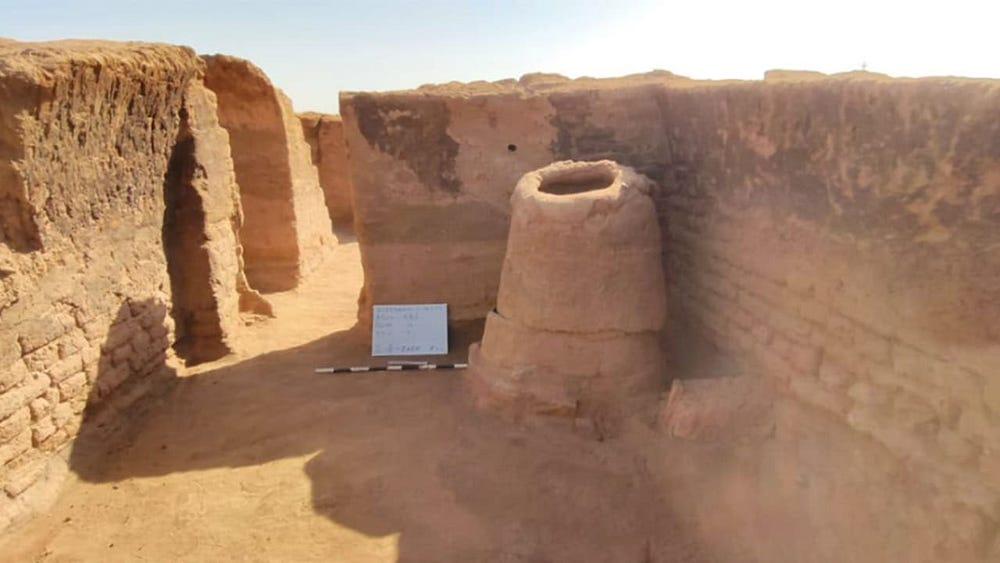
A City In The Sand: What A Fourth-Century Discovery In Egypt’s Western Desert Tells Us About The Early Church
Posted by Luke J. Wilson on 27th July 2026 in Archaeology | archaeology,early church,history
In early July 2026, Egypt’s Ministry of Tourism and Antiquities announced something pretty amazing: an entire Byzantine-era city, buried beneath the sands of the Dakhla Oasis, had been uncovered almost intact! Streets, homes, bread ovens, a fortress, and at its heart, a fourth-century basilica church.
That might not seem very exciting on first glance. But this find deserves a closer look, because it puts flesh on something we usually only encounter in the abstract: what it actually looked like when Christianity took root, house by house, in an ordinary town far from the centres of imperial power.
What Was Found
The excavation, carried out by an Egy...
Will the Real Heretics Please Stand Up (Book Review)
Posted by Luke J. Wilson on 30th January 2019 in Book Review | book review,Francis chan,David Bercot,early church,five stars
Straight off, this book will challenge you in your thinking and quite possibly in your practice and outworking of life as a Christian—especially if you are from an evangelical/Baptist/non-denominational background.
Will the Real HereticsPlease Stand Up
The book starts of taking you carefully through some of the practices and beliefs of the early church and those who knew the Apostles personally. It all feels very hopeful and like you're being led onward in a journey towards a certain goal, much of which I'm sure you'll find agreeable in what Bercot points out as discrepancies between early Christianity and today.
Then we get to a few points about the Re...
Powered by WebBoss.io 3.7.1
Copyright © 2026 The Sacred Faith: Timeless Truths for Modern Minds. All Rights Reserved.