
Blog Search Results


Did you mean:
part one
?
193 results for Part one
found
within the Blog
6 displayed out of 193 (0.47seconds)Page 32 of 33

The Reality of Sin
Posted by Luke J. Wilson on 19th November 2018 in Sin | sin,zombies,mold,mildew,judgement
Sin is like a mold on us, like a rotting, black skin disease. If only we could see it on us, we'd be disgusted and repulsed! Zombies are popular on TV etc. right now, think of the grossness of those images and realise that when we sin and keep sinning, that's what we end up looking like before God!
We are living stones, together building up the temple of the Holy Spirit (1 Peter 2:5; 1 Cor 6:19). Think about that for a moment. Think of the splendor of Solomon's temple when it was built (re-read it again if you can’t remember: 1 Kings 6:14-36). We are that and SO much more! But now imagine it with mold and mildew and all that horrible black damp growing and sp...Was the omniscience of God a developed idea?
Posted by Luke J. Wilson on 21st April 2014 in The Nature of God | progressive revelation, Christocentric, Christotelic, Hermeneutics, omniscience, omnipresence, theology
Or do we retroactively place our current theology of God on God?
Consider the Garden of Eden: '[T]he Lord God called to the man, and said to him, “Where are you?”' (Gen. 3:8-10)
Now today we make it into a rhetorical question, but was this always so? In this story, God is spoken of almost in a physical-bodily sense as walking in the garden, since "they heard the sound of the Lord God walking in the garden" as he moved about, and then tried to hide themselves from his view!
Next think of the tower of Babel - "The Lord came down to see the city and the tower, which mortals had built" (Gen 11:5) - Did he not just know already? Also this story...
Keeping Christ in Xmas
Posted by Luke J. Wilson on 15th November 2023 in Christmas | xmas,christmas,history
The abbreviation “Xmas” often sparks discussions about its origins and whether it diminishes the significance of Christmas. Contrary to misconceptions, the use of 'X' in "Xmas" has deep historical roots dating back to ancient Greek, where it represents the first letter of “Christ” (Χριστός). Additionally, the Chi Rho symbol, formed by superimposing the Greek letters Chi (Χ) and Rho (Ρ), is a notable Christian symbol representing Christ.
The Origins of "Xmas"
The letter ‘X’ in “Xmas” finds its roots in the Greek letter ‘Chi’ (Χ), which abbreviates the word “Christ” in Greek. This practice of using ‘X’ as an abbreviation for...
Is Halloween a Pagan Holiday?
Posted by Luke J. Wilson on 30th October 2017 in Halloween | halloween,all saints day,all hallows eve,early church,tradition,cultural and society,celebrations,festivals,holidays,holy day
It's that time of year when you begin to see various articles and debates online about Hallowe'en, and whether it's entirely pagan in origin and the Church "stole it"; or if it's something that Christians should even have any Part in.
Table of Contents
Origins of the holiday
Aren’t there pagan roots?
What about “Trick or Treat”, costumes and pumpkins?
In conclusion
To some people, the answer is a straightforward “no”, while others say it falls into the realm of Christian freedom and personal discernment. But what about if you're unsure or somewhere in the middle of those two positions, how should you decide what is the right thing to do?...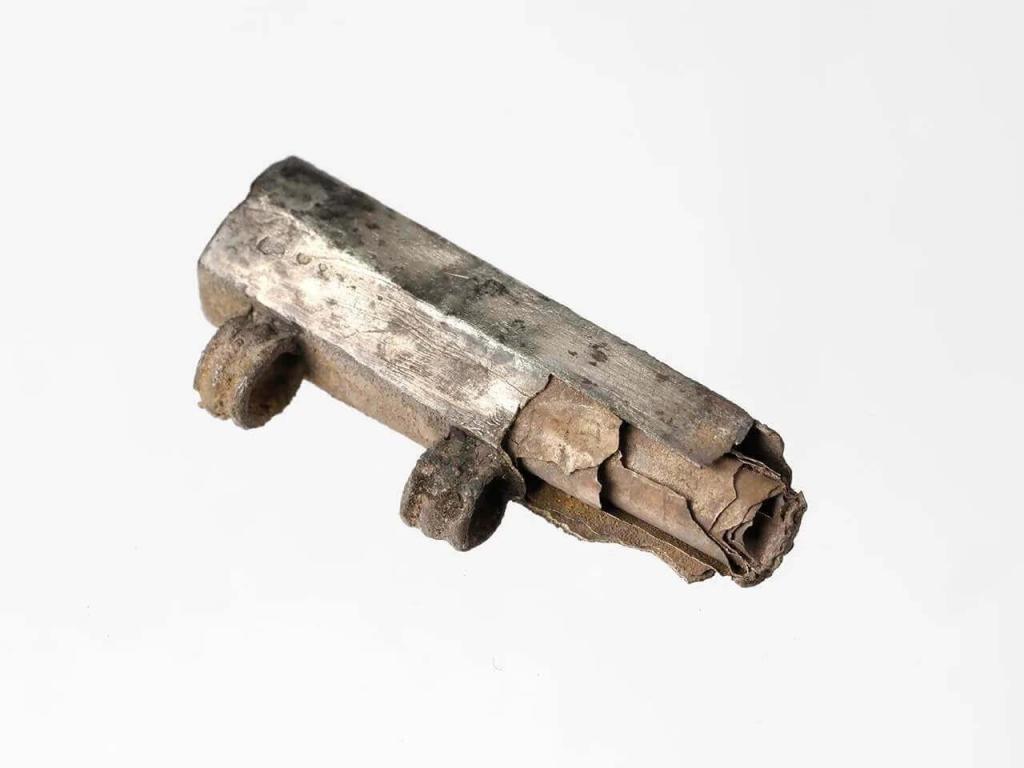
Ancient Amulet Rewrites History Of Christianity In Europe
Posted by Luke J. Wilson on 18th December 2024 in Archaeology | archaeology,amulet,discovery,current events,protection amulet
New discovery proclaims Jesus as “Son of God” a century earlier than previously thought.
An exciting archaeological discovery has recently come to light: researchers have unearthed an 1800-year-old silver amulet in Frankfurt, Germany. This amulet provides the earliest known evidence of Christianity north of the Alps and disrupts previously held ideas about the spread of the faith, namely that Christianity didn’t get to the German region around the fourth century.
The amulet, dating from approximately 230 to 270 AD, was found in 2018 beneath the chin of a man’s skeleton during excavations at a Roman burial site near the former town of Nida, now Part o...
Immanuel, God with us
Posted by Luke J. Wilson on 19th December 2016 in Christmas | christmas,xmas,nativity,book,David H. Petersen,author,God With Us,Immanuel,Bethlehem,house of bread,bread of life
I had been thinking about what to write this coming Christmas time, when I came across this quote the other day. I thought it sufficient enough, rather than go into a long theological treatise! So without further ado, here is a quote/excerpt by David H. Petersen, author of God With Us:
“The Savior is born unto you in Bethlehem, the house of bread, on earth. It is no coincidence that He lacked a crib and was placed instead into a feeding trough. He was born unto you to be bread: bread for beasts, bread for wolves, and bread for sheep. He comes in His body to feed you into life, to slake your thirst, to satisfy your soul. He is put into a manger, not only b...
Powered by WebBoss.io 3.7.1
Copyright © 2026 The Sacred Faith: Timeless Truths for Modern Minds. All Rights Reserved.
