
Blog Search Results


214 results for has
found
within the Blog
6 displayed out of 214 (0.06seconds)Page 33 of 36

Debunking the Myth: The Council of Nicaea and the Formation of the Biblical Canon
Posted by Luke J. Wilson on 20th November 2023 in Early Church | church history,council of nicaea,myths,debunked,canon,biblical canon
...ea. To emphasise that the convened bishops had no interest in this topic, there are no records from the Council or accounts from eyewitness attendees, such as Eusebius or Athanasius, mentioning any deliberations on the Canon of Scripture.
The Origin of the Myth
The myth of the Council of Nicaea’s involvement in forming the biblical canon can be traced back to a late ninth-century Greek manuscript known as the Synodicon Vetus. This manuscript, claiming to be a summary of decisions from Greek councils up to that point, presented a narrative where a divine miracle occurred at the Council of Nicaea. According to the manuscript, the Lord miraculously separated t...
What is Advent?
Posted by Luke J. Wilson on 1st December 2023 in Christmas | Advent,christmas,second coming,parousia
...s that emphasise not only the anticipation of Christ’s first coming but also the profound reflection on the Second Coming and the Last Judgement.
Advent is recognised as a late inclusion in the liturgical calendar during the late fourth and early fifth centuries. The Council of Saragossa in 380 AD, particularly in its fourth canon, laid the foundation for the observance of Advent, emphasising the importance of daily attendance in church during the twenty-one days leading up to December 17th.
Traditional Advent Wreath
The symbolism of Advent is poignantly captured in the Advent wreath, a practice dating back to 16th-century German Lutherans but taking it...
Understanding the Ultimate Ransom
Posted by Luke J. Wilson on 22nd June 2024 in Salvation | redemption,ransom,salvation,Psalms,prosperity gospel
...h can purchase eternal life or prevent the inevitable decay of death. Human riches, no matter how vast, are powerless in the face of the ultimate cost of redemption. As Christians, this message resonates deeply with our understanding of salvation through Christ’s sacrifice.
The Cost of Redemption
The Psalmist’s lament about the futility of relying on wealth for redemption points to a universal human condition: the insufficiency of human efforts to secure eternal life. The idea that “no ransom avails for one’s life, there is no price one can give to God for it.” (v.7) highlights that redemption is beyond human capacity and ability. The price is too h...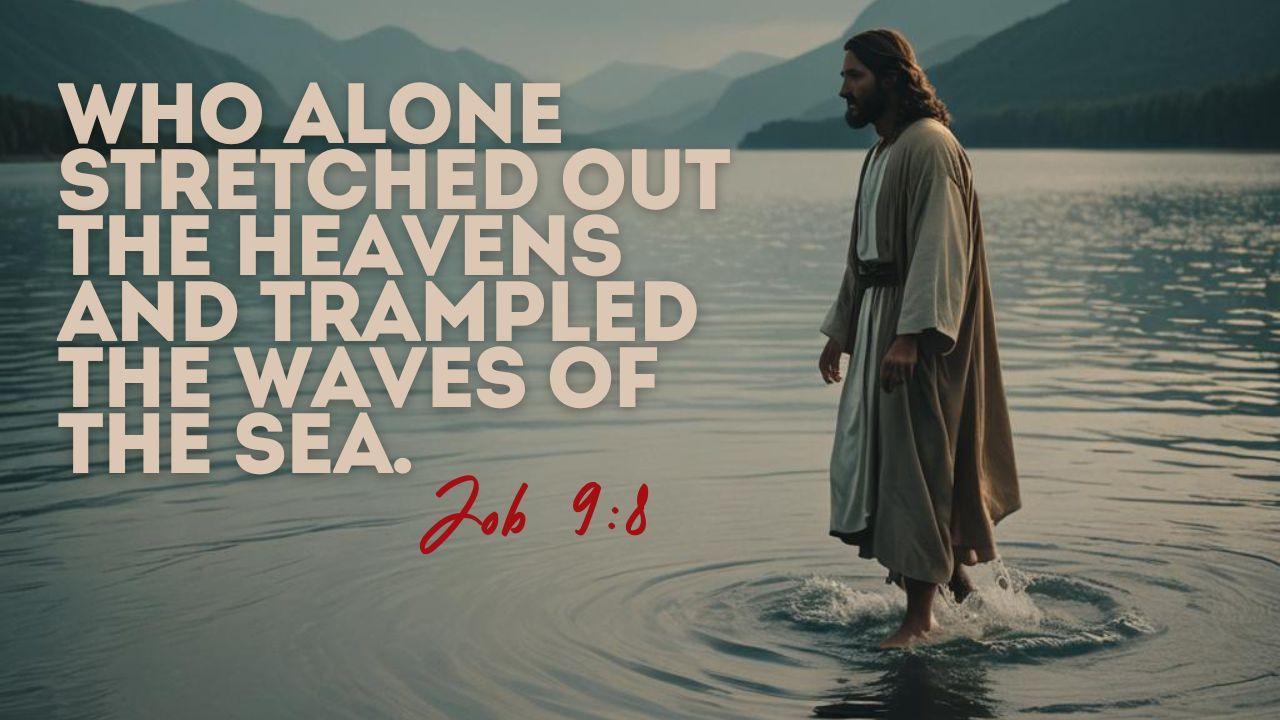
Jesus, Yahweh, And The Power Over The Storm
Posted by Luke J. Wilson on 29th July 2024 in Deity of Christ | Jesus,deity of christ,Yahweh,old testament,elements
...counts emphasise His authority to bring peace and order from chaos.
Power Over the Sea
Other scriptures also affirm Yahweh’s control over the sea. Psalms 89:9 declares:
You rule the raging of the sea;when its waves rise, you still them.
And in Job 9:8, we read:
who alone stretched out the heavensand trampled the waves of the Sea.
These verses reinforce the image of Yahweh as the one who commands and calms the sea, highlighting His supreme power over creation.
Jesus Calms the Storm: Mark 4:35–41
The New Testament echoes this divine power in the person of Jesus Christ. Mark 4:35–41 narrates an event that is reminiscent of Psalm 107 to anyone famili...
Debunking the Crusades: 5 Myths You Probably Believe
Posted by Luke J. Wilson on 14th October 2024 in Crusades | Crusades,Medieval,history,muslim
...The Crusades have long been a topic distorted by myth, legend, and misconception, especially in modern pop culture and film. Movies and television often portray the Crusaders as either valiant knights on holy missions or brutal barbarians bent on conquest, feeding into a skewed image of the events. These simplistic portrayals fail to capture the complex motivations and historical realities of the Crusades.
The Guardian article about the Reconciliation Walk
One striking example of how these misunderstandings have influenced modern perceptions was the so-called Reconciliation Walk in 1999, marking the 900th anniversary of the First Crusade. Hundreds of Chris...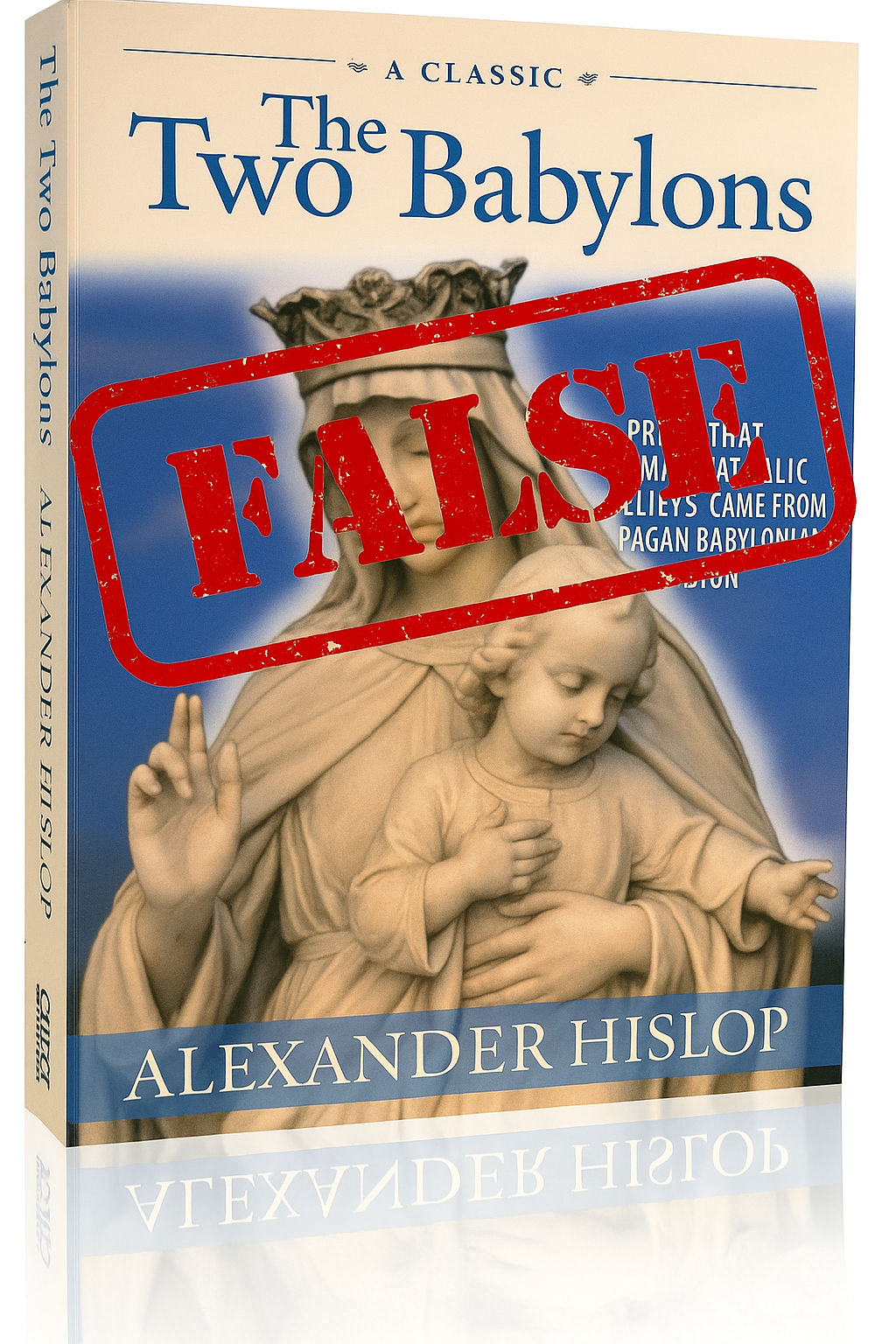
The Two Babylons Exposed: The Book That Misled Millions
Posted by Luke J. Wilson on 21st April 2025 in Easter |
...Over the years, I’ve encountered many Christians who’ve quoted from Alexander Hislop’s The Two Babylons as if it were a solid historical resource. The book claims that the Roman Catholic Church is not truly Christian but rather a continuation of ancient Babylonian religion. It’s self-assured and sweeping, and for many people, it seems to explain everything, from Marian devotion to Lent and Easter, to Christmas, as rooted in paganism. But is it accurate?
In short: no, it really isn’t.
Hislop’s work is a classic example of 19th-century pseudohistory — a polemical piece, written to prove a point, not to explore any historical truth.
Flawed Meth...
Powered by WebBoss.io 3.7.1
Copyright © 2026 The Sacred Faith: Timeless Truths for Modern Minds. All Rights Reserved.
