
Blog Search Results


140 results for faith
found
within the Blog
6 displayed out of 140 (0.04seconds)Page 4 of 24

What is Truth?
Posted by Luke J. Wilson on 29th July 2026 in faith & Reason | truth,incarnation,pilate,philosophy,theology
...w a blind faith, we’re never asked to believe “just because”. The Old Testament is full of times when the historical examples of God’s actions are used as an anchor and reason for faith, and the same is true in the New Testament where we have the Gospels as eyewitness accounts, rooted in history. Paul writes to say that 500 people saw the risen Christ and that many are still alive so you can go and verify it for yourself and that he is passing on what he received from trusted people. The resurrection itself is grounded in it being a real event that if shown otherwise would make our faith “futile” and that we would be people to be most pitied.
1 Cori...
From Dust to Redemption: The Meaning of Ash Wednesday
Posted by Luke J. Wilson on 5th March 2025 in Lent |
...rking the faithful with ashes, typically in the shape of a cross, while the priest or minister recites words such as, “Remember that you are dust, and to dust you shall return” (Genesis 3:19) or “Repent, and believe in the Gospel” (Mark 1:15).
The Lenten Fast
Fasting has always been a central aspect of Lent, and by the time of the Council of Nicaea (AD 325), a forty-day period of fasting before Easter had become a standard part of Church practice. This was based on the example of Jesus’ forty days in the wilderness (Matthew 4:1–2) and was intended to prepare believers spiritually for the Passion and Resurrection of Christ.
Athanasius, the great b...
Kirk Cameron And The Biblical Case For Annihilationism
Posted by Luke J. Wilson on 15th December 2025 in Hell | annihilationism,conditional immortality,Kirk Cameron,hell,controversy,controversial topics
...by being faithful to Scripture.
The Reformers themselves rejected long-held traditions when they believed those traditions lacked biblical grounding. To argue that a doctrine must be true simply because it is familiar is to mistake tradition for revelation.
This does not mean the church has “always been wrong”, but it does mean the church must always remain “reformable” under the Word of God, and also open to those secondary doctrines which aren’t salvation or Gospel issues, which can still be grounded in Scripture — even if you disagree with the conclusion!
Why the Reaction to Kirk Cameron Reveals a Deeper Anxiety
Much of the...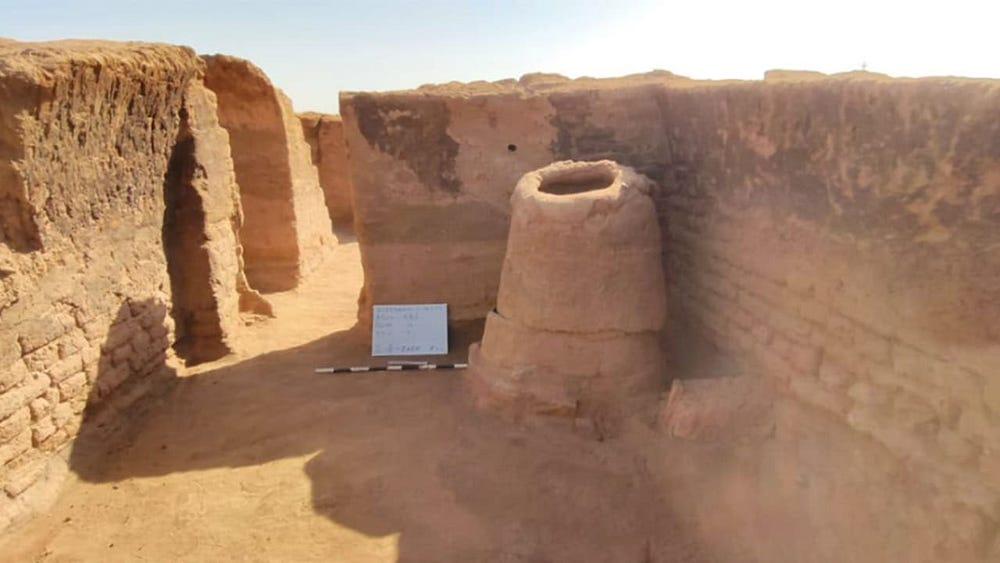
A City In The Sand: What A Fourth-Century Discovery In Egypt’s Western Desert Tells Us About The Early Church
Posted by Luke J. Wilson on 27th July 2026 in Archaeology | archaeology,early church,history
...minority faith to a tolerated, and increasingly favoured, one. A time of transition between a house church and a purpose-built basilica when the threat of persecution no longer loomed over the Church.
We know from Paul’s letters that the earliest churches met in homes — Romans 16:5 greets “the church in [Prisca and Aquila’s] house,” and similar greetings appear in 1 Corinthians 16:19 and Colossians 4:15.
If we were to imagine how a letter from Paul to this house church might look, we need only follow the pattern he already gives us. In 1 Corinthians 16:19 he writes, “Aquila and Prisca, together with the church in their house, greet you warmly....
Lent Day 25: Athanasius: Life of Anthony: Chaps. 41-50
Posted by Luke J. Wilson on 29th March 2017 in Lent | Lent,great lent,fasting,early church fathers,devotional,daily reading,Athanasius,Bishop of Alexandria,Confessor,Doctor of the Church,Anthony the Great,demons,demonology,satan,devil
...t in your faith and purpose of mind with Christ and tell that demon to flee in the name of Jesus, and he will!
The growth of the monastic life at this time (about 305 AD)
As Anthony taught on these things, the people rejoiced and came to despise the evil one even more and became strengthened in their faith.
So their cells were in the mountains, filled with holy bands of men who sang psalms, loved reading, fasted, prayed, rejoiced in the hope of things to come, laboured in almsgiving, and preserved love and harmony one with another.
More and more people came to saving faith and began living the ascetic lifestyle, to the point that there was hardly any w...
Lent Day 29: Athanasius: Life of Anthony: Chaps. 81-94
Posted by Luke J. Wilson on 3rd April 2017 in Lent | Lent,great lent,fasting,early church fathers,devotional,daily reading,Athanasius,Bishop of Alexandria,Confessor,Doctor of the Church,Anthony the Great,miracles,death,persecution,arianism
...in their faith. Many looked up to Anthony as a father figure, even the emperor Constantine Augustus, and his sons Constantius and Constans the Augusti, who “wrote letters to him, as to a father, and begged an answer from him” since they themselves had come to the faith. Despite rulers and kings writing to him and seeking his advice, Anthony thought nothing of it and didn’t allow himself to become puffed up with pride over the status of men.
After meeting and seeing the various people who would visit, Anthony would retreat to the “inner mountain” where he resided and spent much of his time in prayer. It was here that those who accompanied him would of...
Powered by WebBoss.io 3.7.1
Copyright © 2026 The Sacred Faith: Timeless Truths for Modern Minds. All Rights Reserved.
