Luke J. Wilson | 03rd July 2021 | Hell

Welcome to Part Two of my study and examination of Conditional Immortality (aka Annihilationism). If you missed part one, you can read that one here.
As with part one, this will be a long post as there is still much ground to cover before we can really grasp the bigger picture about what Scripture teaches. So with that said, I’ll pick right up where we left off. In part one, I covered a lot of New Testament texts, a few Old Testament passages, plus a look at what some of the earliest church leaders also wrote on the topic to the early church. In this one, we will be looking at a few more Old Testament examples and how they relate to the imagery used in Revelation, amongst other things.
Unquenchable Fire and Undying Worms
What of unquenchable fire and undying worms? Do these phrases really mean that the fuel of the fire and the worms must last forever and ever? We have a few references to shed some light on the meaning of these phrases which we can examine below:
Ezekiel 20:46–48Mortal, set your face toward the south, preach against the south, and prophesy against the forest land in the Negeb; say to the forest of the Negeb, Hear the word of the Lord: Thus says the Lord God, I will kindle a fire in you, and it shall devour every green tree in you and every dry tree; the blazing flame shall not be quenched, and all faces from south to north shall be scorched by it. All flesh shall see that I the Lord have kindled it; it shall not be quenched.
So, in our first example, Ezekiel was obviously not prophesying that the forests of Negeb would burn forever and never go out. Instead, fire that “shall not be quenched” is used to mean fire that cannot be interrupted or stopped in its destructive purpose. No one is able to stop a fire like this until it has run its course, or it is stopped by something greater, which is what the word “quench” actually means. It is an action performed by something external which stops the flames — what it doesn’t mean is a fire burning out naturally once it consumes its fuel. The fire will continue regardless.
Jeremiah 17:27But if you do not listen to me, to keep the sabbath day holy, and to carry in no burden through the gates of Jerusalem on the sabbath day, then I will kindle a fire in its gates; it shall devour the palaces of Jerusalem and shall not be quenched.
Here is another reference to an unquenchable fire consuming something and not being stopped even after the object of destruction has been “devour[ed]”. The image is one of a fire which rages on and on, even after everything in it is burnt up and destroyed.
Now let’s move onto the “undying worms” and see how that phrase is used. In the New Testament we see this phrase used in Mark 9:47–48, which originally comes from Isaiah, and also a similar theme in Jeremiah.
Isaiah 66:24And they shall go out and look at the dead bodies of the people who have rebelled against me; for their worm shall not die, their fire shall not be quenched, and they shall be an abhorrence to all flesh.
A little earlier in Isaiah 66 (v.16) we see that God executes judgement with fire and “by his sword, on all flesh”, and that the dead will be many, ending the chapter with the verse quoted above. Jeremiah picks up on a similar theme of God’s judgement, people being killed to such an extent there won’t be room to bury them. This is also where we find a reference to Gehenna, or the valley of the son of Hinnom, as its name means (also called Topheth), in chapters 7 and 19. The concept of Gehenna as a place of punishment is then picked up by Jesus in Matthew 10:28, which he uses in a more eschatological sense.
Jeremiah 7:32–33Therefore, the days are surely coming, says the Lord, when it will no more be called Topheth, or the valley of the son of Hinnom, but the valley of Slaughter: for they will bury in Topheth until there is no more room. The corpses of this people will be food for the birds of the air, and for the animals of ...
Luke J. Wilson | 25th May 2020 | Hell
I know that "Conditional Immortality" is quite a divisive topic, and one you may have come across before (sometimes referred to as “Annihilationism”); and have been told outright that it’s “heresy” or false, or that it’s an emotional argument people want to believe because it ‘sounds nicer’ than the doctrine of Eternal Conscious Torment (ECT). Or maybe you’ve never even heard of this before and you didn’t realise there were alternative interpretations and views on hell. If you are new to this, in brief it means that “the wicked” will be removed from existence after judgement and finite torment, rather than living forever in torment.
Any discussion on “hell” is going to cover a lot of ground, and refer to many, many places throughout Scripture; so with that said, this will be a long one, so get comfy! I will do this in two parts as it will become too lengthy for one blog post.
This article will just focus on the Scriptural basis for the position of Annihilationism, as opposed to ECT, but to begin with I’ll define some terms as words like “hell” have become quite loaded with extra and unbiblical meaning over the centuries.
What is hell, anyway?
If you read through the Old and New Testament in older translations like the KJV, you’ll see the word “hell” a lot more often than in more recent Bible translations, which will most likely transliterate the Greek words instead. Not all the words get this treatment, and some still get presented as the word hell in English, for example, the NIV and NRSV will convert the word Gehenna into “hell”, but keep the Greek word Hades as-is (see: Matt. 5:22; 11:23).
The etymology of “hell” and its origins and how it became the word we know today in English, would take more time than I have space for here, but in short, there are three main Greek words which often get translated as the word “hell”, even though they are each different words with different underlying meanings:
GehennaLiterally means “valley of Hinnom”, which is a place near Jerusalem where children were once sacrificed to Baal (see Jer. 19:5–6). Due to its history, it took on a more eschatological/spiritual meaning as a place of judgement and destruction.
Hades (Sheol)This is the Greek form of the Hebrew Sheol found in the Old Testament, usually (and properly) translated as “grave”, or meaning the general place of the dead (similar to the place of the same name in Greek mythology).
TartarusThis only appears once in the New Testament in 2 Peter 2:4 and is used in relation to the angels who sinned and were put in chains. Interestingly, it’s another word borrowed from Greek mythology, for the prison where the Titans were sent as punishment.
If you are interested in how we got the word “hell” in our English language, and more importantly, into our Bibles, I highly recommend that you read this study: The Real Hell.
A Case for Conditional Immortality (aka Annihilationism)
We are often taught that our souls, human souls, are inherently immortal. But where does this idea come from, because it’s never actually stated in Scripture that this is so. This is an Hellenistic philosophical assumption brought into the text (mainly from Plato’s influence) which can taint our interpretations. If we look at 1 Timothy 6:16 we can see that it is God alone who is immortal:
It is he [God] alone who has immortality and dwells in unapproachable light, whom no one has ever seen or can see; to him be honour and eternal dominion. Amen.
Any other mention of immortality or eternal life is only ever spoken of as a gift given to us by Jesus, and is often contrasted with the alternative: death, perishing and/or destruction.
Romans 6:23For the wages of sin is death, but the free gift of God is eternal life in Christ Jesus our Lord.
2 Timothy 1:10…but it has now been revealed through the appearing of our Savior Christ Jesus, who abolished death and brought life and immortality to...
Luke J. Wilson | 05th April 2014 | Hell

Book review on Rob Bell's “Love Wins” (originally written March 2013)
This book was quite openly condemned by some prominent Christian leaders when the book was first announced back around Spring 2011, mainly mainly accusing Bell of being a universalist and denying the existence of hell.
Lots of leaders formed opinions about the book and thus lots and laypeople took on various opinions as their own without much insight or research. The problem was that these leaders hadn't even READ the book! It wasn't released yet at the time. They decided their opinions based on the blurb and promo video which posed provocative questions about the doctrine of hell.
The book starts up asking lots of questions concerning salvation and how are you “attain” it and the consequences if you don't – while the same time pointing out the flaws in modern theology and general beliefs held by many in the Church today.
He then presents a lot more question to get you thinking and quotes Jesus' words, and a few other scriptures, which leads to more questions. Therein lies the purpose of this book – not for Rob to push you to believe what he does, but to get you to question and really think about the things we say we believe.
Bell then moves on to heaven. Unless you've really studied the Bible on Heaven, this chapter will likely smash a lot of cultural ideas you hold without you really realising it – the same can be said about the the chapter after which deals with hell.
Prepare for an eye-opener, and a lot of "Gospel Truth" that has somehow got lost, changed, misrepresented and mixed up in Medieval tradition and imagery over the last few centuries.
Anyone who is aware of the controversy that was/is surrounding this book and who heard that that Rob Bell "doesn't believe in hell" can rest assured that this isn't the case.
To quote the book, Bell writes:
"There is a hell now, and there is a hell later, and Jesus teaches us to take both seriously." (pg. 79)
It's not only that he believes in hell "later" (i.e. after death), but also that because of our freedom of will in this life we can, and do, create hell on earth through our actions and sins.
Likewise, we can also create heaven on earth in the same way. This is what Jesus referred to when he prayed "Your will be done on earth as in heaven" – bringing the kingdom of God to the here and now.
The book then continues on from what is explained in these chapters to explore the rest of our theology and doctrines on salvation, the cross and the hereafter, often taking our contemporary doctrines (which aren't always as scripturally based as we may think) to their sometimes extreme logical conclusions; which often shows up the absurdities in them that we can overlook.
The book ends by examining the Good News, explaining that "it's better" than we first imagine; that God has done so much more through Jesus on the cross than we can comprehend at times – God's reconciliation is, literally, awesome and that ultimately, one way or another, love wins.
Whatever your thoughts or opinions on Rob Bell, whatever your beliefs about heaven, hell and everything in between, I highly recommend this book. Go in without an agenda – read it with an open mind and a willingness to learn and let the Spirit guide you. You may not come out agreeing with everything written, but if you at least question and think about your views on hell and who goes there and, more importantly, why you think that – then I believe this book has served purpose.
Five stars – Well-written, easy to read and a thought-provoking book that everyone who takes Jesus' Gospel seriously should read at least once, even if they think they'll disagree....
Luke J. Wilson | 23rd January 2025 | Science

Have you ever wondered why God asks us to resist temptation and practise self-control? At first glance, it might seem like God is just trying to limit our enjoyment of life, especially when the world tells us to “follow your heart” and “give in to what feels good.” But what if I told you that resisting temptation is not about taking away your joy, but about protecting and blessing your life — spiritually, emotionally, and even mentally?
I was recently watching a TV series with my wife (called Perception, if you’re interested) about a neuroscience professor who consults for the FBI. The series often gives some interesting facts about the brain and human behaviour, and in one episode the main character capped off the episode by talking about how resisting temptations benefits your mental health.
This piqued my interest, as it made me think of the obvious Scriptural connections, so I looked it up to see if the episode was accurate.
And it was!
A 2017 neuroscience research study highlights how beneficial self-control and resisting temptation are for your brain and mental health. These findings echo the timeless truths of Scripture, showing us that God’s design for self-control is not just a moral obligation but a pathway to wholeness and flourishing as a healthy person.
The Science Behind Resisting Temptation
The study on self-control and temptation explored the brain’s salience network — the system responsible for detecting what’s important — and found something really very interesting: people better at resisting temptation have a healthier dynamic between this network and other parts of the brain, such as the visual system. In other words, their brains are better at ignoring distractions and focusing on what truly matters.
Here are some of the benefits of self-control revealed by the study:
Improved Focus — Resisting temptation strengthens your ability to stay on task and avoid distractions.
Emotional Resilience — Self-control helps regulate emotions, making you less reactive and more at peace.
Mental Clarity — It improves how your brain processes information, aiding decision-making.
Protection from Harm — It reduces the risk of mental health issues like depression, addiction, and impulsive behaviour which may help mitigate some symptoms of ADHD by strengthening attention regulation and executive function.
Spiritual Growth—Though not a part of the study, self-control aligns with God’s call for holy living and leads to greater spiritual maturity.
This isn’t just science talking; it’s evidence of God’s amazing design for your body and mind which has been testified to in the Scriptures for thousands of years, long before neuroscience could confirm it. I couldn’t help but be struck by this connection when I came across this study.
What Does the Bible Say?
The New Testament repeatedly highlights the importance of self-control and resisting temptation. These teachings are not arbitrary rules to suck the “fun” out of life, but divine guidance to help you thrive. Let’s explore how the Bible speaks to this:
Self-Control is a Gift from GodThe Bible teaches that self-control is a fruit of the Spirit (Galatians 5:22–23) and that God has given us a spirit of “power and of love and of self-discipline” (2 Timothy 1:7). The ability to resist temptation is not something we muster up alone; it’s a gift God gives to help us grow in Him and rely on His strength.
Resisting Temptation Brings FreedomJames 1:14–15 warns us that temptation, if left unchecked, leads to sin and ultimately to death. Science backs this up, showing that unchecked impulsivity can lead to destructive behaviours like addiction and emotional instability. God’s commands to resist temptation protect us from harm and lead us to freedom in Christ (John 8:36).
Your Mind MattersRomans 12:2 urges us to “be transformed by the renewing of your minds.” Resisting temptat...
Luke J. Wilson | 21st July 2024 | Trinity

Monarchical Trinitarianism, also referred to as the “Monarchy of the Father,” is a theological perspective that asserts the Father as the sole source (or monarch) within the Trinity. This view maintains a clear distinction of roles among the Father, the Son, and the Holy Spirit while upholding their unity in essence. It is essential to distinguish this from Monarchianism, a heretical belief condemned in the 4th century, which posited that God is a single person rather than three distinct persons.
The Eternal Begottenness of the Son
The term “created” used by the early pre-Nicene Fathers does not align with the Arian view, which posits that the Son was created ex nihilo (out of nothing), making Him a creature. As Arius infamously declared, “there was a time when the Son was not”. Rather, the Fathers articulated that the Son was begotten out of the Father, emphasising His divine origin and eternal existence within the Father’s bosom (cf. John 1:18 in Greek). As Justin Martyr explains, “For Christ is the first-begotten of God, and we have declared above that He is the Word of whom every race of men were partakers; and those who lived reasonably are Christians, even though they have been thought atheists” (Justin Martyr, First Apology, Chapter 46). This highlights that the Son, the Word, existed eternally with the Father before being begotten and manifested.
Similarly, Hippolytus expounds on this concept, noting that “God, subsisting alone, and having nothing contemporaneous with Himself, determined to create the world … For He was neither without reason, nor wisdom, nor power, nor counsel And all things were in Him, and He was the All. When He willed, and as He willed, He manifested His word in the times determined by Him, and by Him He made all things. … And thus there appeared another beside Himself. But when I say another, I do not mean that there are two Gods, but that it is only as light of light, or as water from a fountain, or as a ray from the sun. For there is but one power, which is from the All; and the Father is the All, from whom cometh this Power, the Word. And this is the mind which came forth into the world, and was manifested as the Son of God.” (Hippolytus, Against the Heresy of One Noetus, Chapter 10–11). Here, Hippolytus underscores the eternal existence of the Word within God, proceeding from the Father and being of the same essence.
The Procession of the Holy Spirit
The procession of the Holy Spirit from the Father is another essential aspect of Monarchical Trinitarianism. The Spirit, like the Son, derives His essence from the Father, ensuring that He is co-equal and consubstantial with the Father and the Son. Tertullian speaks to this procession in his work, Against Praxeas, explaining how the Word and Spirit derive their essence from the Father.
But still the tree is not severed from the root, nor the river from the fountain, nor the ray from the sun; nor, indeed, is the Word separated from God. … Now the Spirit indeed is third from God and the Son; just as the fruit of the tree is third from the root, or as the stream out of the river is third from the fountain, or as the apex of the ray is third from the sun. Nothing, however, is alien from that original source whence it derives its own properties. In like manner the Trinity, flowing down from the Father through intertwined and connected steps, does not at all disturb the Monarchy, while it at the same time guards the state of the Economy. (Tertullian, Against Praxeas, Chapter 8).
Looking at how Tertullian describes this doctrine, we can see how he has gone to lengths to carefully explain how the relationship within the Trinity exists together and relate to one another, while keeping intact the source and essence of divinity united and uncompromised. When we talk about these things, we use terms like “ontological” and “economy” to help to describe the Godhead. Ontology is the study of being, and what make...
Luke J. Wilson | 01st July 2024 | Trinity
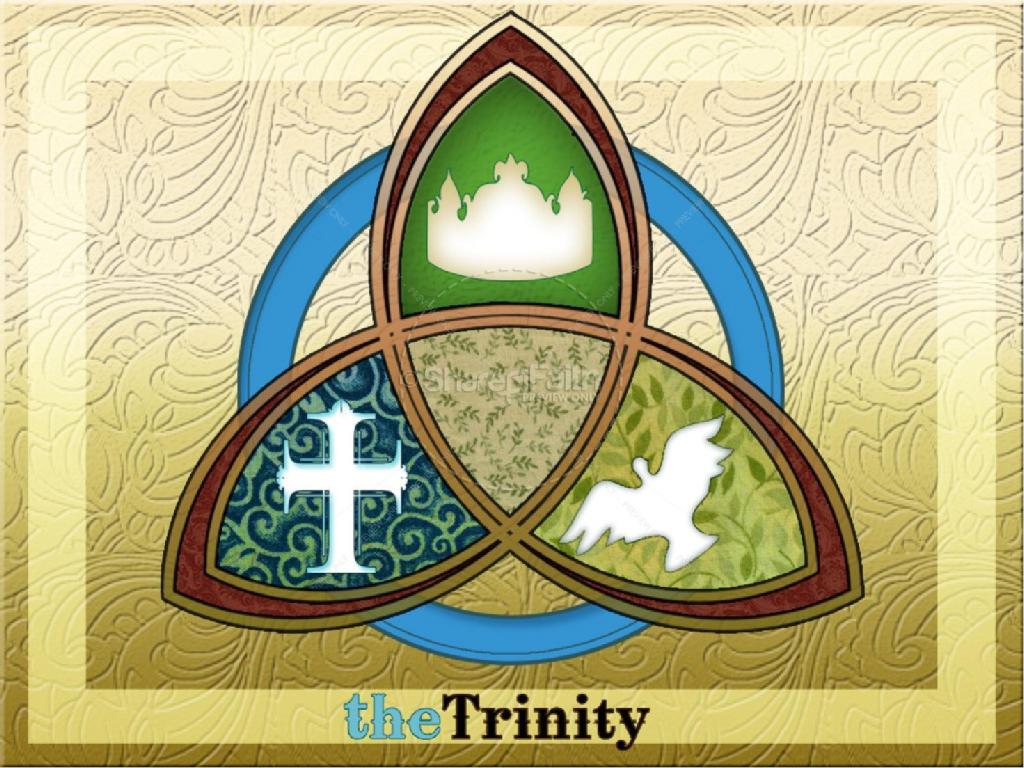
The Trinity is a cornerstone of Christian faith, defining God as one Being in three Persons: Father, Son, and Holy Spirit. However, throughout history, various misunderstandings and false teachings — known as heresies — have arisen, challenging this core doctrine. Understanding these heresies can strengthen our faith and deepen our appreciation for the truths held by the Church since its earliest days.
What Is the Trinity?
Before diving into the heresies, let’s briefly review what we mean by the Trinity. The Christian doctrine of the Trinity teaches that God is one essence in three distinct Persons:
The Father: The Creator and sustainer of all.
The Son (Jesus Christ): God incarnate, who lived, died, and was resurrected for our salvation.
The Holy Spirit: The presence of God active in the world and within believers.
This concept is rooted in Scripture and has been affirmed by the Church through various councils and creeds.
Common Historical Heresies
Arianism
What It Taught: Arius, a priest in the early 4th century, claimed that Jesus Christ was not of the same substance as the Father. He taught that the Son was a created being, distinct and subordinate to the Father.
Church’s Response: The Council of Nicaea in 325 AD condemned Arianism, affirming that the Son is “of the same substance” (homoousios) as the Father. This is reflected in the Nicene Creed: “We believe in one Lord Jesus Christ, the only Son of God… of one Being with the Father.”
Patristic Quote: Athanasius, a staunch defender against Arianism, wrote, “For the Son of God became man so that we might become God” (On the Incarnation, 8:54).
Modalism (Sabellianism)
What It Taught: Sabellius proposed that God is one Person who reveals Himself in three different modes or aspects: as the Father in creation, as the Son in redemption, and as the Holy Spirit in sanctification. This denies the distinctiveness of the three Persons.
Church’s Response: Modalism was rejected because it undermines the relational aspect of the Trinity. The distinct Persons interact with each other, as seen in Jesus’ baptism where the Father speaks, the Son is baptised, and the Spirit descends like a dove.
Patristic Quote: Tertullian argued against Modalism by affirming the distinctiveness within the Godhead: “We do indeed believe that there is only one God, but we believe that under this dispensation… there is the Son, who has issued from the Father, and the Spirit, who has issued from both Father and Son” (Against Praxeas, 2).
Nestorianism
What It Taught: Nestorius, a 5th-century bishop, suggested that Jesus Christ was two separate persons — one human and one divine — rather than one Person with two natures.
Church’s Response: The Council of Ephesus in 431 AD declared that Jesus is one Person with two distinct yet united natures: divine and human. This ensures that Jesus is fully God and fully man, capable of bridging the gap between humanity and divinity.
Patristic Quote: Cyril of Alexandria emphasised the unity of Christ: “Wherefore we confess one Christ, one Son, one Lord. According to this understanding of this unmixed union, we confess the holy Virgin to be Mother of God; because God the Word was incarnate and became Man, and from this conception he united the temple taken from her with himself.” (Cyril of Alexandria Letter to John of Antioch).
Docetism
What It Taught: Docetists believed that Jesus’ physical body was an illusion and that He only seemed to suffer and die on the cross.
Church’s Response: The Church affirmed that Jesus’ incarnation and suffering were real, as this is essential for our salvation. Jesus’ true humanity allows Him to truly represent us and atone for our sins.
Patristic Quote: Ignatius of Antioch stressed the reality of Jesus’ incarnation and suffering: “He was truly of the seed of David according to the flesh, and the Son of God according to the will and powe...
Luke J. Wilson | 27th June 2024 | Eucharist
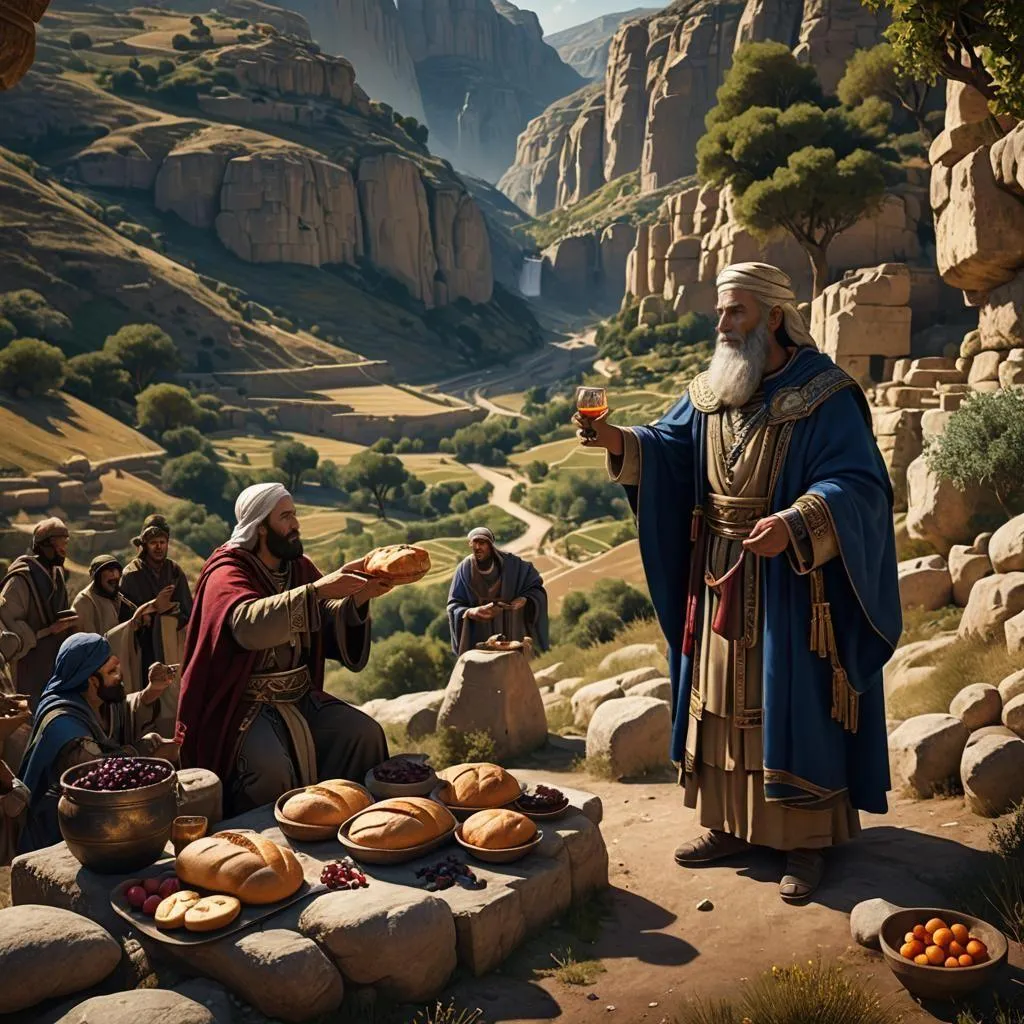
This past Sunday at church, we were looking at Genesis 14 in the sermon. There’s a lot going on in this chapter with nine different kings all at war fighting one another, and Abram and Lot somehow mixed up in the middle of it (this is before Abram is renamed to Abraham). Sodom gets invaded, Lot gets taken captive (along with everyone else) and then Abram mounts a daring rescue with 318 of his men! It’s really quite action-packed for such a short chapter. I don’t know about you, but I always think of Abraham as this kindly old man, not some tribal warrior ready to go all “Taken” on his enemies (Gen 14:14–16).
Abraham, probably
It’s in the midst of all this action that we meet a mysterious character who pretty much just turns up out of nowhere: Melchizedek, king of Salem.
He is one of those characters from the Old Testament whose actions reverberate down through history into the New Testament era and beyond and into our present-day worship. Despite the number of kings fighting all across Canaan, Melchizedek doesn’t appear to be a part of these conflicts and only enters the scene when it’s all over, and Abram has rescued Lot and subdued the king who captured Sodom. Then “the king of Sodom went out to meet [Abram] at the Valley of Shaveh, that is, the King’s Valley.” (Gen 14:17), which is modern-day Kidron Valley, just outside of Jerusalem. So the meeting was local and close to Melchizedek, but still doesn’t explain what happens next to Abram:
Genesis 14:18–20And King Melchizedek of Salem brought out bread and wine; he was priest of God Most High. He blessed him and said, “Blessed be Abram by God Most High, maker of heaven and earth,and blessed be God Most High, who has delivered your enemies into your hand!”
The blessing of bread and wine by Melchizedek connects us with the divine thread that will flow through all time and history: the then-future Passover and, ultimately, with Jesus’ institution of the Eucharist. This connection underscores a sacred continuity that we, as Christians, continue to partake in today until Jesus returns.
Melchizedek: Priest and King
Melchizedek appears in Genesis 14:18–20, where he is described as the king of Salem and a priest of the Most High God. His encounter with Abram (Abraham) is brief but significant. He brings out bread and wine and blesses Abraham. He then responds by giving Melchizedek a tenth of everything. Both of these acts point to aspects of the Law, tithes and sacrifices, which at this point in time had not yet been given, which leaves us with more unanswered questions regarding what this priesthood of Melchizedek was (and its origins), and also why Abraham would give a tenth like a tithe.
Salem, which is understood to be the ancient name for Jerusalem, means “city of peace”. This is highly significant as it links to the messianic prophecy of Jesus being the Prince of Peace (Isaiah 9:6). The connection between Melchizedek being the king of Salem and Jesus being in the lineage of David, who reigned in Jerusalem, ties the notion of peace directly into the divine narrative. Melchizedek’s role as a king and priest in the city of peace prefigures the ultimate role of Jesus as Messiah.
Jesus, the Prince of Peace, not only fulfils the royal lineage through King David but also the priestly order of Melchizedek. Hebrews 7:2–3 elaborates on Melchizedek’s name and title, explaining that Melchizedek “means ‘king of righteousness’; next, he is also king of Salem, that is, ‘king of peace’.” This dual kingship of righteousness and peace perfectly summarises Jesus’ ministry and mission.
Psalm 110:4 further cements Melchizedek’s significance by declaring the Messiah as “a priest forever according to the order of Melchizedek”. This eternal priesthood signifies a lasting peace and righteousness that Jesus embodies and imparts to His followers (John 14:27). Thus, Melchizedek’s brief appearance becomes a profound for...