
Blog Search Results


25 results for origin
found
within the Blog
6 displayed out of 25 (0.04seconds)Page 4 of 5

Jesus was a pagan copy, and other Christmas myths
Posted by Luke J. Wilson on 24th December 2017 in Christmas | christmas,jesus,incarnation,horus,osiris,mithras,egyptian gods,roman gods,zeitgeist,debunked
...after the origin of Christianity. So if there was any influence of one on the other, it was the influence of the historical event of the New Testament [resurrection] on mythology, not the reverse.
If you don't want to read a long essay on the subject though, this video by Inspiring Philosophy breaks it down nicely in just under 5 minutes:
Other myths debunked
If not Osiris, Jesus is often claimed to be copied from the Egyptian god Horus... or the Roman god Mithras (fun fact: the Mithras cult actually ended up trying to mimic aspects of Christianity, not the other way around!). Apparently, everyone just copied whoever came before them, and hoped no one w...
Man-Made Tradition vs Apostolic Tradition
Posted by Luke J. Wilson on 28th February 2016 in Early Church | early church,early church fathers,tradition,creeds,nicene creed,apostolic creed,man made tradition,apostolic tradition
...apostolic origin. Bishop of Carthage, Cyprian, who was a prominent early leader and writer (c. 250 AD), sums up the view on human tradition rather well, when he says:
...what presumption, to prefer human tradition to divine ordinance, and not to observe that God is indignant and angry as often as human tradition relaxes and passes by the divine precepts … for custom without truth is the antiquity of error.
Cyprian, Epistle 73:3,9
In contrast, he also says this about “divine tradition”:
…you must diligently observe and keep the practice delivered from divine tradition and apostolic observance, which is also maintained among us, and almost throug...
Does Jesus mean Hail Zeus?
Posted by Luke J. Wilson on 13th June 2016 in Etymology | apologetics,refuting nonsense,hail zeus,does Jesus mean Zeus,earth pig latin,etymology,linguistics
...asus, his origins in the mythology and how he got the name, here, here and here.
But let's keep going. If this meme is true, then some basic research should show it quite quickly.
Claim 2: "DionySUS means Wine of Zeus"
One thing is partially true: Dionysus' name does have a connection to Zeus. Except it's not as the image suggests.
See here:
"Behind the Name: Meaning, origin and history of the name Dionysos. From Greek Διος (Dios) meaning "of ZEUS" combined with NYSA, the name of the region where young Dionysos was said to have been raised"
— Behind the Name
The "DIOS-" part is the only aspect related to the name Zeus!
“The dio- element...
Is fasting an expectation for Christians?
Posted by Luke J. Wilson on 29th February 2020 in Fasting | fasting,Lent,Ash Wednesday,self control,self denial
...have its origin in our time, but long before in that of our predecessors. — Irenaeus (c.180)
Evidence for this is well established from the ancient letters that we still have available to us, such as from Irenaeus quoted above. As you can see, the fast varied in the earlier times until it became fixed at forty days across the whole Church in the run up to Easter.
Fasting has been a steadfast part of the faith not only in the earliest of times, but even as ‘recently’ as the Reformation era. John Calvin, in his Institutes, wrote on the topic as it appears in his time the value of it was not being recognised by the Church:
Let us say something abo...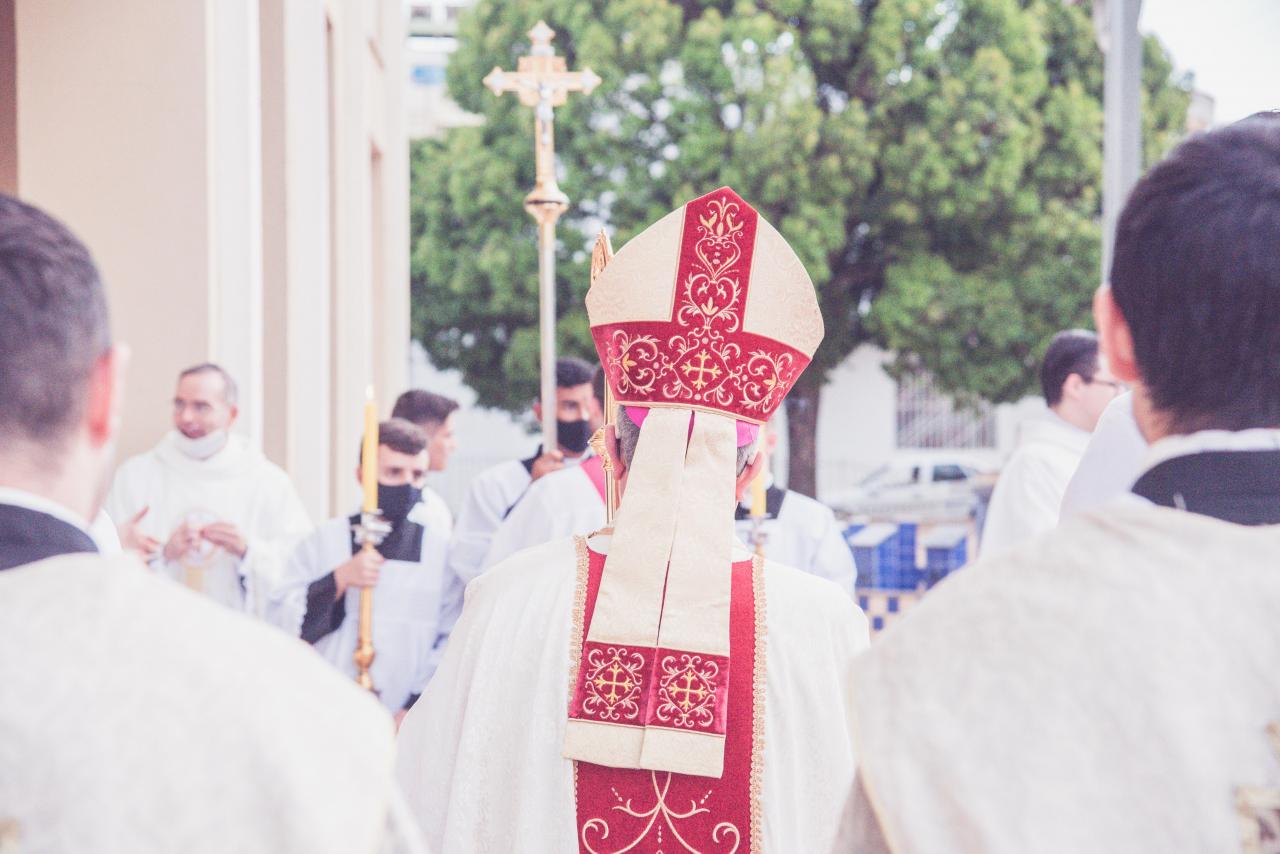
What does the word "Catholic" mean?
Posted by Luke J. Wilson on 8th March 2021 in Etymology | catholic,church fathers,church history,etymology,roman catholic,eastern orthodox,Great Schism,Muratorian Fragment
...
For many people today, non-Christians and (low church) Christians alike, when they hear the word “Catholic”, certain images spring to mind: the Pope, the rosery, Catholic school, big old churches buildings, choirboys, maybe monks or statues of Mary even; and sadly more recently, sex abuse scandals.
But, generally speaking, all of these are actually aspects of Roman Catholicism — a particular branch of Christianity, and not what the word “catholic” truly means as we’ll see when examining how the early church used the word and what the original Greek word means.
καθολικός (katholikos)
The Greek word where we get the English word “c...
Did the Early Church invent the Trinity?
Posted by Luke J. Wilson on 4th January 2022 in Trinity | early church,trinity,church fathers,theology,council of nicaea,nicea council
...er is the origin and source of the Son or Holy Spirit. — On First Principles 1.2.3, A.D. 225
Hippolytus (c. 228)
The Word alone of this God is from God himself, wherefore also the Word is God, being the being of God — Refutation of All Heresies 10:29, A.D. 228.
Pope Dionysius (c. 262)
Next, then, I may properly turn to those who divide and cut apart and destroy the most sacred proclamation of the Church of God, making of it [the Trinity], as it were, three powers, distinct substances, and three godheads. . . . [Some heretics] proclaim that there are in some way three gods, when they divide the sacred unity into three substances foreign to each...
Powered by WebBoss.io 3.7.1
Copyright © 2026 The Sacred Faith: Timeless Truths for Modern Minds. All Rights Reserved.
