
Blog Search Results


176 results for armour of god
found
within the Blog
6 displayed out of 176 (0.45seconds)Page 5 of 30

What is Monarchical Trinitarianism?
Posted by Luke J. Wilson on 21st July 2024 in Trinity | trinity,monarchy of the Father,Monarchical Trinitarianism,church fathers,church history
Monarchical Trinitarianism, also referred to as the “Monarchy of the Father,” is a theological perspective that asserts the Father as the sole source (or monarch) within the Trinity. This view maintains a clear distinction of roles among the Father, the Son, and the Holy Spirit while upholding their unity in essence. It is essential to distinguish this from Monarchianism, a heretical belief condemned in the 4th century, which posited that god is a single person rather than three distinct persons.
The Eternal Begottenness of the Son
The term “created” used by the early pre-Nicene Fathers does not align with the Arian view, which posits that the Son was...
The Neuroscience of Resisting Temptation
Posted by Luke J. Wilson on 23rd January 2025 in Science | Science,temptation,neuroscience,self control
Have you ever wondered why god asks us to resist temptation and practise self-control? At first glance, it might seem like god is just trying to limit our enjoyment of life, especially when the world tells us to “follow your heart” and “give in to what feels good.” But what if I told you that resisting temptation is not about taking away your joy, but about protecting and blessing your life — spiritually, emotionally, and even mentally?
I was recently watching a TV series with my wife (called Perception, if you’re interested) about a neuroscience professor who consults for the FBI. The series often gives some interesting facts about the brain...
Great Lent: The Season of Fasting
Posted by Luke J. Wilson on 13th February 2016 in Lent | Lent,Easter,Fasting,Prayer,early church,early church fathers,paganism,pagan roots
Fasting
A spiritual and physical discipline
If you are looking for a Lenten reading plan, make sure to check out my book, 40 Days with the Fathers: A Journey Through Church History, which will take you through the first 400 years of church history in forty days!
Lent is upon us once again (according to Western tradition), and so I thought it’d be good to write something on the discipline of fasting, which is often neglected or overlooked in many Protestant churches.
And much like any major holiday, there is the usual arguments and accusations about how it's all just pagan festivities with a "Christian mask". Easter is no different, and usually gets hit...
The Temptations of Jesus: Testing god
Posted by Luke J. Wilson on 4th March 2018 in Lent | temptation,testing god,pinnacle,Temple,Jesus,Satan,wilderness,Lent,desert,armour of god
Here we are at the final temptation that the devil directly attacks Jesus with (I say directly, because next week I’m going to look at the more subtle attacks and temptations we can face).
Let’s begin with the text:
Matthew 4:5-7
Then the devil took him to the holy city and placed him on the pinnacle of the temple, saying to him, “If you are the Son of god, throw yourself down; for it is written,
‘He will command his angels concerning you,’
and ‘On their hands they will bear you up,
so that you will not dash your foot against a stone.’”
Jesus said to him, “Again it is written, ‘Do not put the Lord your god to the test.’” (...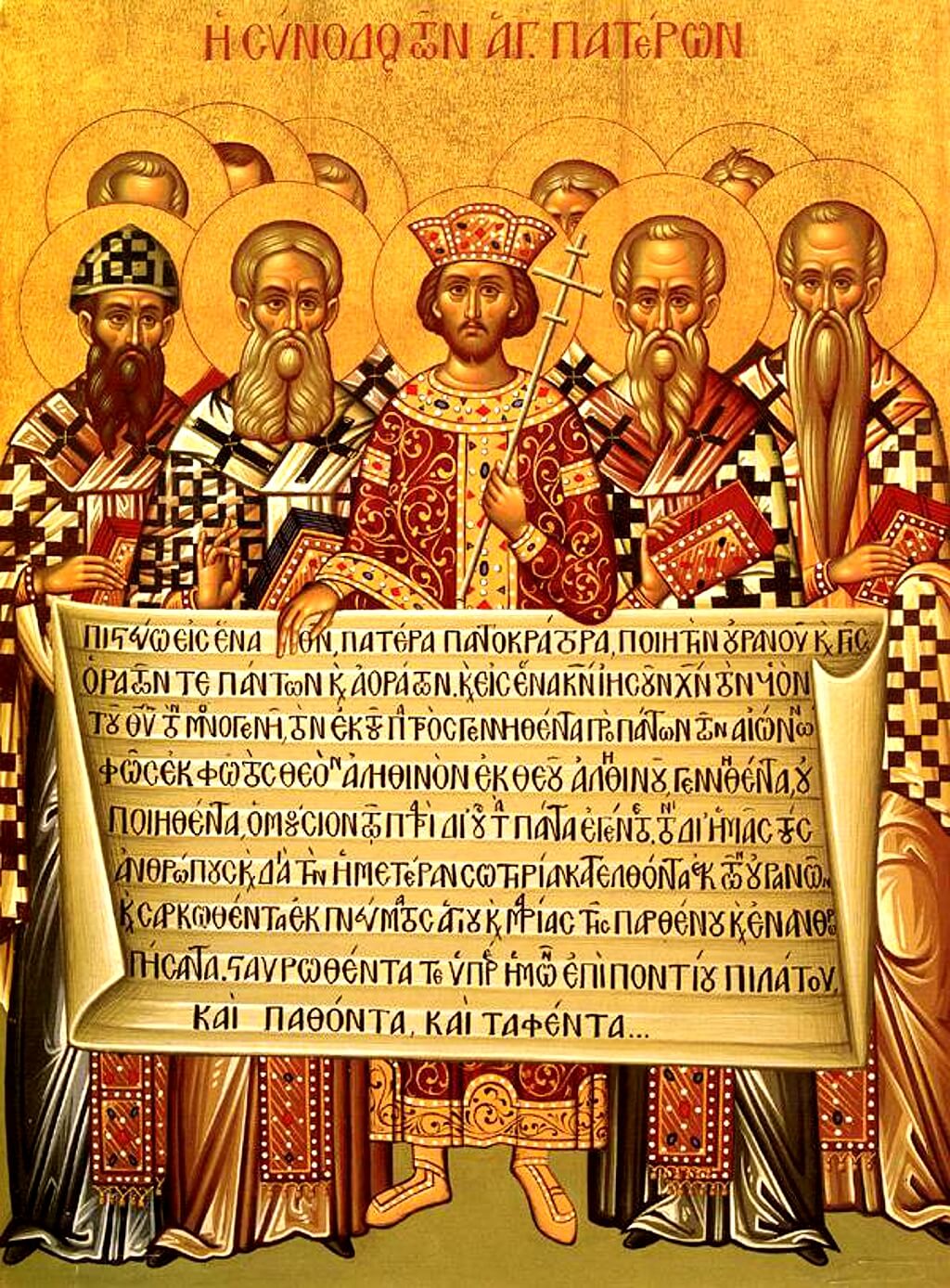
Creedal Christians: The Nicene Creed
Posted by Luke J. Wilson on 2nd June 2019 in Early Church | nicene creed,nicea council,creeds,creedal christians,creedal
The Nicene Creed — what is it and why is it called that?
This creed gets its name from a time and place: the first ecumenical Church council held at Nicaea, which is now known as İznik in northwestern Turkey, in 325 AD.
Now that may raise another question for you: what is an ecumenical council? Well, to explain more about the Nicene Creed, we are going to have to take a look at The First Council of Nicaea in order to better understand why this creed was written.
First things first though; an “ecumenical council” is ideally a Church-wide meeting where all the Bishops from all across the Church come together to hold a very large and very important meetin...
The Coming of Jesus: Coming on the clouds
Posted by Luke J. Wilson on 21st April 2014 in Second Coming Series | Second Coming,Return of Christ,Return of Jesus,Preterism,Prophecy,Last Days,Left Behind,Part 2,Part two,Coming in the Clouds,surfing,Eschatology
Coming on the clouds of heaven
Then the sign of the Son of Man will appear in heaven, and then all the tribes of the earth will mourn, and they will see ‘the Son of Man coming on the clouds of heaven’ with power and great glory.
When people read Jesus saying that he will be "coming on the clouds of heaven with power and great glory" in Matthew 24:30, it often taken to mean that he will be doing that literally as opposed to figuratively.
Kinda like this, but on clouds.
Careful now, before you put on your heretic hunting hats and grab your pitchforks — let me explain why I say that Jesus wasn't telling his fol...
Powered by WebBoss.io 3.7.1
Copyright © 2026 The Sacred Faith: Timeless Truths for Modern Minds. All Rights Reserved.
