
Blog Search Results


43 results for tradition
found
within the Blog
6 displayed out of 43 (0.03seconds)Page 5 of 8

Rob Bell's “Love Wins” (Review)
Posted by Luke J. Wilson on 5th April 2014 in Hell | Rob Bell,book review
...Medieval tradition and imagery over the last few centuries.
Anyone who is aware of the controversy that was/is surrounding this book and who heard that that Rob Bell "doesn't believe in hell" can rest assured that this isn't the case.
To quote the book, Bell writes:
"There is a hell now, and there is a hell later, and Jesus teaches us to take both seriously." (pg. 79)
It's not only that he believes in hell "later" (i.e. after death), but also that because of our freedom of will in this life we can, and do, create hell on earth through our actions and sins.
Likewise, we can also create heaven on earth in the same way. This is what Jesus referred to when...
What was so good about Good Friday?
Posted by Luke J. Wilson on 18th April 2014 in Easter | Good Friday,Jesus,crucifixion,forgiveness,sin,Easter,Holy Week,Christmas
...gan/Roman tradition, the Christians had nothing to do with it. It wasn't until around the 4th Century when Pope Julius declared December 25th as the date in order to corresponded with the Roman feast of Saturnalia.
But the real celebration, and the main thrust and focus in the New Testament is the death of Jesus and his subsequent resurrection. While there does seem to be some evidence to suggest that by the 2nd Century, early Christians were celebrating Easter, it sometimes feels like the Modern Church has placed more emphasis on Jesus's birth in terms of celebrations and events, than it does for his resurrection. Though that's probably partly due to Weste...
The Temptations of Jesus: Testing God
Posted by Luke J. Wilson on 4th March 2018 in Lent | temptation,testing God,pinnacle,Temple,Jesus,Satan,wilderness,Lent,desert,Armour of God
...y, Church tradition), the spot where he was baptised is close to Jericho. Directly next to this area is the Judaean Desert, which would be the wilderness where Jesus spent his time. On the other side of this desert is Jerusalem, which is about 27 miles away from the spot by the Jordan where the baptism took place. I’ve put together a quick map so you can get a better idea of locations:
Approx. locations of events
Anyway, I digress slightly. The point being, is that where Jesus was and where he was taken was not exactly just around the corner! Coupled with the fact that the devil took Jesus up to the pinnacle of the Temple, this was quite a journey. Now t...
Creedal Christians: The Apostle's Creed
Posted by Luke J. Wilson on 11th October 2018 in Early Church | creedal christians,creeds,creedal,apostles,apostolic creed,apostolic tradition,rule of faith,early church fathers,early church
...The Apostle's creed — what is it and why is it called that?
Outside of the New Testament, this is one of the oldest creeds we have, dating back to the sixth – eighth century in its current form that is commonly known today, but having its origins much earlier — as far back as the second century in a shorter form known simply as the “Old Roman Creed”.
The Apostles creed is also sometimes referred to as the “Rule of Faith” as it is a summary of the Gospel and is the basis for pretty much all modern theology. The points of the creed cover all the major pillars of the Christian faith which aims to safeguard what is true orthodoxy (right belief), whic...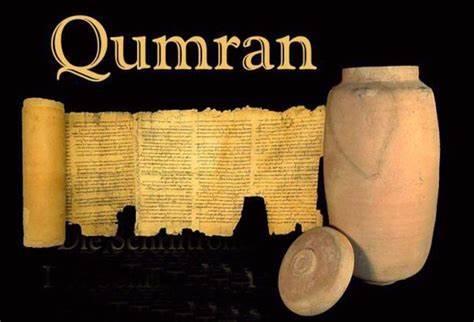
Did the Qumran community predict the coming of Jesus?
Posted by Luke J. Wilson on 28th April 2015 in General Interest | Qumran,Dead Sea Scrolls,Messianic,4Q521,prophecy,Christ
...Christian tradition is that these passages from Luke and Matthew come from the source scholars have designated as Q, from the German word Quelle, meaning “source.” According to most N.T. scholars, Q was a collection of the “Sayings of Jesus,” somewhat like the Gospel of Thomas in genre, which was compiled in the middle of the first century, but before our finished Gospels (Matthew, Mark, and Luke) were written.
It's very interesting stuff and gives us a great insight and glimpse into the world and surrounding culture of the time of Jesus!
You can read full article here which I quoted from above, or have a look at a full translation of the text her...
Lent: Day 6 - Ignatius to the Magnesians
Posted by Luke J. Wilson on 7th March 2017 in Lent | Lent,great lent,fasting,early church fathers,devotional,daily reading,Ignatius,Ignatius of Antioch: Letter to the Magnesians
...Day Six: St. Ignatius of Antioch: Letter to the Magnesians (full text)
Who: Ignatius converted at a young age and later became Bishop of Antioch. A friend of Polycarp and fellow disciple of John, there is a long standing tradition that Ignatius was the child that Jesus held in his arms and blessed in Mark 10:13-16
What: Ignatius urges the church to continue in unity, to honour their leadership and to avoid Judaizers who may try to bring false teaching. This letter also gives some valuable insight to early church hierarchy.
Why: Ignatius wrote a series of letters to the churches in Asia Minor whilst en route to Rome to face martyrdom by wild beasts in the Col...
Powered by WebBoss.io 3.7.1
Copyright © 2026 The Sacred Faith: Timeless Truths for Modern Minds. All Rights Reserved.
