Blog Search Results


Did you mean:
end times
?
120 results for End Times
found
within the Blog
6 displayed out of 120 (0.60seconds)Page 6 of 20

Evidence of the Trinity in the Hebrew Scriptures
Posted by Arnold Fruchtenbaum on 8th November 2017 in Trinity | trinity,monotheism,shema,Jewish,Jews,Messiah,messianic,Jews for Jesus,jewsforjesus.org,tri-unity,creeds
Table of Contents
Jewishness and the Trinity
1. God Is A Plurality
The Name Elohim
Plural Verbs used with Elohim
The Name Eloah
Plural Pronouns
Plural Descriptions of God
The Shema
II. God Is At Least Two
Elohim and YHVH Applied to Two Personalities
III. God Is Three
How Many Persons Are There?
The Three Personalities in the Same Passage
Conclusion
New Testament Light
I was recently in some discussions/debates online about the nature of God and whether the "Trinity" exists, or if God is purely singular and exists in different forms rather than different persons.
This idea that God has different "forms" or "mod...
What does the word "Catholic" mean?
Posted by Luke J. Wilson on 8th March 2021 in Etymology | catholic,church fathers,church history,etymology,roman catholic,eastern orthodox,Great Schism,Muratorian Fragment
For many people today, non-Christians and (low church) Christians alike, when they hear the word “Catholic”, certain images spring to mind: the Pope, the rosery, Catholic school, big old churches buildings, choirboys, maybe monks or statues of Mary even; and sadly more recently, sex abuse scandals.
But, generally speaking, all of these are actually aspects of Roman Catholicism — a particular branch of Christianity, and not what the word “catholic” truly means as we’ll see when examining how the early church used the word and what the original Greek word means.
καθολικός (katholikos)
The Greek word where we get the English word “c...
Christians and the Coronavirus (COVID-19)
Posted by Luke J. Wilson on 20th March 2020 in Coronavirus |
We currently live in troubled Times lately with a lot of uncertainty around us, both locally and globally. But even now as I write this and think on the topic of the virus, one verse in particular springs to mind:
Psalm 23:4Even though I walk through the valley of the shadow of deathI fear no evil;for you are with me;your rod and your staff — they comfort me.
It does feel a little bit like we are all walking through “the valley of the shadow of death” at the moment! But as the Psalmist says, “I fear no evil” for God is with us and comforts us. That doesn’t necessarily mean we won’t get sick (or die), but that no matter what is happening aroun...
Slavery in the Bible – Does God Condone Slavery?
Posted by Joshua Spaulding on 15th September 2020 in Slavery | slavery,bond-servant,Philemon
This is a guest post by Joshua Spaulding from eternalanswers.org. The views are that of the author and don't necessarily reflect the views of That Ancient Faith.
As you read through the Scriptures, you will come across some passages that seem to suggest that slavery is not condemned by God. Some who think this to be the case are sincerely seeking truth, while others are only looking for reasons to discount the Bible.
Some of the passages in question are Exodus 21:2-6, Deuteronomy 15:12-15, Ephesians 6:5 and Colossians 4:1 which provide instruction on the treatment of slaves.
In light of these Scriptures, does God condone slavery?
Before diving too deep...
Is fasting an expectation for Christians?
Posted by Luke J. Wilson on 29th February 2020 in Fasting | fasting,Lent,Ash Wednesday,self control,self denial
The season of Lent is here once again which of course brings up the topic of fasting, since the tradition of Lent comes from following Jesus’ example of his time in the wilderness (Luke 4:1–2). I wasn’t planning on writing anything specific this year like I have previous in previous years, but I felt inspired today at church from one of Gospel readings:
Matthew 9:14–15
Then the disciples of John came to him, saying, “Why do we and the Pharisees fast often, but your disciples do not fast?” And Jesus said to them, “The wedding guests cannot mourn as long as the bridegroom is with them, can they? The days will come when the bridegroom is t...
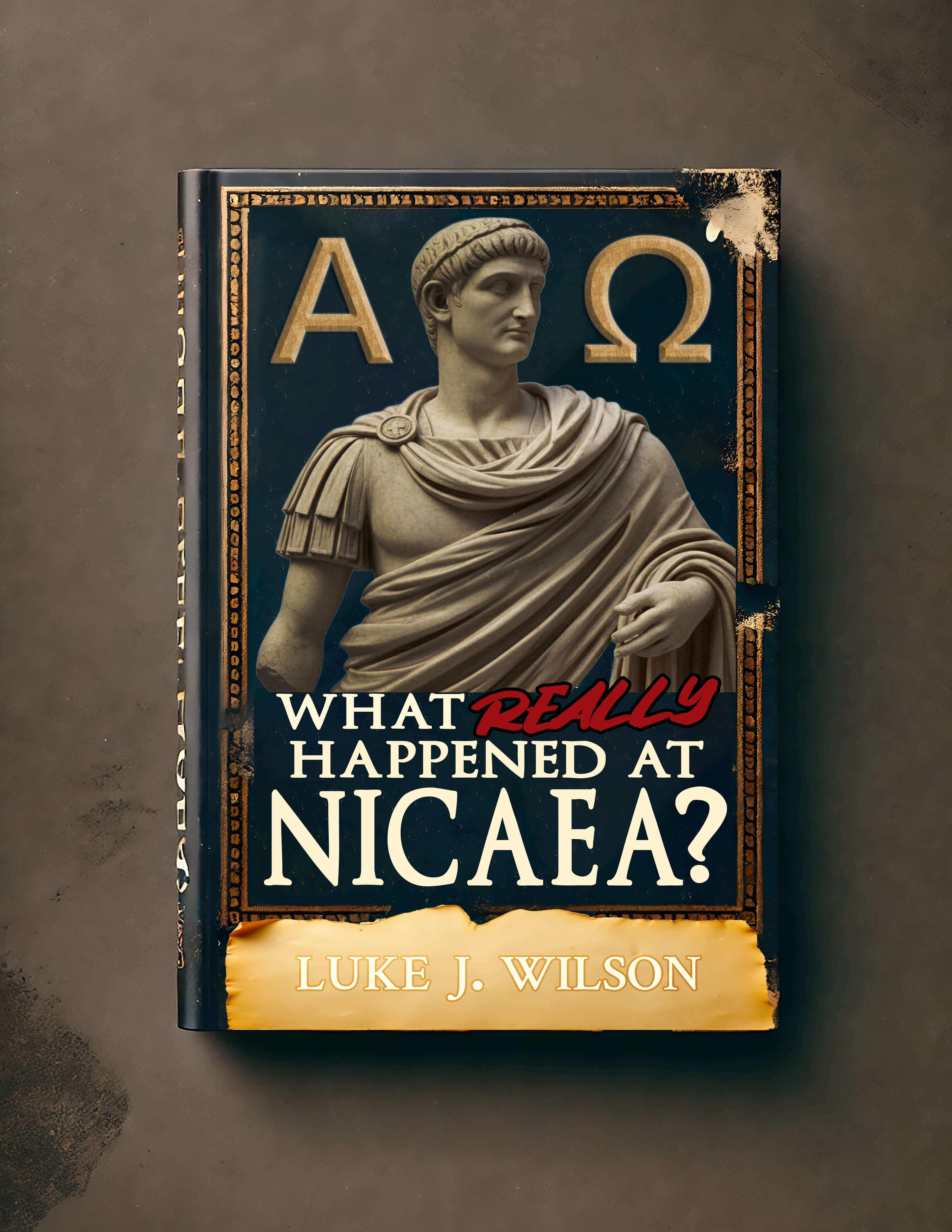
Did the Early Church invent the Trinity?
Posted by Luke J. Wilson on 4th January 2022 in Trinity | early church,trinity,church fathers,theology,council of nicaea,nicea council
The doctrine and concept of the Trinity is encapsulated in Matthew 28:19, where Jesus instructs the apostles: “Go therefore and make disciples of all nations, baptizing them in the name of the Father and of the Son and of the Holy Spirit”. John, who was very close to Jesus and obviously knew him well, alludes to this teaching frequently in his Gospel, too. For example: John 1:1; John 8:58; John 10:30; and John 10:38.
Yet, despite this, and numerous other examples throughout the New Testament which point towards the threefold nature of God, plenty of myths and legEnds abound online and in books which state that the divinity of Jesus (and therefore the Trinit...
Powered by WebBoss.io 3.7.1
Copyright © 2026 The Sacred Faith: Timeless Truths for Modern Minds. All Rights Reserved.