
Blog Search Results


Did you mean:
part one
?
193 results for Part one
found
within the Blog
6 displayed out of 193 (0.50seconds)Page 6 of 33

Does Christmas have pagan origins?
Posted by Luke J. Wilson on 19th December 2019 in Christmas | christmas,xmas,origins,pagan,pagan roots,church fathers,church history,Saturnalia,Epiphany,Annunciation,Tertullian,Origen,john chrysostom,incarnation,liturgical calendar,church calendar,festivals
For most people, the question of the origins of Christmas is probably far from their minds. Some may recognise and give a cursory glance towards the Biblical narrative on the birth of Jesus as something to do with it (although a 2017 study showed that almost 1 in 20 Brits thought Easter was the birth of Jesus!);—but in some Christian circles the question (accusation?) that “Christmas is pagan” is at the forefront of their minds.
Table of Contents
When was December 25th celebrated?
The Christian Calendar
Concluding Thoughts
Bonus Information
Further Reading & Sources:
As time goes on and we move further and further into the future,...
Unveiling the Trinity: Exploring the Nature of Jesus and the Incarnation
Posted by Luke J. Wilson on 4th November 2023 in Trinity | trinity,incarnation,two powers in heaven
I recently received a question about the nature of Jesus and the incarnation, which delves into the mystery of the Trinity:
"Sorry to trouble you, but I have only one question: Is God the Father and Jesus His Son the same, God Himself in the flesh when He walked the earth? I am still struggling with this concept. When Jesus asked His Father, was He essentially talking to Himself?"
Thanks so much for the question, and it is a good question when asked genuinely. It is obviously a very deep and complex topic that covers a lot of Scripture (and history) to fully make sense of, but I’ll try and keep this brief to cover the key points.
To gain a better unders...
What is Monarchical Trinitarianism?
Posted by Luke J. Wilson on 21st July 2024 in Trinity | trinity,monarchy of the Father,Monarchical Trinitarianism,church fathers,church history
Monarchical Trinitarianism, also referred to as the “Monarchy of the Father,” is a theological perspective that asserts the Father as the sole source (or monarch) within the Trinity. This view maintains a clear distinction of roles among the Father, the Son, and the Holy Spirit while upholding their unity in essence. It is essential to distinguish this from Monarchianism, a heretical belief condemned in the 4th century, which posited that God is a single person rather than three distinct persons.
The Eternal Begottenness of the Son
The term “created” used by the early pre-Nicene Fathers does not align with the Arian view, which posits that the Son was...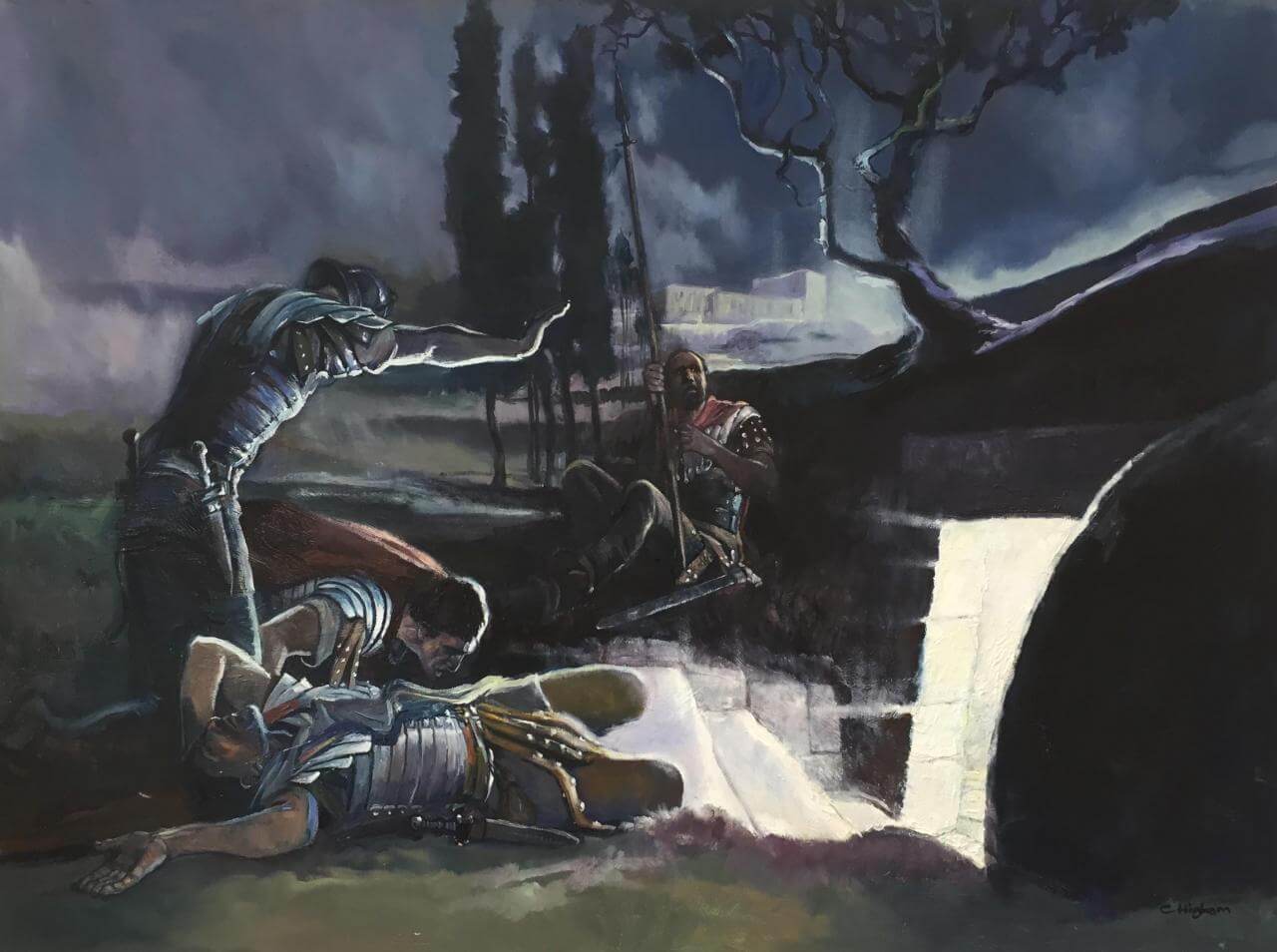
Raised in the Heavenlies!
Posted by Luke J. Wilson on 27th March 2016 in Easter | resurrection,Jesus,new birth,new life,born again,baptism,spiritual resurrection,physical resurrection,glorified bodies,third day,Easter,easter sunday
Easter is upon us once again! Lent is over, Good Friday has passed and now the time for mourning and fasting is complete. It's a time to feast, a time to remember and celebrate the resurrection of Christ as we look forward to our own final resurrection!But what really is the resurrection? How will we be resurrected, and what does it mean for us that Jesus rose again? Let’s explore what this means for us as Christians, and see what the Scriptures say.
The resurrection is spiritual!
That heading may cause some reading this to question me, but do read on – this is actually what the New Testament teaches us (though not only this type of resurrection).
Many ti...
Lent Day 34: Cyril of Jerusalem: Catechetical Lectures: Lecture XXIII
Posted by Luke J. Wilson on 8th April 2017 in Lent | Lent,great lent,fasting,early church fathers,devotional,daily reading,Doctor of the Church,lectures,liturgy,catechism,Bishop of Jerusalem,Eucharist,Lord's Prayer
Day Thirty-four: St. Cyril of Jerusalem: Catechetical Lectures: Lecture XXIII
Who: Bishop of Jerusalem and Doctor of the Church, born about 315; died probably 18 March, 386. Little is known of his life, except from his younger contemporaries, Epiphanius, Jerome, and Rufinus, as well as from the fifth-century historians, Socrates, Sozomen and Theodoret.
What: Each of the lectures deal with a different topic to teach converts the mysteries of the Church, Particularly: rites of the renunciation of Satan and his works, of anointing with oil, of baptism, of anointing with the holy chrism, and of Partaking of the body and blood of Christ.
Why: Cyril delivered to ne...
Lent Day 40: Leo the Great: Sermon LXXII: ON THE LORD'S RESURRECTION, II
Posted by Luke J. Wilson on 15th April 2017 in Lent | Lent,great lent,fasting,early church fathers,devotional,daily reading,Doctor of the Church,lectures,Leo the Great,St Leo,Pope Leo I,sermon,resurrection,easter,easter sunday
Day Forty: St. Leo the Great: Sermon LXXII: ON THE LORD'S RESURRECTION, II
Who: Leo the Great, also known as Pope St. Leo I (the Great), was Pope from 440-61 AD. Place and date of birth unknown; died 10 November, 461. Leo's pontificate, next to that of St. Gregory I, is the most significant and important in Christian antiquity, as he tried to combat the heresies which seriously threatened church unity even in the West, such as Pelagianism.
What: A sermon on the Gospel, incarnation and resurrection of our Lord.
Why: To encourage the Church in the power of the incarnation and the true faith and the nature of Christ and to give a new meaning to Passover in lig...
Powered by WebBoss.io 3.7.1
Copyright © 2026 The Sacred Faith: Timeless Truths for Modern Minds. All Rights Reserved.
