
Blog Search Results


45 results for fallen angels
found
within the Blog
6 displayed out of 45 (0.41seconds)Page 6 of 8

Lent Day 27: Athanasius: Life of Anthony: Chaps. 61-70
Posted by Luke J. Wilson on 31st March 2017 in Lent | Lent,great lent,fasting,early church fathers,devotional,daily reading,Athanasius,Bishop of Alexandria,Confessor,Doctor of the Church,Anthony the Great,demons,healing,miracles,heresy,heretics,Arianism,deity of Christ
Day Twenty-seven: St. Athanasius: Life of Anthony: Chaps. 61-70
Who: Bishop of Alexandria; Confessor and Doctor of the Church; born c. 296; died 2 May, 373 AD. He was the main defender of orthodoxy in the 4th-century battle against the Arianism heresy. Certain writers received the title “Doctor” on account of the great advantage their doctrine had on the whole Church, Athanasius especially for his doctrine on the incarnation.
What: The biography of Anthony the Great’s life, which helped to spread the concept of Christian monasticism, particularly in Western Europe.
Why: From the letter’s own prologue: “The life and conversation of our holy Father...
What did Jesus actually sacrifice?
Posted by Luke J. Wilson on 18th March 2018 in Lent | Jesus,Jesus death,sacrifice,Jesus sacrifice,atheist,meme,flogging,crucifixion,Godhead,eternal consequences
Sometimes the question, or accusation/criticism maybe, is posed by atheists and critics of Christianity that Jesus didn’t really sacrifice anything because he is God and also because he got his life back three days later. So where’s the sacrifice if you know that what you give up will be given back, and given back even better than you previously had it?
It’s an interesting question, and one that should cause us to stop and think about what we, as Christians, say to non-believers in case the question is ever given to us. Most people will say Jesus gave up his life for us – but is that such a big deal if he knew he’d have it back in three days; and th...
The Coming of Jesus: The Olivet Discourse – Part 2
Posted by Luke J. Wilson on 3rd February 2016 in Second Coming Series | Second Coming,Return of Christ,Return of Jesus,Preterism,Prophecy,Last Days,Left Behind,Eschatology,Matthew 24,Olivet Discourse,Josephus,history,Part 2,Desolation,Temple Destruction,Jewish War,70AD
Welcome to Part Two of the Olivet Discourse! It’s been a while, so we’ll pick up right where we left off with Matthew 24 verse 15 onwards, after a small recap of the chapter so far.
The Olivet Discourse begins with the disciples admiring the architecture of the temple in Jerusalem. Jesus responds to this by telling them that it will all be thrown down and destroyed, to the point that not one stone will be left on another. Later on, when they are sat on the Mount of Olives, Jesus’ disciples come to him and ask “when will this happen?” and “what will be the sign” that all of this is about to commence?
If we look at the accou...
The Coming of Jesus: Our Future Hope - What Now?
Posted by Luke J. Wilson on 22nd January 2016 in Second Coming Series | second coming,70 weeks,70ad,what now?,what next,preterism,fulfilled prophecy,eighth day
So here we are at the final part of this Coming of Jesus series. If you’re new here, you can start from the beginning by clicking here, or carry on reading as I will give a brief overview of what’s been covered so far.
This series has covered many topics and themes of eschatology, starting with Daniel’s prophecy of the Messiah’s first coming to this world, all the way through to the prophecies of another coming. It’s been a very interesting and eye-opening journey of discovery, at least for myself, if no one else. I didn’t start this study with a particular doctrine or conclusion in mind, but rather went in with the minds...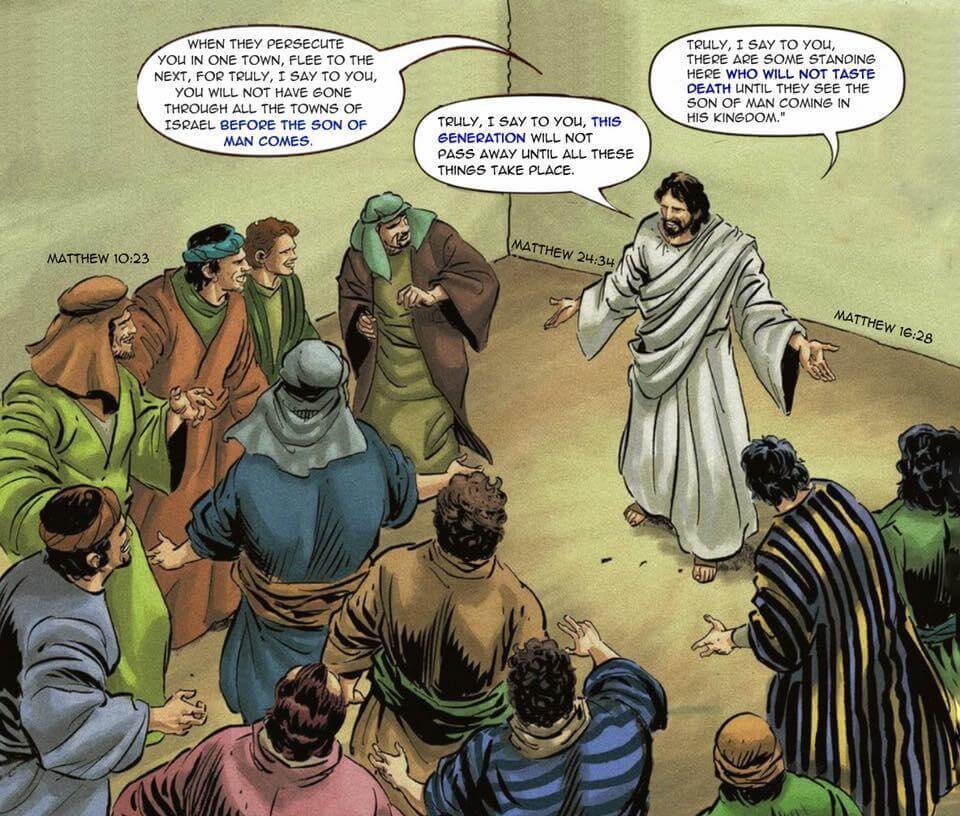
The Coming Kingdom of the Son of Man
Posted by Luke J. Wilson on 20th July 2016 in Eschatology | second coming,preterism,Kingdom of God,Coming kingdom,olivet discourse,Gospels,end times,end of the world,end of the age
The importance of context of what's being said, and to whom, in Scripture.
I came across this image the other day (in the header above; see larger here) that links together three parts of Matthew’s Gospel to highlight the connection which many often miss, or read as separate events. I like the image because it shows that when Jesus spoke these things, he would have been saying them directly to the disciples and others who were listening to his teaching, and not in some cryptic, ambiguous dictation to a prophetic scribe, devoid of all context and meaning to those around him at the time.
Update Feb 2017: I am adding some additional information to this to dis...
Lent: Day 7 - Ignatius to the Trallians
Posted by Luke J. Wilson on 8th March 2017 in Lent | Lent,great lent,fasting,early church fathers,devotional,daily reading,Ignatius,Ignatius of Antioch: Letter to the Trallians,Docetism
Day Seven: St. Ignatius of Antioch: Letter to the Trallians (full text)
Who: Ignatius converted at a young age and later became Bishop of Antioch. A friend of Polycarp and fellow disciple of John, there is a long standing tradition that Ignatius was the child that Jesus held in his arms and blessed in Mark 10:13-16
What: Ignatius urges the church to continue in unity and to honour their leadership. This letter also gives a defence against certain heresies.
Why: Ignatius wrote a series of letters to the churches in Asia Minor whilst en route to Rome to face martyrdom by wild beasts in the Colosseum around 108 AD.
When: Around 107-108 AD
The letter to the Tr...
Powered by WebBoss.io 3.7.1
Copyright © 2026 The Sacred Faith: Timeless Truths for Modern Minds. All Rights Reserved.
