
Blog Search Results


75 results for human suffering
found
within the Blog
6 displayed out of 75 (0.51seconds)Page 6 of 13

It's no longer about land!
Posted by Luke J. Wilson on 16th August 2014 in Israel | Israel,war,politics,current events,Hamas,Gaza,promised land,New Covenant,spirit and truth,worship,new creation
As I've been thinking more about the Israel situation, and reading and hearing the responses and debates on my last article, and the issue in general, it seems to me that people can't help but get stuck in the mindset of a geo-political debate. Yes, there's a place called "Israel" in the middle-east, and yes there's a war going on which is terrible for all involved — but from a New Testament Christian perspective, that shouldn't be our focus when it comes to thinking about the true Israel!
This is what it's about!
If you want to "support Israel" because you believe they are in the right or have 'just cause', then fine – just don't cal...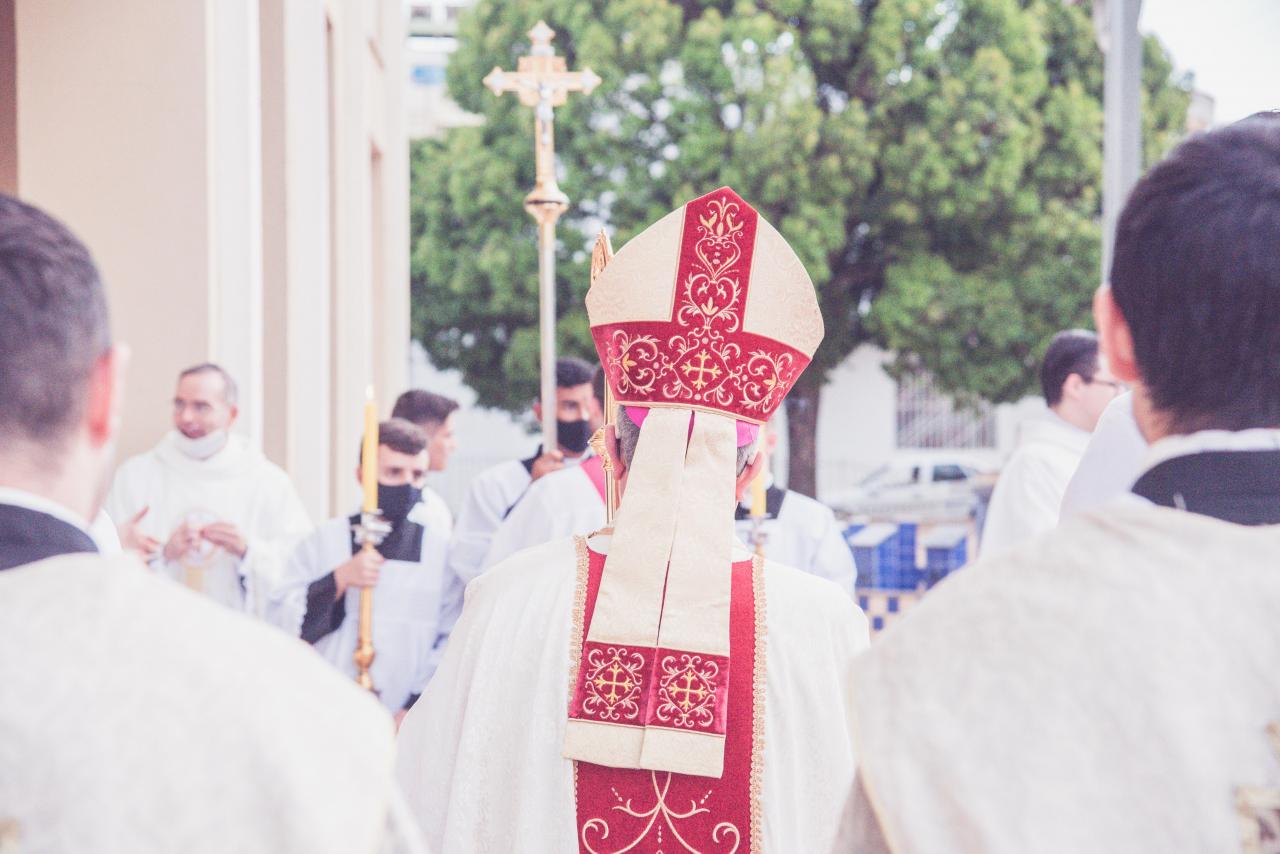
What does the word "Catholic" mean?
Posted by Luke J. Wilson on 8th March 2021 in Etymology | catholic,church fathers,church history,etymology,roman catholic,eastern orthodox,Great Schism,Muratorian Fragment
For many people today, non-Christians and (low church) Christians alike, when they hear the word “Catholic”, certain images spring to mind: the Pope, the rosery, Catholic school, big old churches buildings, choirboys, maybe monks or statues of Mary even; and sadly more recently, sex abuse scandals.
But, generally speaking, all of these are actually aspects of Roman Catholicism — a particular branch of Christianity, and not what the word “catholic” truly means as we’ll see when examining how the early church used the word and what the original Greek word means.
καθολικός (katholikos)
The Greek word where we get the English word “c...
How Old Was Jesus When He Died? A Fresh Look At The Historical Clues
Posted by Luke J. Wilson on 9th April 2025 in History | history,church fathers,church history,Jesus,crucifixion
We often hear that Jesus was “about 33 years old” when he was crucified and only had a three-year ministry. But have you ever wondered how precise that number is, or why we assume that was his age, especially when Scripture doesn’t specify?
Table of Contents
The Gospel of Luke: “About Thirty”
Early Church Testimony: Irenaeus and the Longer Ministry
Historical Anchors: Birth, Pilate, and the Crucifixion Window
The Death of Herod
Cross-referencing with Pilate, Caiaphas, and Jesus
When Did Tiberius Begin to Reign?
1. From his co-regency with Augustus (AD 11–12)
2. From the death of Augustus (AD 14)
How Does This Affect Jesus’ Ag...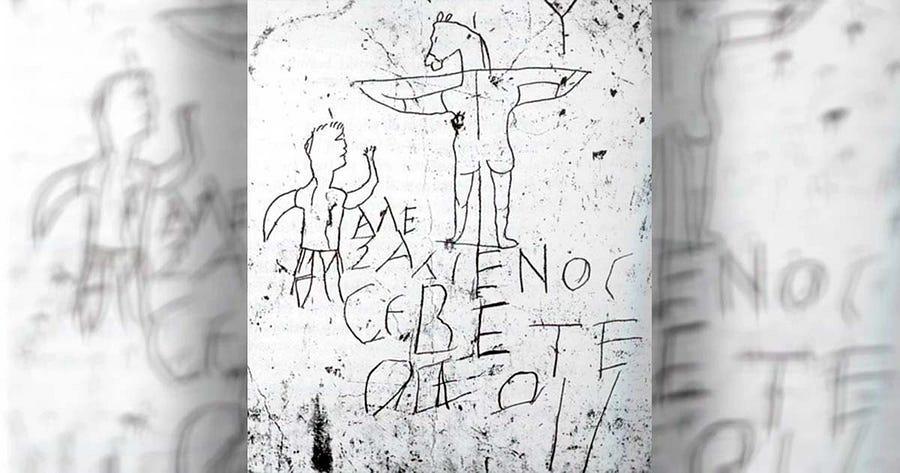
The World's Oldest Anti-Christian Meme
Posted by Luke J. Wilson on 9th March 2026 in Archaeology | Alexamenos graffito,archaeology,history
I first came across the Alexamenos graffito back in Bible college in the early 2000s. It was one of those “fun facts” that gets dropped into a church history lecture and sticks with you — the ancient Roman equivalent of someone spray-painting an insult on a wall. I filed it away, thought it was fascinating, and largely forgot about it for two decades.
Then, recently, I discovered something about it I had never known. There’s a response to it. Scratched in a different room, in a different hand.
So I started digging into this more to verify the information and discovered more historical curiosities surrounding the graffiti than I ever knew existed wh...
Lent Day 28: Athanasius: Life of Anthony: Chaps. 71-80
Posted by Luke J. Wilson on 1st April 2017 in Lent | Lent,great lent,fasting,early church fathers,devotional,daily reading,Athanasius,Bishop of Alexandria,Confessor,Doctor of the Church,Anthony the Great,miracles,Greek Philosophy,demons,healing,deliverance,the cross,foolishness of the cross
Day Twenty-eight: St. Athanasius: Life of Anthony: Chaps. 71-80
Who: Bishop of Alexandria; Confessor and Doctor of the Church; born c. 296; died 2 May, 373 AD. He was the main defender of orthodoxy in the 4th-century battle against the Arianism heresy. Certain writers received the title “Doctor” on account of the great advantage their doctrine had on the whole Church, Athanasius especially for his doctrine on the incarnation.
What: The biography of Anthony the Great’s life, which helped to spread the concept of Christian monasticism, particularly in Western Europe.
Why: From the letter’s own prologue: “The life and conversation of our holy Father...
Lent Day 36: Ambrose of Milan: Concerning the Mysteries: 5-9
Posted by Luke J. Wilson on 11th April 2017 in Lent | Lent,great lent,fasting,early church fathers,devotional,daily reading,Doctor of the Church,lectures,liturgy,catechism,Eucharist,Bishop of Milan,St Ambrose,mysteries,treatise,baptism,transubstantiation,real presence
Day Thirty-six: St. Ambrose of Milan: Concerning the Mysteries: 5-9
Who: Bishop of Milan from 374 to 397; born probably 340, at Trier, Arles, or Lyons; died 4 April, 397. He was one of the most illustrious Fathers and Doctors of the Church.
What: The treatise was composed for use during the latter part of Lent, for the benefit of those about to be baptised, the rites and meaning of that Sacrament, as well as of Confirmation and the Holy Eucharist. For all these matters were treated with the greatest reserve in the Early Church, for fear of being misused by unbelievers.
Why: Ambrose states that after the explanations he has already given of holy living (in pre...
Powered by WebBoss.io 3.7.1
Copyright © 2026 The Sacred Faith: Timeless Truths for Modern Minds. All Rights Reserved.
