
Blog Search Results


Did you mean:
second coming
?
106 results for Second Coming
found
within the Blog
6 displayed out of 106 (1.13seconds)Page 7 of 18
Lent Day 24: Athanasius: Life of Anthony: Chaps. 31-40
Posted by Luke J. Wilson on 28th March 2017 in Lent | Lent,great lent,fasting,early church fathers,devotional,daily reading,Athanasius,Bishop of Alexandria,Confessor,Doctor of the Church,Anthony the Great,demons,demonology
Day Twenty-four: St. Athanasius: Life of Anthony: Chaps. 31-40
Who: Bishop of Alexandria; Confessor and Doctor of the Church; born c. 296; died 2 May, 373 AD. He was the main defender of orthodoxy in the 4th-century battle against the Arianism heresy. Certain writers received the title “Doctor” on account of the great advantage their doctrine had on the whole Church, Athanasius especially for his doctrine on the incarnation.
What: The biography of Anthony the Great’s life, which helped to spread the concept of Christian monasticism, particularly in Western Europe.
Why: From the letter’s own prologue: “The life and conversation of our holy Father,...
Lent Day 29: Athanasius: Life of Anthony: Chaps. 81-94
Posted by Luke J. Wilson on 3rd April 2017 in Lent | Lent,great lent,fasting,early church fathers,devotional,daily reading,Athanasius,Bishop of Alexandria,Confessor,Doctor of the Church,Anthony the Great,miracles,death,persecution,arianism
Day Twenty-nine: St. Athanasius: Life of Anthony: Chaps. 81-94
Who: Bishop of Alexandria; Confessor and Doctor of the Church; born c. 296; died 2 May, 373 AD. He was the main defender of orthodoxy in the 4th-century battle against the Arianism heresy. Certain writers received the title “Doctor” on account of the great advantage their doctrine had on the whole Church, Athanasius especially for his doctrine on the incarnation.
What: The biography of Anthony the Great’s life, which helped to spread the concept of Christian monasticism, particularly in Western Europe.
Why: From the letter’s own prologue: “The life and conversation of our holy Father,...
It's no longer about land!
Posted by Luke J. Wilson on 16th August 2014 in Israel | Israel,war,politics,current events,Hamas,Gaza,promised land,New Covenant,spirit and truth,worship,new creation
As I've been thinking more about the Israel situation, and reading and hearing the responses and debates on my last article, and the issue in general, it seems to me that people can't help but get stuck in the mindset of a geo-political debate. Yes, there's a place called "Israel" in the middle-east, and yes there's a war going on which is terrible for all involved — but from a New Testament Christian perspective, that shouldn't be our focus when it comes to thinking about the true Israel!
This is what it's about!
If you want to "support Israel" because you believe they are in the right or have 'just cause', then fine – just don't cal...
New Covenant Israel is no longer physical (nor literal)!
Posted by Luke J. Wilson on 11th October 2015 in Israel | Israel,new creation,born again,new covenant
If you've read my previous two articles on Israel, then this will probably seem familiar. This is a combination of the previous two combined into one study, focussing more on who Israel is under the New Covenant rather than the geopolitical/war situation of the Middle East.
So Who is Israel?
No doubt what I'm about to say will cause some knee-jerk reactions, but to properly understand the New Covenant, we need to address the issue of who is Israel, Biblically speaking? Yes, there is a modern nation known as "Israel" now since 1948, but is that the same Israel of the Bible? The same Israel to whom God made his promises? If so, does that mean...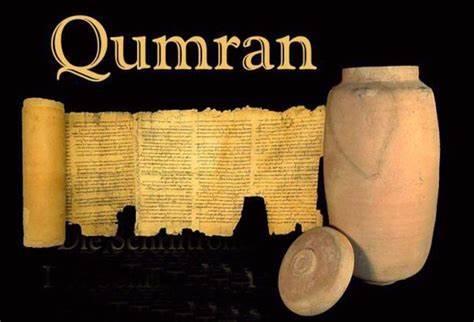
Did the Qumran community predict the Coming of Jesus?
Posted by Luke J. Wilson on 28th April 2015 in General Interest | Qumran,Dead Sea Scrolls,Messianic,4Q521,prophecy,Christ
I'm going to start a new category here for "General Interest" which will be for things I see or read about that I think are interesting or informative about the Bible, Christianity or the Faith in general; but which aren't necessarily topics I could, or would need to, write a full blog post about.
I'll kick off this new venture with an brief look at something I read the other day from the Dead Sea scrolls which is very interesting – Qumran text 4Q521. It gives us a glimpse of early Jewish expectations of the Coming Messiah from the time before Jesus arrived, and shows just how Jesus did actually meet those expectations.
For example, when John asks his disci...
Lent: Day 13 - Justin Martyr: First Apology, Chaps. 12-23
Posted by Luke J. Wilson on 15th March 2017 in Lent | Lent,great lent,fasting,early church fathers,devotional,daily reading,Justin Martyr,apologetics
Day Thirteen: St. Justin Martyr: First Apology, Chaps. 12-23
Who: Justin Martyr was a Philosopher who converted to Christianity and became a tireless evangelist and apologist. Justin wrote more Christianity than any other person prior to his time. He is classified herein as Eastern, since he a native of Samaria and his thought patterns were Eastern. However, he spent the last years of his life in Rome, where he was executed as a martyr (c. 165).
What: An apologetic (defence) essay to explain what Christians believe and do.
Why: Justin is demanding the Emperor to investigate accusations and unjust persecution against Christians so that they at least may face...
Powered by WebBoss.io 3.7.1
Copyright © 2026 The Sacred Faith: Timeless Truths for Modern Minds. All Rights Reserved.
