
Blog Search Results


214 results for has
found
within the Blog
6 displayed out of 214 (0.06seconds)Page 7 of 36
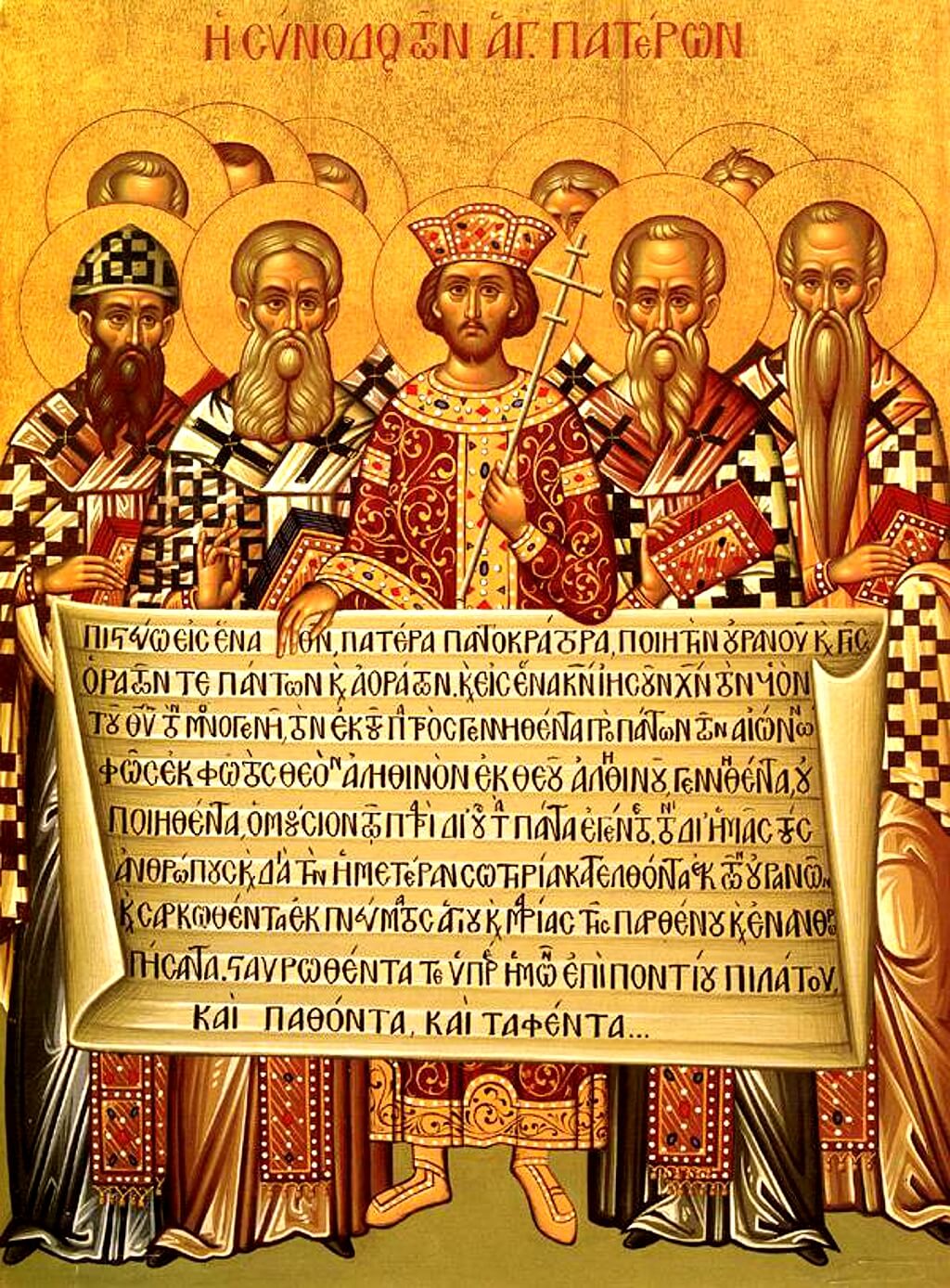
Creedal Christians: The Nicene Creed
Posted by Luke J. Wilson on 2nd June 2019 in Early Church | nicene creed,nicea council,creeds,creedal christians,creedal
...his creed has served that purpose in acting as the “gatekeeper” of orthodoxy, pointing people towards the proper understanding of God and the Christian faith via Scripturally-based statements.
Some of you reading this may already be familiar with this creed, others may recognise aspects of it, but you may not realise that the fuller and longer version that is more common actually came around 56 years later from the First Council of Constantinople in 381 AD. The initial creed was much shorter and included a statement at the end specifically targeting the teachings of Arius. This wasn’t the only revision the Nicene Creed went under, as there was another add...
The Relationship Between Jesus and Sophia
Posted by Luke J. Wilson on 22nd July 2021 in Christology | wisdom,Sophia,feminism,women,christology,early church,early church fathers
...says, “has raised up the world by His wisdom;” [Jeremiah 10:12] for wisdom, which is His word, raises us up to the truth, who have fallen prostrate before idols, and is itself the first resurrection from our fall.– Clement of Alexandria, Exhortation to the Heathen, ch. 8
For He is termed Wisdom, according to the expression of Solomon … He is also styled First-born, as the apostle has declared: “ who is the first-born of every creature.” The first-born, however, is not by nature a different person from the Wisdom, but one and the same.– Origen, De Principiis, 1.2.1
And Solomon, David’s son and successor, presenting the same thought by a differ...
Support Israel? OK, which Israel?
Posted by Luke J. Wilson on 9th August 2014 in Israel | Israel,war,politics,current events,Hamas,terrorism,promised land,Church Fathers,pacifism,nonviolence,New Covenant
...he church has a long and bloody history - but is that really the Jesus way - Jesus the "prince of peace" (Isaiah 9:6)?
How about we do what Jesus taught and support efforts for peace, and not war; praying for our enemies and those who persecute, and not take sides, you know, like we're supposed to as Christ-followers.
"But I say to you, Love your enemies and pray for those who persecute you, so that you may be children of your Father in heaven; for he makes his sun rise on the evil and on the good, and sends rain on the righteous and on the unrighteous." – Matt 5:44-45
"Do not be overcome by evil, but overcome evil with good." – Rom 12:21
In the...
What does the word "Catholic" mean?
Posted by Luke J. Wilson on 8th March 2021 in Etymology | catholic,church fathers,church history,etymology,roman catholic,eastern orthodox,Great Schism,Muratorian Fragment
...hat usage has fallen out of common use in modern times.
The first Biblical[1] reference to the word is found in Acts 9:31 when speaking about “the church throughout [all] Judea, Galilee, and Samaria…”. The words “throughout” and “all” are καθ (κατά) and ὅλης (ὅλος) respectively in Greek, which together come to form the word καθολικός.
The earliest historical use of the word, in the context of the Church, is found in one of the letters of Ignatius to the Smyrnaeans, written around A.D. 107, where he writes:
Wherever the bishop shall appear, there let the multitude [of the people] also be; even as, wherever Jesus Christ...
Coffee with Jesus: John 1
Posted by Luke J. Wilson on 14th February 2023 in Devotional |
...Brief Thoughts From Daily Devotions
I’m sure we’re all familiar with John 1, especially the first few verses:
John 1:1–2In the beginning was the Word, and the Word was with God, and the Word was God. He was in the beginning with God. Through him all things were made; without him nothing was made that has been made.
Sometimes I think we can become so familiar with a Biblical text that we can forget or gloss over the rest of it, or what comes after and around it. Similar to the other famous John verse, John 3:16. After reading all of John 1 today, I was struck again with just how much theology John packs into such a short space in the opening paragraphs (...
Is The Rapture Biblical?
Posted by Luke J. Wilson on 21st September 2020 in Eschatology | rapture,the rapture in the bible,scriptures on the rapture,N.T. Wright,john chrysostom,church fathers,church history,signs of the rapture,Coming of Christ
...orld. But has this always been so, and does it have any biblical basis?
In short: sort of.
What is The Rapture?
This is the primary verse where the doctrine finds its footing:
…then we that are alive, that are left, shall together with them be caught up in the clouds, to meet the Lord in the air: and so shall we ever be with the Lord. — 1 Thessalonians 4:17
On the face of it, that is a pretty obscure (and short) text, yet so much has been written on and speculated about around this event.
I’m not going to cover every aspect of rapture doctrine here, but rather want to just highlight the context of this verse and its parallels in Paul’s other l...
Powered by WebBoss.io 3.7.1
Copyright © 2026 The Sacred Faith: Timeless Truths for Modern Minds. All Rights Reserved.
