
Blog Search Results


107 results for ignatius of antioch: letter to the romans
found
within the Blog
6 displayed out of 107 (3.57seconds)Page 8 of 18

Understanding the New Testament: Inspiration, Canonisation, And Historical Context
Posted by Luke J. Wilson on 23rd December 2023 in Early Church | Inspiration,Scripture,early church,early church fathers,islam,Bible
A common modern perception of the inspiration of Scripture often portrays it as a rigid, divine dictation of words from God to be written down verbatim. This perspective leads to concerns among some religious communities, such as Muslims, who view any alteration or addition to the text as a potential threat to the entire faith. the Islamic understanding of inspiration emphasises direct and unalterable divine dictation, contributing to their scepticism of multiple Bible translations, which they falsely label as “corruption”.
In contrast, the Biblical inspiration of the Scriptures has never been viewed as a literal divine dictation, as if the apostles were un...
Does Easter Have Pagan Origins?
Posted by Luke J. Wilson on 22nd March 2021 in Easter | Easter,easter sunday,early church,church history,paganism,pagan roots,Ishtar,Eostre,fertility goddess
Much like any major Christian holiday, there are the usual arguments and accusations about how it’s all just pagan festivities with a “Christian mask”. Easter is no different, and usually gets hit the hardest over its so-called “pagan roots”, or in the month or so preceding it, Lent being some “invention of the Catholic Church”.
Table of Contents
the Lenten Fast
the Easter controversy and why we celebrate it when we do
Is the Name “Easter” really the Anglo-Saxon goddess Eostre?
Chocolate eggs and bunnies?
Concluding Thoughts
Further Reading and Sources
I like to try and observe Lent, as it is one of the most ancient custom...
Was Jesus worshipped in the New Testament?
Posted by Luke J. Wilson on 14th November 2023 in Worship | jesus,incarnation,worship,muslim,islam,islam vs christianity,Pliny the Younger
often a claim from critics of the faith, and especially Muslims arguing against Christianity, is that Jesus wasn't thought of as God early on and more to the point, wasn't ever worshipped in the accounts of the New Testament.
This is a very cursory look at a few places within the Gospels where Jesus was clearly worshipped, either by his followers or others he encountered, and didn't rebuke or correct people for doing something wrong.
Worshiping Jesus:
1. Matthew 14:33 - the Proclamation of Divinity
And those in the boat worshiped him, saying, “Truly you are the Son of God.”
In the aftermath of a storm on the Lake of Galilee which Jesus calmed with a...
Kirk Cameron And the Biblical Case For Annihilationism
Posted by Luke J. Wilson on 15th December 2025 in Hell | annihilationism,conditional immortality,Kirk Cameron,hell,controversy,controversial topics
Christian conversations about hell have never been especially calm, but the recent online reaction to Kirk Cameron’s comments in favour of annihilationism has been particularly revealing. Social media has erupted with accusations of heresy, doctrinal collapse, and theological compromise.
It’s the “Rob Bell Incident” all over again (if anyone remembers that).
the infamous John Piper tweet about Rob Bell
A lot of comments I saw were wondering what Ray Comfort thinks of this, as he and Kirk worked closely together in ministry for about 25 years, and while Ray wasn’t as dismissive as John Piper was of Rob Bell, he still calls out Kirk’s new vi...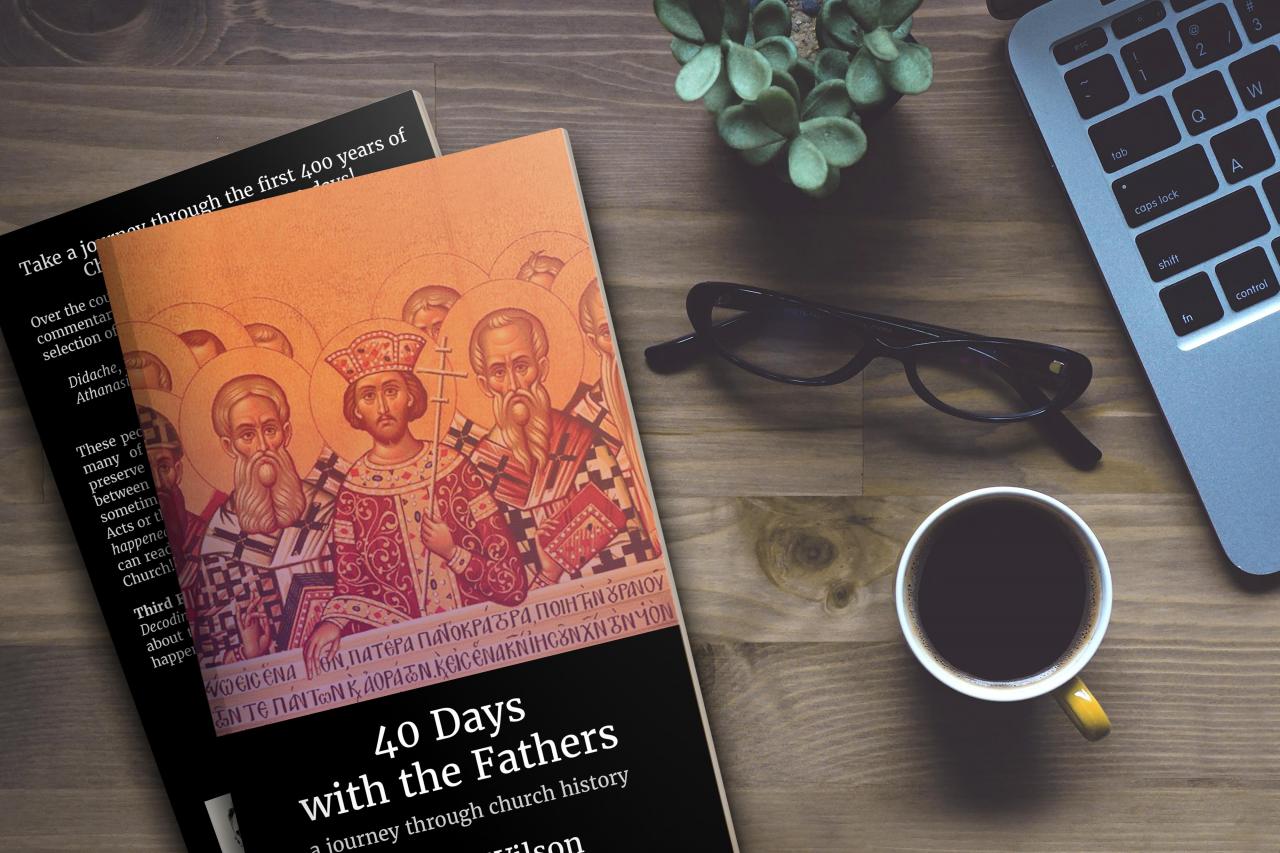
A Journey Through Church History
Posted by Luke J. Wilson on 31st January 2022 in Book Release | church fathers,church history,book release,council of nicaea
After many, many months of working on this in between COVID and other “life events” that kept me busy, I’ve finally released the Third Edition of my book, 40 Day With the Fathers: A Journey Through Church History!
the Third Edition includes: a foreword by Paul Pavao (author of Decoding Nicea), updated content and also a new chapter about the Council of Nicaea explaining what did (and didn’t) happen there.
“I cannot imagine there is a better way to get familiar with 350 of the most important years of church history in seven hours spread over 40 days.” — Paul Pavao, author of Decoding Nicea
If you are unfamiliar with my previous editions...
Great is the Mystery of Faith!
Posted by Luke J. Wilson on 17th September 2022 in Early Church | Melito of Sardis,Faith,mysteries,church fathers,early church fathers,Quotes,fragment
A little while ago, I came across a quote on Facebook by a guy called Melito of Sardis.
St. Melito of Sardis
Melito was bishop of the church in Sardis (modern-day Sart), a city of Asia Minor near Smyrna (modern-day Izmir, Turkey), and lived between 160-170/177 AD until he was martyred, possibly under the reign of Marcus Aurelius. Due to the close proximity of locations, he may also have known ignatius who was also from Asia Minor, and potentially was also an acquaintance of Polycarp and his disciple, Irenaeus. there’s also the thought that he may have been the successor to the leader of the church in Sardis, which is mentioned by the Apostle John in Re...
Powered by WebBoss.io 3.7.1
Copyright © 2026 The Sacred Faith: Timeless Truths for Modern Minds. All Rights Reserved.
