
Blog Search Results


58 results for sponsored post
found
within the Blog
6 displayed out of 58 (0.49seconds)Page 8 of 10

Man-Made Tradition vs Apostolic Tradition
Posted by Luke J. Wilson on 28th February 2016 in Early Church | early church,early church fathers,tradition,creeds,nicene creed,apostolic creed,man made tradition,apostolic tradition
Quite often in discussions which are about or involve some aspects of early church history or practices earlier Christians did, someone will inevitably throw out the "show stopper" that is "it's all just man made tradition" therefore not valid and the discussion is over. It’s as though saying it's "man made", without considering anything other than that they can't find an isolated chapter and verse in the bible which states something explicitly, means they've "won" the debate!
Nothing more to see here folks, someone told us it's man made so we can all go home now. Either that, or the mere mention of the word “tradition” and suddenly you’re accused of be...
Did the Early Church invent the Trinity?
Posted by Luke J. Wilson on 4th January 2022 in Trinity | early church,trinity,church fathers,theology,council of nicaea,nicea council
The doctrine and concept of the Trinity is encapsulated in Matthew 28:19, where Jesus instructs the apostles: “Go therefore and make disciples of all nations, baptizing them in the name of the Father and of the Son and of the Holy Spirit”. John, who was very close to Jesus and obviously knew him well, alludes to this teaching frequently in his Gospel, too. For example: John 1:1; John 8:58; John 10:30; and John 10:38.
Yet, despite this, and numerous other examples throughout the New Testament which point towards the threefold nature of God, plenty of myths and legends abound online and in books which state that the divinity of Jesus (and therefore the Trinit...
Jesus, Mithras and Ancient Roman Cults: Separating Fact from Fiction
Posted by Luke J. Wilson on 25th April 2023 in Mythology | Jesus,mithras,apologetics,roman gods,atheist
Welcome to the next instalment of my series looking at the ancient mythological gods and how they compare to the life, death and resurrection of Jesus. Mithras is yet another popular ancient god that people like to compare with Jesus and make wild claims about, proposing that they are the same deities with different names. But is this even remotely true?
This article has ended up being a bit longer than anticipated as it’s one of the few ancient religions that was contemporary to the birth of Christianity which was seen as somewhat of a rival belief system, so there’s a lot of interesting things to cover!
The Origins
Mithras has his roots in ancient Persi...
Is The Rapture Biblical?
Posted by Luke J. Wilson on 21st September 2020 in Eschatology | rapture,the rapture in the bible,scriptures on the rapture,N.T. Wright,john chrysostom,church fathers,church history,signs of the rapture,Coming of Christ
Most people have some idea about what the rapture is – or do they? Generally there is an idea or concept of a form of escapism from the world when Jesus returns, which happens pre, mid or post tribulation and in some connection to the millenium. Now, if you understood any of those terms, you are most likely on, or aware of, the Dispensationalism side of things.
There’s a lot of doctrine all bundled together in “end times” beliefs, and a fair bit of speculation around “the rapture” with its timing and logistics etc. which makes the whole thing a but murky, but nonetheless, it’s pretty much taken for granted as a staple belief within the Evangelical...
Where Hal Lindsey and Dispensationalism Went Wrong
Posted by Charles Meek on 2nd December 2024 in Eschatology | Dispensationalism,end times,Hal Lindsey,John Nelson Darby,false prophets
This is a guest post from Charles Meek
Hal Lindsey’s bookThe Late Great Planet Earth
Hal Lindsey’s book The Late Great Planet Earth, first edition in 1970, sold over 40 million copies. Gullible Christians got sucked into Lindsey’s soon-end-of-the-world cult-like poppycock. As time has passed without his version of Armageddon taking place, we can now objectively analyze where Lindsey went wrong:
Lindsey (p. 54, 181), like other dispensationalists, placed the beginning of the end with Israel becoming a nation in 1948. He thought all prophecy would be fulfilled within a 40-year generation (Matthew 24:34). But 1988 came and went, proving him to b...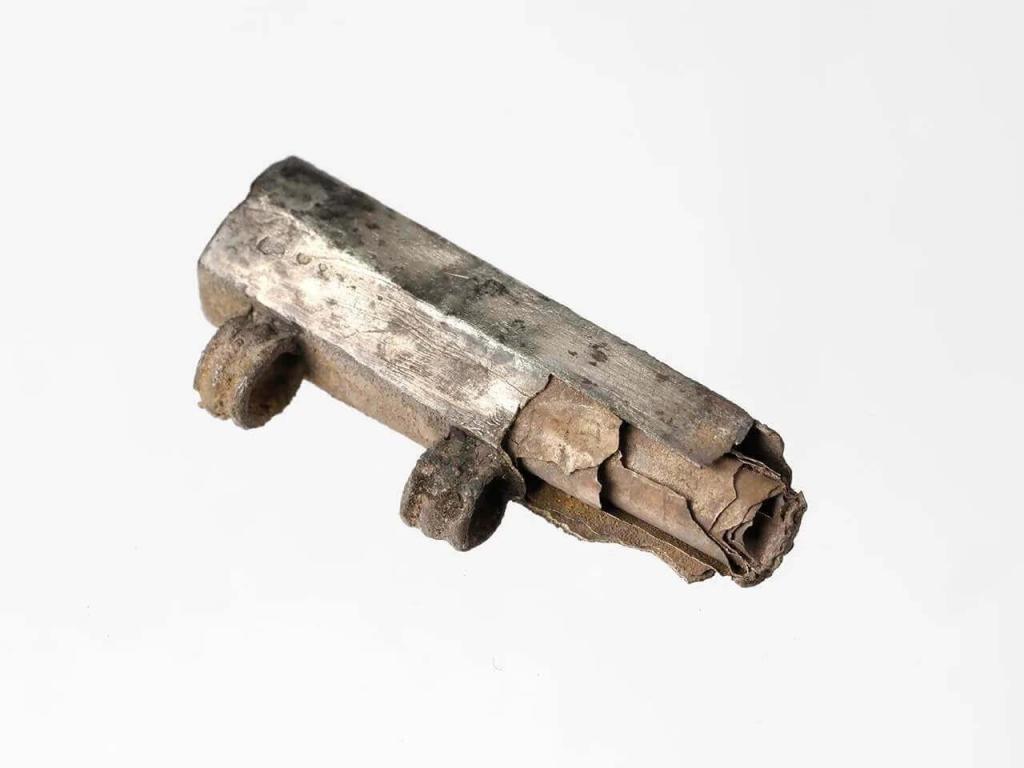
Ancient Amulet Rewrites History Of Christianity In Europe
Posted by Luke J. Wilson on 18th December 2024 in Archaeology | archaeology,amulet,discovery,current events,protection amulet
New discovery proclaims Jesus as “Son of God” a century earlier than previously thought.
An exciting archaeological discovery has recently come to light: researchers have unearthed an 1800-year-old silver amulet in Frankfurt, Germany. This amulet provides the earliest known evidence of Christianity north of the Alps and disrupts previously held ideas about the spread of the faith, namely that Christianity didn’t get to the German region around the fourth century.
The amulet, dating from approximately 230 to 270 AD, was found in 2018 beneath the chin of a man’s skeleton during excavations at a Roman burial site near the former town of Nida, now part o...
Powered by WebBoss.io 3.7.1
Copyright © 2026 The Sacred Faith: Timeless Truths for Modern Minds. All Rights Reserved.
