
Blog Search Results


56 results for five fold ministry
found
within the Blog
6 displayed out of 56 (0.71seconds)Page 9 of 10

Lent Day 35: Ambrose of Milan: Concerning the Mysteries: 1-4
Posted by Luke J. Wilson on 10th April 2017 in Lent | Lent,great lent,fasting,early church fathers,devotional,daily reading,Doctor of the Church,lectures,liturgy,catechism,Eucharist,Bishop of Milan,St Ambrose,mysteries,treatise
Day Thirty-five: St. Ambrose of Milan: Concerning the Mysteries: 1-4
Who: Bishop of Milan from 374 to 397; born probably 340, at Trier, Arles, or Lyons; died 4 April, 397. He was one of the most illustrious Fathers and Doctors of the Church.
What: The treatise was composed for use during the latter part of Lent, for the benefit of those about to be baptised, the rites and meaning of that Sacrament, as well as of Confirmation and the Holy Eucharist. For all these matters were treated with the greatest reserve in the Early Church, for fear of being misused by unbelievers.
Why: Ambrose states that after the explanations he has already given of holy living (in pr...
What did Jesus actually sacrifice?
Posted by Luke J. Wilson on 18th March 2018 in Lent | Jesus,Jesus death,sacrifice,Jesus sacrifice,atheist,meme,flogging,crucifixion,Godhead,eternal consequences
Sometimes the question, or accusation/criticism maybe, is posed by atheists and critics of Christianity that Jesus didn’t really sacrifice anything because he is God and also because he got his life back three days later. So where’s the sacrifice if you know that what you give up will be given back, and given back even better than you previously had it?
It’s an interesting question, and one that should cause us to stop and think about what we, as Christians, say to non-believers in case the question is ever given to us. Most people will say Jesus gave up his life for us – but is that such a big deal if he knew he’d have it back in three days; and th...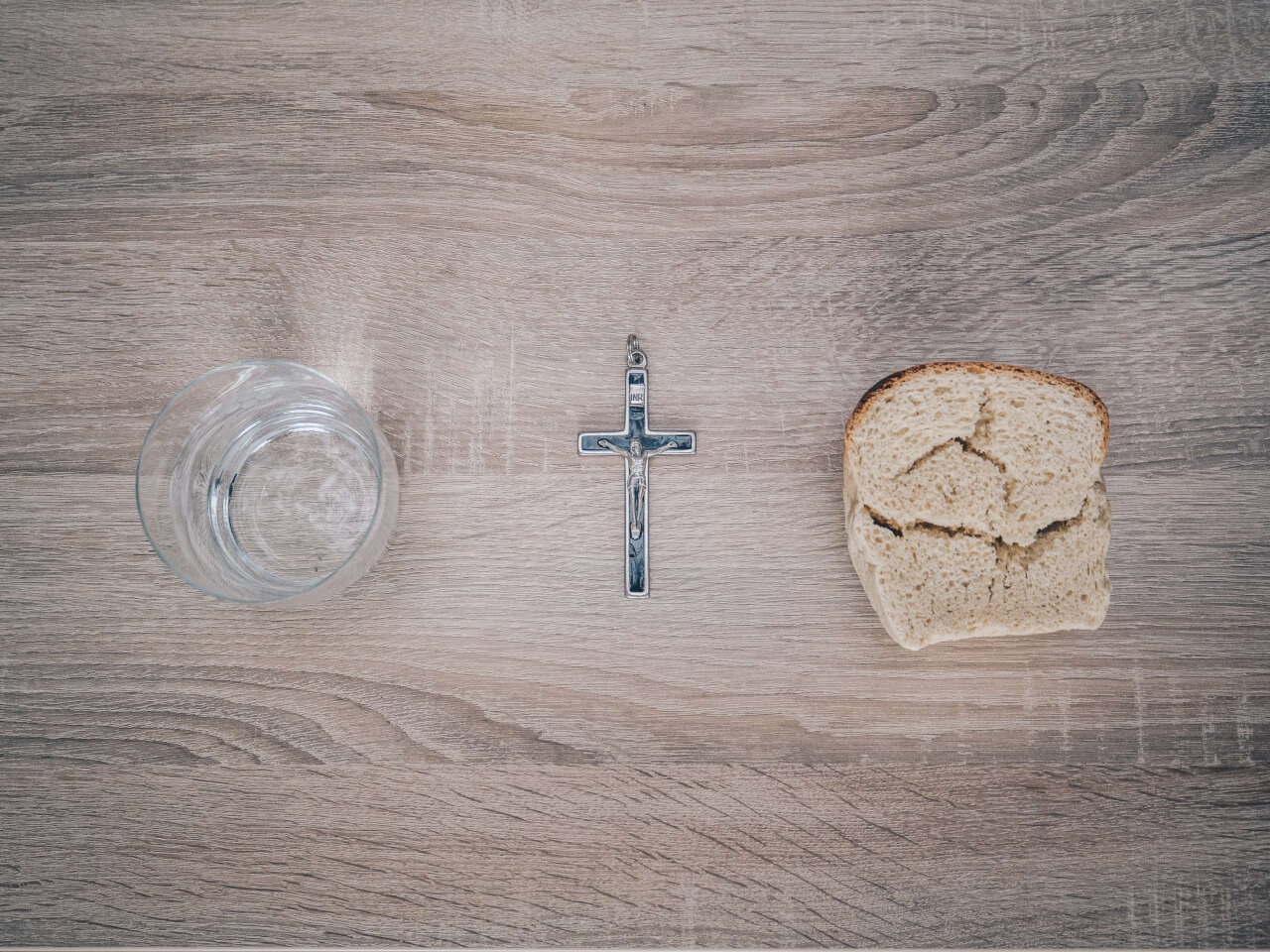
Fasting: A spiritual and physical discipline
Posted by Luke J. Wilson on 27th May 2019 in Fasting | fasting,didache,discipline,self control,Lent,early church,early church fathers
The topic of fasting often comes up in online discussion groups that I'm a part of, more often in Protestant circles where the practice is more often sidelined in low churches. So let's take a look at the practice of fasting from a practical and historical view, as it seems to be a spiritual discipline which has been pushed aside in many churches today, with prayer, worship and bible reading taking more precedence in a Christian's life instead (not that those are bad things to do!).
Why fast?
There are many reasons to fast, and recent studies have shown a lot of health benefits that can be derived from fasting. But on the spiritual side of life, there are also...
Spiritual Disciplines of the Early Church: Ancient Practices for the 21st Century
Posted by Luke J. Wilson on 17th June 2019 in Early Church |
I was asked not so long ago what kinds of things Christians did in the Early Church (first to fourth century) as a form of spiritual discipline, on a personal level as well as a corporate one. Though the concept of an individual “personal spiritual life” would have been quite foreign to first century believers as faith and Church was very much a corporate venture that had personal implications, rather than the other way around as it can often appear to be thought of today.
Much of what made Christianity structured, disciplined and set apart from society, has largely been lost in practice, or forgotten and relegated to the annals of history by many practicin...
The Resurrection as a historical event
Posted by Luke J. Wilson on 29th April 2017 in Easter | resurrection,easter,apologetics,history,historical
Table of Contents
Jesus was raised bodily – and historically
The resurrection is what makes Christianity unique!
Evidence from Paul
The mystery of the resurrection
The nature of the resurrection
The resurrection is more than physical
What with Easter still ringing in our ears, I thought it would be a good time to revisit the topic of resurrection, but from a historical standpoint and why we can trust it as a real, world-changing event. So, what really is the resurrection? How will we be resurrected, and what does it mean for us that Jesus rose again? Let’s explore what this means for us as Christians, and see what the Scriptures say.
Jesus wa...
Great Lent: The Season of Fasting
Posted by Luke J. Wilson on 13th February 2016 in Lent | Lent,Easter,Fasting,Prayer,early church,early church fathers,paganism,pagan roots
Fasting
A spiritual and physical discipline
If you are looking for a Lenten reading plan, make sure to check out my book, 40 Days with the Fathers: A Journey Through Church History, which will take you through the first 400 years of church history in forty days!
Lent is upon us once again (according to Western tradition), and so I thought it’d be good to write something on the discipline of fasting, which is often neglected or overlooked in many Protestant churches.
And much like any major holiday, there is the usual arguments and accusations about how it's all just pagan festivities with a "Christian mask". Easter is no different, and usually gets hit...
Powered by WebBoss.io 3.7.1
Copyright © 2026 The Sacred Faith: Timeless Truths for Modern Minds. All Rights Reserved.
