
Blog Search Results


64 results for sunday worship
found
within the Blog
6 displayed out of 64 (0.59seconds)Page 9 of 11
The Coming of Jesus: Daniel's 70 Weeks
Posted by Luke J. Wilson on 16th June 2014 in Second Coming Series | Second Coming,Return of Christ,Return of Jesus,Preterism,Prophecy,Last Days,Left Behind,Part 1,Part one,Daniel,70 weeks
Daniel's 70 Weeks
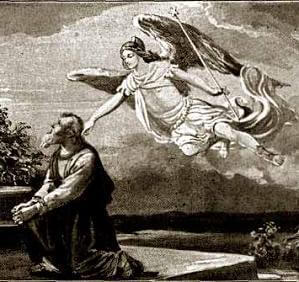
To fully understand Jesus's first, and indeed what is commonly called his "Second Coming," we need to understand the book of Daniel. This prophetic books give many details and glimpses into the future about coming kingdoms, rulers and above all, the Messiah. I'm going to be focussing on just one part of the book, chapter nine, often referred to as "Daniel's 70 Weeks". But just what is "Daniel's 70 Weeks" you might be asking as you read this. For those unfamiliar with Old Testament prophecy, it is a prophetic vision that Daniel was given from God, and interpreted by the angel Gabriel. You can read the prophecy in fu...
Lent: Day 1 - The Didache
Posted by Luke J. Wilson on 2nd March 2017 in Lent | Lent,great lent,fasting,early church fathers,devotional,daily reading,Didache
Day One: the Didache (in full)
Who: Written by an anonymous author, possibly multiple sources compiled into one book at a later date. The title translates as “the teaching”, or in its full tithe: Teaching of the Twelve Apostles.
What: The Didache is basically a church handbook with a summarised collection of the basic teachings of the Church and Gospel, aimed at local church leaders and new converts.
Why: Tradition has it as being a collection of the apostles teachings, so it was probably written to preserve this information as they grew older or died, or moved away from the communities they planted.
When: Between 70-100 AD
The Didache is one of my...
Lent: Day 13 - Justin Martyr: First Apology, Chaps. 12-23
Posted by Luke J. Wilson on 15th March 2017 in Lent | Lent,great lent,fasting,early church fathers,devotional,daily reading,Justin Martyr,apologetics
Day Thirteen: St. Justin Martyr: First Apology, Chaps. 12-23
Who: Justin Martyr was a Philosopher who converted to Christianity and became a tireless evangelist and apologist. Justin wrote more Christianity than any other person prior to his time. He is classified herein as Eastern, since he a native of Samaria and his thought patterns were Eastern. However, he spent the last years of his life in Rome, where he was executed as a martyr (c. 165).
What: An apologetic (defence) essay to explain what Christians believe and do.
Why: Justin is demanding the Emperor to investigate accusations and unjust persecution against Christians so that they at least may face...
Lent Day 27: Athanasius: Life of Anthony: Chaps. 61-70
Posted by Luke J. Wilson on 31st March 2017 in Lent | Lent,great lent,fasting,early church fathers,devotional,daily reading,Athanasius,Bishop of Alexandria,Confessor,Doctor of the Church,Anthony the Great,demons,healing,miracles,heresy,heretics,Arianism,deity of Christ
Day Twenty-seven: St. Athanasius: Life of Anthony: Chaps. 61-70
Who: Bishop of Alexandria; Confessor and Doctor of the Church; born c. 296; died 2 May, 373 AD. He was the main defender of orthodoxy in the 4th-century battle against the Arianism heresy. Certain writers received the title “Doctor” on account of the great advantage their doctrine had on the whole Church, Athanasius especially for his doctrine on the incarnation.
What: The biography of Anthony the Great’s life, which helped to spread the concept of Christian monasticism, particularly in Western Europe.
Why: From the letter’s own prologue: “The life and conversation of our holy Father...
Creedal Christians: Introduction
Posted by Luke J. Wilson on 29th September 2018 in Early Church | creeds,creedal Christians,creedal,early church,church history
I’m starting a new four part series over the coming weeks which will be looking at the different historical creeds of the Church which have been recited, used and handed down for two millennia, beginning with the very first formal creed: the Apostles Creed. This series will be a mixture of historical background plus a commentary on the creed itself to see where each statement is based in Scripture, and why we can trust them to accurately portray the Faith.
What are creeds and why should we accept them?
The word “creed” comes from the Old English crēda, and from Latin crēdo meaning “I believe”. A creed is basically a set of beliefs which you profess...When did Christians become so whiny?
Posted by Luke J. Wilson on 25th April 2014 in Christianity | persecution, news, Christians, whiny, Google, homosexuality, Early Church, Love, Church Fathers
The Church is so whiny at times. At least in the West it seems, from the various news outlets which like to showcase the "worst" (and actual worst) of the bunch. Sometimes I read articles and wonder why do certain Christians care so much about this!? It's usually a non-issue really, often under the guise of "principles" or "persecution."
Now I realise that some of the articles I linked to above could also relate to serious issues that we, as Christians, should face and discuss. But even from a quick search on Huffington Post and the BBC News for "Christian", the majority of articles (as of writing) from America relate to homosexuality in some form, and for...
Powered by WebBoss.io 3.7.1
Copyright © 2026 The Sacred Faith: Timeless Truths for Modern Minds. All Rights Reserved.
