
Blog Search Results


Did you mean:
histology
?
7 results for christology
found
within the Blog
6 displayed out of 7 (0.81seconds)Page 1 of 2

The Relationship Between Jesus and Sophia
Posted by Luke J. Wilson on 22nd July 2021 in christology | wisdom,Sophia,feminism,women,christology,early church,early church fathers
Now you may be wondering about the title, or thinking “who the heck is Sophia??” — well, bear with me, and all will be revealed. It’s not as sinister or weird as it may first appear.
I saw a post on my Instagram feed the other day that just got me a little riled up. I’ll admit it, I can be a little short-tempered at times, especially around the subject of Jesus and seeing him/the Christian faith misrepresented to such a degree that it could mislead others down the wrong path. I don’t normally write responses to things like this, but I felt this one deserved it, mainly just to add some clarity to a somewhat confusing topic, and so there’s a pla...
William Lane Craig Rejects The Nicene Creed. Is He Right To?
Posted by Luke J. Wilson on 25th August 2026 in William Lane Craig | William Lane Craig,current events,nicene creed,heresy
If you’ve been on Christian social media this week, you’ve probably seen it: William Lane Craig — one of the most respected Protestant apologists of our time— flatly denying a core line of the Nicene Creed. In his own words, he does not believe or confess that the Son is eternally begotten from the Father in his divine nature. Human nature, yes. But divine? Nope.
For a lot of readers, that’s a jarring sentence. Isn’t “eternally begotten of the Father” literally in the Creed we recite? How can someone who has spent decades defending the resurrection and the existence of God turn around and reject something so central?
I want to walk through...
Lent Day 37: Leo the Great: Letter XXVIII (called the "Tome")
Posted by Luke J. Wilson on 12th April 2017 in Lent | Lent,great lent,fasting,early church fathers,devotional,daily reading,Doctor of the Church,lectures,Tome,Leo the Great,St Leo,hypostatic union,deity of christ,heresy,Pope Leo I
Day Thirty-seven: St. Leo the Great: Letter XXVIII (called the "Tome")
Who: Leo the Great, also known as Pope St. Leo I (the Great), was Pope from 440-61 AD. Place and date of birth unknown; died 10 November, 461. Leo's pontificate, next to that of St. Gregory I, is the most significant and important in Christian antiquity, as he tried to combat the heresies which seriously threatened church unity even in the West, such as Pelagianism.
What: A defence of the twofold nativity and nature of Christ against the false teaching of a priest called Eutyches. It is a doctrinal letter sent by Pope Leo I in the year 449 to Flavian, Patriarch of Constantinople, on the...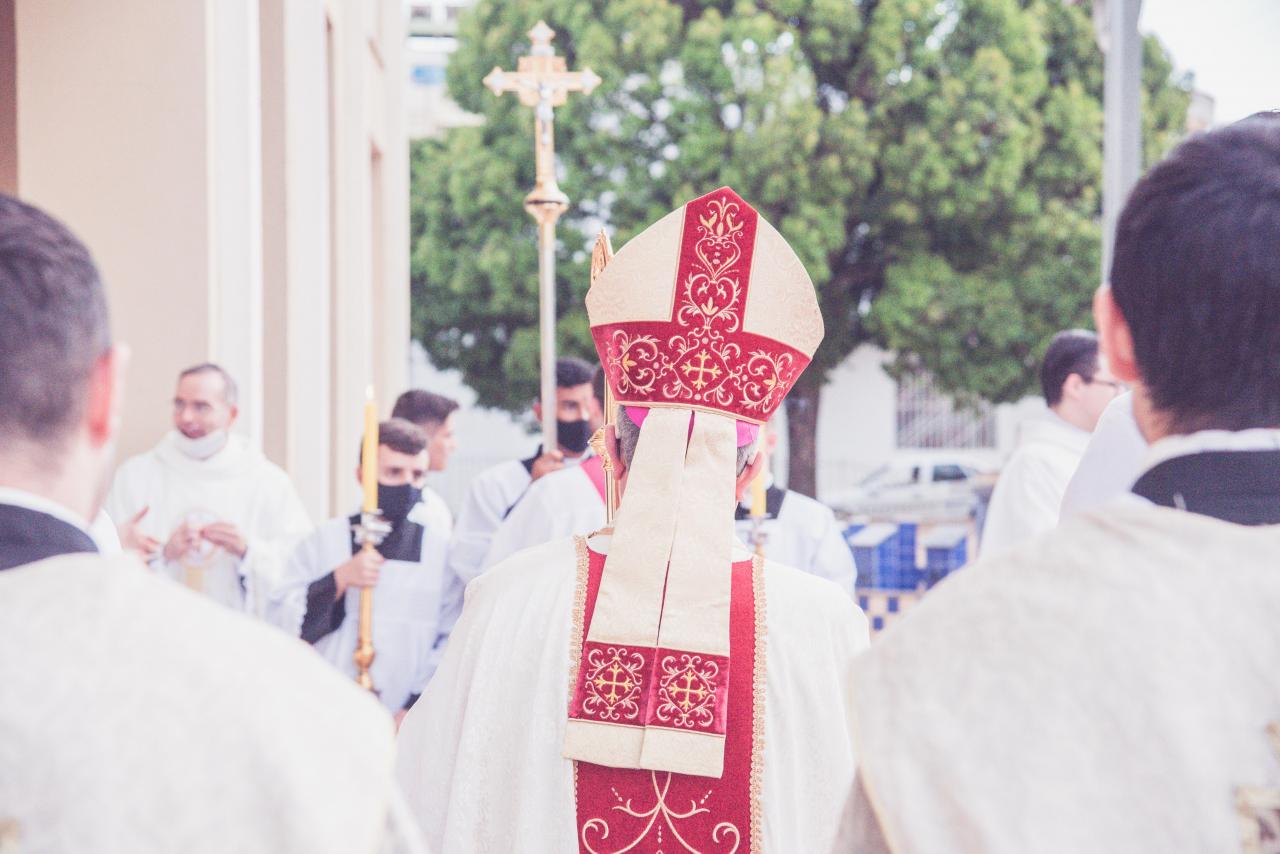
What does the word "Catholic" mean?
Posted by Luke J. Wilson on 8th March 2021 in Etymology | catholic,church fathers,church history,etymology,roman catholic,eastern orthodox,Great Schism,Muratorian Fragment
For many people today, non-Christians and (low church) Christians alike, when they hear the word “Catholic”, certain images spring to mind: the Pope, the rosery, Catholic school, big old churches buildings, choirboys, maybe monks or statues of Mary even; and sadly more recently, sex abuse scandals.
But, generally speaking, all of these are actually aspects of Roman Catholicism — a particular branch of Christianity, and not what the word “catholic” truly means as we’ll see when examining how the early church used the word and what the original Greek word means.
καθολικός (katholikos)
The Greek word where we get the English word “c...
God from God: The Eternal Son in the Crib
Posted by Luke J. Wilson on 13th December 2025 in Christmas | advent,incarnation,xmas,christmas
How can God beget a Son? Does that mean Jesus is His creation?
This question comes sharply into focus during Advent, when the Church contemplates the Incarnation: the eternal Son entering the world as a baby in Mary’s womb. And to understand this, we turn to language the Church has treasured for centuries — especially that crucial distinction between begotten and created.
And C. S. Lewis describes this with a real concise clarity:
We don’t use the words begetting or begotten much in modern English, but everyone still knows what they mean. To beget is to become the father of: to create is to make. And the difference is this. When you beget, you beget...
Lent Day 38: Leo the Great: Sermon XXI (On the Nativity Feast I)
Posted by Luke J. Wilson on 13th April 2017 in Lent | Lent,great lent,fasting,early church fathers,devotional,daily reading,Doctor of the Church,lectures,Leo the Great,St Leo,hypostatic union,deity of christ,Pope Leo I,christology,sermon
Day Thirty-eight: St. Leo the Great: Sermon XXI (On the Nativity Feast I)
Who: Leo the Great, also known as Pope St. Leo I (the Great), was Pope from 440-61 AD. Place and date of birth unknown; died 10 November, 461. Leo's pontificate, next to that of St. Gregory I, is the most significant and important in Christian antiquity, as he tried to combat the heresies which seriously threatened church unity even in the West, such as Pelagianism.
What: A sermon on the Nativity at Christmas time, about the incarnation of the Word of God.
Why: To explain the incarnation and preach the Good News of our Lord and Saviour becoming man for our sake so that we may be sav...
Powered by WebBoss.io 3.7.1
Copyright © 2026 The Sacred Faith: Timeless Truths for Modern Minds. All Rights Reserved.
