
Blog Search Results


7 results for discovery
found
within the Blog
6 displayed out of 7 (0.03seconds)Page 1 of 2
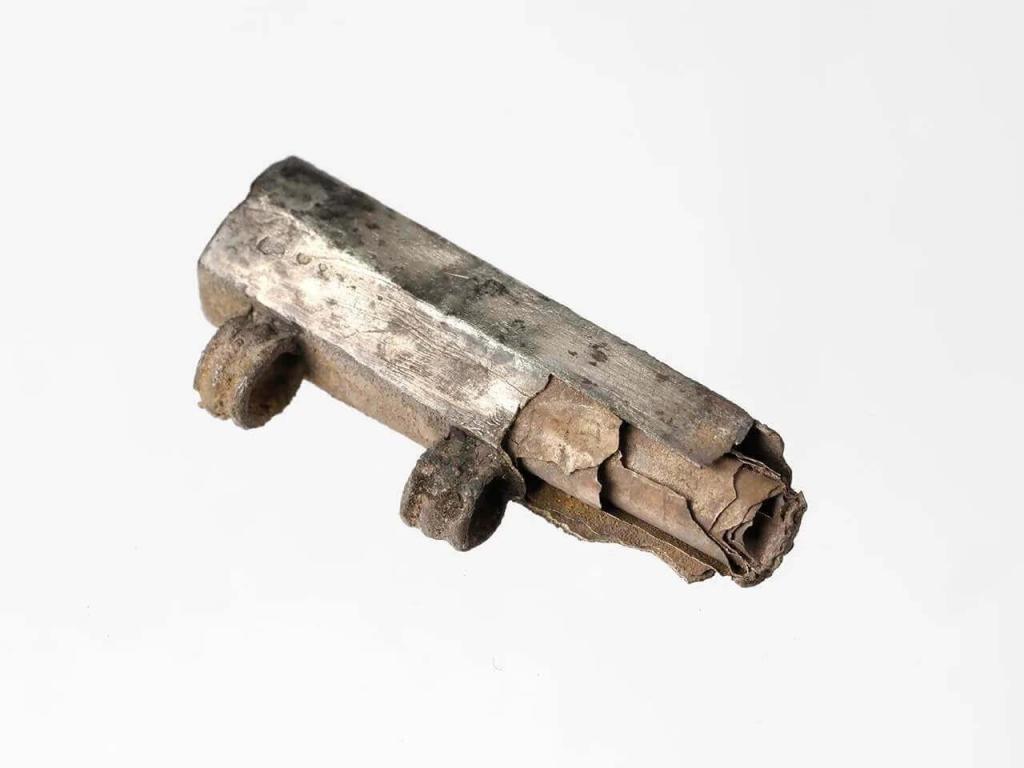
Ancient Amulet Rewrites History Of Christianity In Europe
Posted by Luke J. Wilson on 18th December 2024 in Archaeology | archaeology,amulet,discovery,current events,protection amulet
New discovery proclaims Jesus as “Son of God” a century earlier than previously thought.
An exciting archaeological discovery has recently come to light: researchers have unearthed an 1800-year-old silver amulet in Frankfurt, Germany. This amulet provides the earliest known evidence of Christianity north of the Alps and disrupts previously held ideas about the spread of the faith, namely that Christianity didn’t get to the German region around the fourth century.
The amulet, dating from approximately 230 to 270 AD, was found in 2018 beneath the chin of a man’s skeleton during excavations at a Roman burial site near the former town of Nida, now part o...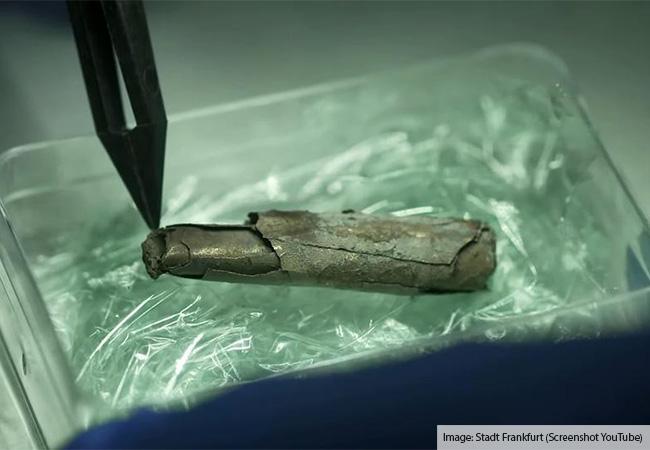
Implications Of The Frankfurt Silver Amulet: Insights Into Early Christian Practice And Belief
Posted by Luke J. Wilson on 6th January 2025 in Archaeology | amulet,liturgy,history,current events,early church
The discovery of an 1,800-year-old silver amulet in Frankfurt, Germany, has captured the attention of archaeologists and theologians alike. Known as the “Frankfurt Silver Inscription,” this artefact is the earliest known evidence of Christianity north of the Alps and serves as a great insight to early Christian theology and liturgical practice.
Its early date (230–270 AD) sets it apart from previously known artefacts, which are at least 50 years younger. While there are historical references to Christian communities in Gaul and Upper Germania during the late 2nd century, reliable material evidence of Christian life in the northern Alpine regions generally...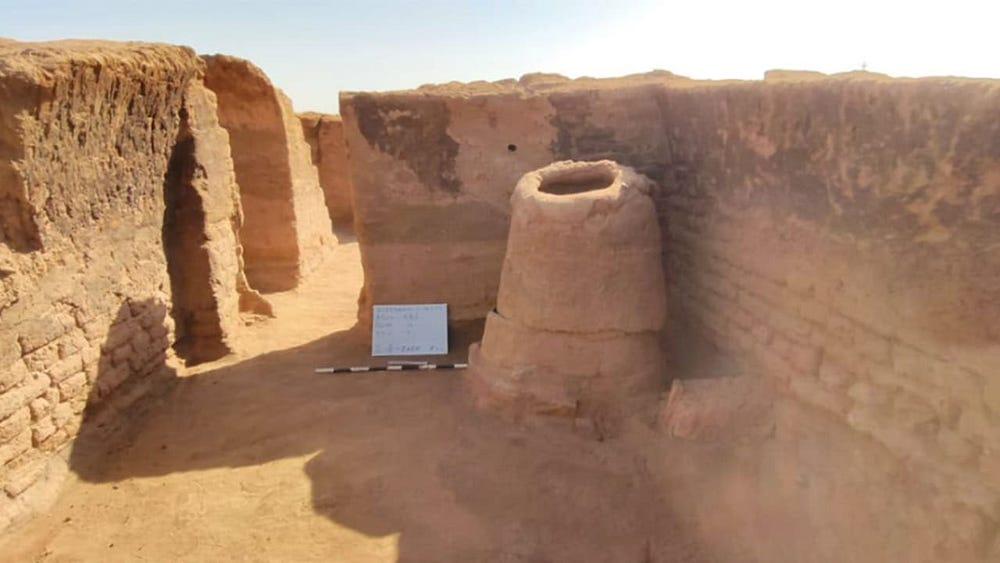
A City In The Sand: What A Fourth-Century discovery In Egypt’s Western Desert Tells Us About The Early Church
Posted by Luke J. Wilson on 27th July 2026 in Archaeology | archaeology,early church,history
...t of this discovery is timing. If it predates the basilica and dates to the early fourth century, it sits right at — or just before — the pivot point of Roman-Egyptian Christian history: the years surrounding Constantine’s Edict of Milan in 313 AD, when Christianity moved from a persecuted minority faith to a tolerated, and increasingly favoured, one. A time of transition between a house church and a purpose-built basilica when the threat of persecution no longer loomed over the Church.
We know from Paul’s letters that the earliest churches met in homes — Romans 16:5 greets “the church in [Prisca and Aquila’s] house,” and similar gre...
Ancient “curse” amulet drastically changes perspective on Biblical dating
Posted by Luke J. Wilson on 26th March 2022 in Archaeology | current events,archaeology,curse amulet,Jerusalem Post
...n by this discovery, “This changes our timeline for the Exodus from Egypt and subsequent entry into Israel. The conquest would have had to take place at an earlier date”.
Along with the amulet, they also discovered flat stones covered in plaster at the site of the altar. This is another confirmation for the Deuteronomy account:
Deuteronomy 27:4So when you have crossed over the Jordan, you shall set up these stones, about which I am commanding you today, on Mount Ebal, and you shall cover them with plaster.
This discovery will now change how scholars approach the biblical texts along with any understandings of when language and written texts were created,...
Scientist Uncovers Hidden 1,750-Year-Old New Testament Translation with Ultraviolet Imaging
Posted by Luke J. Wilson on 17th April 2023 in Archaeology | Syriac bible,Codex Sinaiticus,textual criticism,history,archaeology,Old Syriac
...l for his discovery, attributing it to his "profound knowledge" of ancient Syriac texts and script features.
Rapp estimates that the Syriac translation predates some of the oldest surviving Greek manuscripts, including the Codex Sinaiticus, by at least a century. The Codex Sinaiticus is a complete Gospel text, thought to be older than the fourth century.
Rapp emphasizes the significance of combining modern digital technologies and basic research when examining medieval manuscripts, as demonstrated by this discovery.
In February, The Christian Post reported the upcoming auction of the Codex Sassoon in May, possibly the earliest single codex containing all Hebr...
Francis Chan turns towards a more historical and ancient view of Communion
Posted by Luke J. Wilson on 14th January 2020 in General Interest | eucharist,communion,francis chan,church fathers,church history,controversy
...bout this discovery of his, as I went through the exact same mind-blowing realisation around five or so years ago when I first delved into the writings of the Early Church Fathers and was forced to come to the same conclusion that there was something there to seriously consider. If the Church had always understood Jesus’ words and the interpretation of Scripture in a fairly singular and unified way for nearly two millennia, then who was I to come along and say my understanding exceeds the wisdom of everyone before me?
It was actually one of the earliest texts, from a second century bishop called Ignatius, that really tipped me over the edge from a “memorial...
Powered by WebBoss.io 3.7.1
Copyright © 2026 The Sacred Faith: Timeless Truths for Modern Minds. All Rights Reserved.
