
Blog Search Results


14 results for lectures
found
within the Blog
6 displayed out of 14 (0.02seconds)Page 1 of 3

Lent Day 30: Cyril of Jerusalem: Catechetical lectures: Lecture XIX
Posted by Luke J. Wilson on 4th April 2017 in Lent | Lent,great lent,fasting,early church fathers,devotional,daily reading,Doctor of the Church,lectures,liturgy,catechism,Bishop of Jerusalem
Day Thirty: St. Cyril of Jerusalem: Catechetical lectures: Lecture XIX
Who: Bishop of Jerusalem and Doctor of the Church, born about 315; died probably 18 March, 386. Little is known of his life, except from his younger contemporaries, Epiphanius, Jerome, and Rufinus, as well as from the fifth-century historians, Socrates, Sozomen and Theodoret.
What: Each of the lectures deal with a different topic to teach converts the mysteries of the Church, particularly: rites of the renunciation of Satan and his works, of anointing with oil, of baptism, of anointing with the holy chrism, and of partaking of the body and blood of Christ.
Why: Cyril delivered to new conve...
Lent Day 34: Cyril of Jerusalem: Catechetical lectures: Lecture XXIII
Posted by Luke J. Wilson on 8th April 2017 in Lent | Lent,great lent,fasting,early church fathers,devotional,daily reading,Doctor of the Church,lectures,liturgy,catechism,Bishop of Jerusalem,Eucharist,Lord's Prayer
Day Thirty-four: St. Cyril of Jerusalem: Catechetical lectures: Lecture XXIII
Who: Bishop of Jerusalem and Doctor of the Church, born about 315; died probably 18 March, 386. Little is known of his life, except from his younger contemporaries, Epiphanius, Jerome, and Rufinus, as well as from the fifth-century historians, Socrates, Sozomen and Theodoret.
What: Each of the lectures deal with a different topic to teach converts the mysteries of the Church, particularly: rites of the renunciation of Satan and his works, of anointing with oil, of baptism, of anointing with the holy chrism, and of partaking of the body and blood of Christ.
Why: Cyril delivered to ne...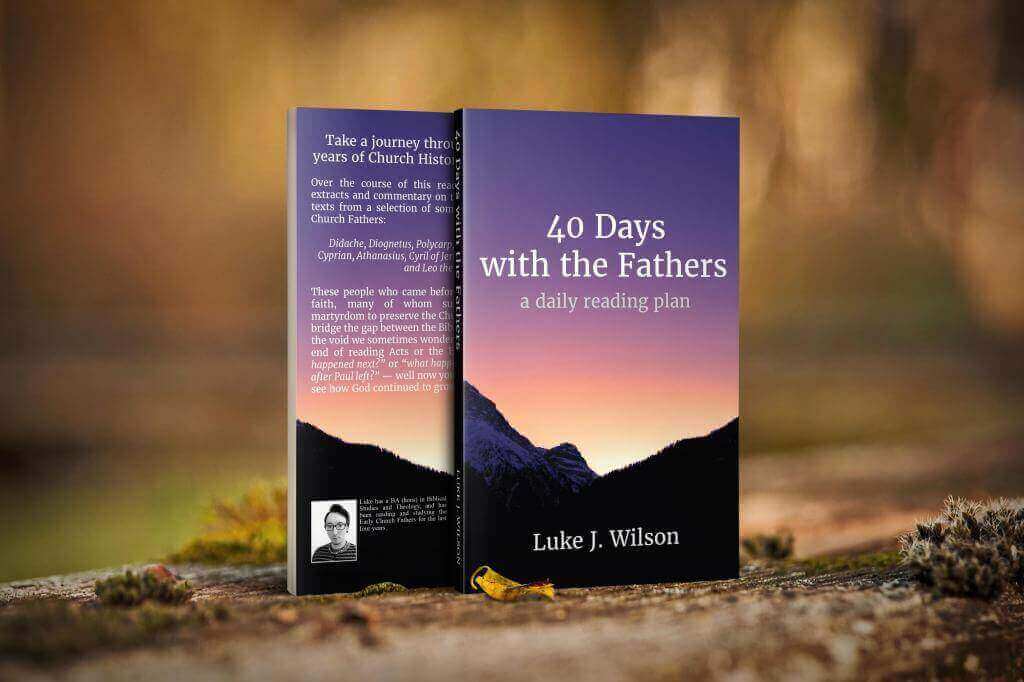
40 Days with the Fathers: Source Texts Companion Book
Posted by Luke J. Wilson on 2nd March 2019 in My Books | church fathers,church history,early church,early church fathers,companion book,40 days,Lent
Available soon will be a companion book that will include all of the source texts in full, which I had hoped to get out in time for Lent, but it’s unlikely to be ready in time this year. So if you have my book and would like to read along each day with the Church Fathers as well, I’ve compiled a list of online sources where you can read the original texts.
If you don’t have the book and would like it, you can order it now from Amazon and still get it in time for Lent by clicking the following link: Amazon.com; or if you would like to pledge some support towards my book writing in return for some nice perks, you can do so on my Patreon page: https://patreo...
Lent: Intro - 40 Day Reading Plan with the Fathers
Posted by Luke J. Wilson on 1st March 2017 in Lent | Lent,great lent,fasting,early church fathers,devotional,daily reading
This year for Lent I'm following a reading plan which comprises of a collection of extracts from various early church fathers writings. Each day I'm going to write a short overview and any thoughts on the text and link back to the source material so you can also follow along with me too, if you'd like. The overview of each day will probably be posted on the day after. The reading should only take 10-15 minutes of your time, and by day 40, you will have read ten different Fathers:
Didache, Diognetus, Polycarp, Ignatius, Justin Martyr, Cyprian, Athanasius, Cyril of Jerusalem, Ambrose of Milan, and Leo the Great.
I'll be reading from the “Church Fathers Lenten...
Lent Day 31: Cyril of Jerusalem: Catechetical lectures: Lecture XX
Posted by Luke J. Wilson on 5th April 2017 in Lent | Lent,great lent,fasting,early church fathers,devotional,daily reading,Doctor of the Church,lectures,liturgy,catechism,Bishop of Jerusalem,baptism
Day Thirty-one: St. Cyril of Jerusalem: Catechetical lectures: Lecture XX
Who: Bishop of Jerusalem and Doctor of the Church, born about 315; died probably 18 March, 386. Little is known of his life, except from his younger contemporaries, Epiphanius, Jerome, and Rufinus, as well as from the fifth-century historians, Socrates, Sozomen and Theodoret.
What: Each of the lectures deal with a different topic to teach converts the mysteries of the Church, particularly: rites of the renunciation of Satan and his works, of anointing with oil, of baptism, of anointing with the holy chrism, and of partaking of the body and blood of Christ.
Why: Cyril delivered to new co...
Lent Day 33: Cyril of Jerusalem: Catechetical lectures: Lecture XXII
Posted by Luke J. Wilson on 7th April 2017 in Lent | Lent,great lent,fasting,early church fathers,devotional,daily reading,Doctor of the Church,lectures,liturgy,catechism,Bishop of Jerusalem,Eucharist,Communion,Real Presence,Transubstantiation
Day Thirty-three: St. Cyril of Jerusalem: Catechetical lectures: Lecture XXII
Who: Bishop of Jerusalem and Doctor of the Church, born about 315; died probably 18 March, 386. Little is known of his life, except from his younger contemporaries, Epiphanius, Jerome, and Rufinus, as well as from the fifth-century historians, Socrates, Sozomen and Theodoret.
What: Each of the lectures deal with a different topic to teach converts the mysteries of the Church, particularly: rites of the renunciation of Satan and his works, of anointing with oil, of baptism, of anointing with the holy chrism, and of partaking of the body and blood of Christ.
Why: Cyril delivered to ne...
Powered by WebBoss.io 3.7.1
Copyright © 2026 The Sacred Faith: Timeless Truths for Modern Minds. All Rights Reserved.
