
Blog Search Results


22 results for punishment
found
within the Blog
6 displayed out of 22 (0.03seconds)Page 1 of 4
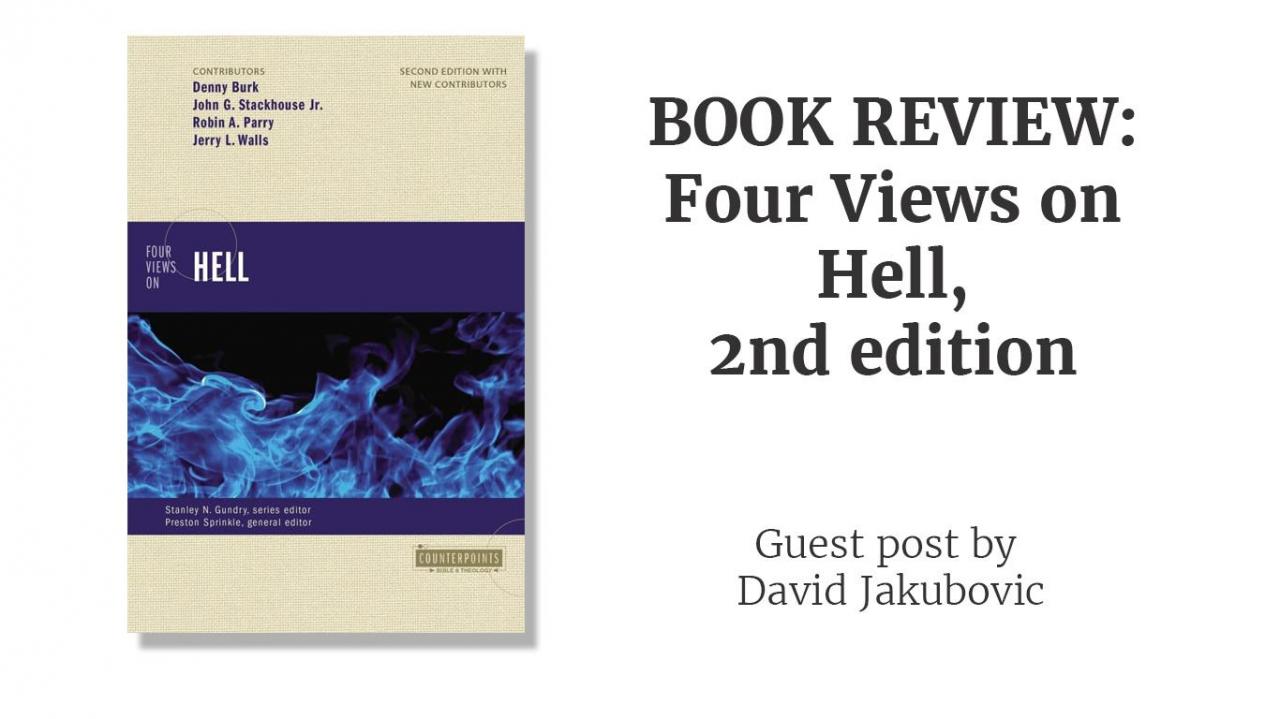
BOOK REVIEW: Four Views on Hell 2nd edition
Posted by David Jakubovic on 17th March 2021 in Book Review |
...r eternal punishment. But fellow pro-ECT essayist Walls squashes this analogy:
“There is profound disanalogy in the parable that undermines the central point he wants to establish. This resides in the fact that we do not have the power to do anything to God that is remotely analogous to the harm the character in the parable inflicts on helpless creatures ranging from grasshoppers to human
infants. Indeed, God is so far above us in power, glory, and moral perfection that we are utterly incapable of harming him.”1
Burk even ventures that ECT “will ultimately become a source of joy and praise for the saints as they witness the infinite goodness and jus...
Kirk Cameron And The Biblical Case For Annihilationism
Posted by Luke J. Wilson on 15th December 2025 in Hell | annihilationism,conditional immortality,Kirk Cameron,hell,controversy,controversial topics
...uffer the punishment of eternal destruction” (2 Thess. 1:9)
Being consumed or brought to an end — “The wicked will perish… they vanish — like smoke they vanish away” (Ps. 37:20)
Jesus Himself warns that God can “destroy both body and soul in Gehenna” (Matt. 10:28). This is not language of preservation, but of finality.
Revelation describes the ultimate fate of the wicked as the second death (Rev. 20:14–15). Death, by definition, is the loss of life — not life in another mode. Hence why it is “second”: the first being physical death from the body, the second being spiritual death from existence.
Fire, in biblical imagery,...Are There Levels of Sin?
Posted by Luke J. Wilson on 5th April 2014 in Sin | sin, judgement, punishment, hell, last judgement
..."All sins are equal." "Sin is sin." "All sin is the same in God's eyes."
You may have heard these phrases said before (you may even have said them before!). But is all sin really equal? I do, and don't, think so.
Let me clarify: All sin is equal in the sense that all illegal activities are crimes; but even crimes have degrees of severity and punishment, and it would seem to me that the New Testament also supports this concept in regards to sin.
Lets look at a few examples:
If you can blaspheme the Holy Spirit and never be forgiven (Matt 12:31), then it's a sin definitely not on par with others.
If being sexually immoral is seen as something to shun more...
An Examination of Conditional Immortality (Part One)
Posted by Luke J. Wilson on 25th May 2020 in Hell | Conditional Immortality,Annihilationism,church fathers,church history,Hell,theology
...e sent as punishment.
If you are interested in how we got the word “hell” in our English language, and more importantly, into our Bibles, I highly recommend that you read this study: The Real Hell.
A Case for Conditional Immortality (aka Annihilationism)
We are often taught that our souls, human souls, are inherently immortal. But where does this idea come from, because it’s never actually stated in Scripture that this is so. This is an Hellenistic philosophical assumption brought into the text (mainly from Plato’s influence) which can taint our interpretations. If we look at 1 Timothy 6:16 we can see that it is God alone who is immortal:
It is he...
Why do bad things happen to 'good' people?
Posted by Luke J. Wilson on 6th April 2014 in Judgement | judgement,good people,bad things,mercy,grace,Job,divine pushishment
...- like a punishment, even if you were born like that! Jesus simply responds that it was no ones fault, but it was so that "God’s works might be revealed in him" (v.3). This man's blindness was not a divine punishment, but rather just something that happens and something which can be turned around for the glory of God - a sentiment that is echoed in Paul's writing to the church in Rome: "We know that all things work together for good for those who love God..." (Rom 8:28). Whatever is happening or has happened, if you love God, then he is actively working to turn all things for good.
Later in the Gospels we find that there were others who had a similar questi...
Lent Day 34: Cyril of Jerusalem: Catechetical Lectures: Lecture XXIII
Posted by Luke J. Wilson on 8th April 2017 in Lent | Lent,great lent,fasting,early church fathers,devotional,daily reading,Doctor of the Church,lectures,liturgy,catechism,Bishop of Jerusalem,Eucharist,Lord's Prayer
...ose under punishment”, wouldn’t he rescind the punishment?
But instead of offering up a crown, they “offer up Christ sacrificed for our sins, propitiating our merciful God for them as well as for ourselves”. Prayers on behalf of the dead may seem strange to Protestant ears, though there are some potential passages of Scripture about this in the New Testament, albeit debated, such as 2 Tim 1:16-18 which seems to imply Onesiphorus was dead, yet Paul prays on his behalf (plus the strange reference to baptism of the dead in 1 Corinthians 15:29). Prayers for the dead was not an uncommon practice in the early centuries of the Church, though I’m not entirely...
Powered by WebBoss.io 3.7.1
Copyright © 2026 The Sacred Faith: Timeless Truths for Modern Minds. All Rights Reserved.
