
Blog Search Results


171 results for good people
found
within the Blog
6 displayed out of 171 (0.28seconds)Page 15 of 29

Lent Day 26: Athanasius: Life of Anthony: Chaps. 51-60
Posted by Luke J. Wilson on 30th March 2017 in Lent | Lent,great lent,fasting,early church fathers,devotional,daily reading,Athanasius,Bishop of Alexandria,Confessor,Doctor of the Church,Anthony the Great,demons,healing,miracles
Day Twenty-six: St. Athanasius: Life of Anthony: Chaps. 51-60
Who: Bishop of Alexandria; Confessor and Doctor of the Church; born c. 296; died 2 May, 373 AD. He was the main defender of orthodoxy in the 4th-century battle against the Arianism heresy. Certain writers received the title “Doctor” on account of the great advantage their doctrine had on the whole Church, Athanasius especially for his doctrine on the incarnation.
What: The biography of Anthony the Great’s life, which helped to spread the concept of Christian monasticism, particularly in Western Europe.
Why: From the letter’s own prologue: “The life and conversation of our holy Father,...
Lent Day 28: Athanasius: Life of Anthony: Chaps. 71-80
Posted by Luke J. Wilson on 1st April 2017 in Lent | Lent,great lent,fasting,early church fathers,devotional,daily reading,Athanasius,Bishop of Alexandria,Confessor,Doctor of the Church,Anthony the Great,miracles,Greek Philosophy,demons,healing,deliverance,the cross,foolishness of the cross
Day Twenty-eight: St. Athanasius: Life of Anthony: Chaps. 71-80
Who: Bishop of Alexandria; Confessor and Doctor of the Church; born c. 296; died 2 May, 373 AD. He was the main defender of orthodoxy in the 4th-century battle against the Arianism heresy. Certain writers received the title “Doctor” on account of the great advantage their doctrine had on the whole Church, Athanasius especially for his doctrine on the incarnation.
What: The biography of Anthony the Great’s life, which helped to spread the concept of Christian monasticism, particularly in Western Europe.
Why: From the letter’s own prologue: “The life and conversation of our holy Father...
Former Muslim Explains the Trinity
Posted by Luke J. Wilson on 9th February 2018 in Trinity | muslim,former muslim,trinity,apologetics,Nabeel Qureshi,modalism,heresy
I saw this video doing the rounds on Facebook, and thought it was too good not to share here as well.
Very few people tend to articulate the Trinitarian doctrine well enough to: a) still make sense, and b) not slip into heresy. Just reading the comments section on this video proves point b) quick enough, with many people giving their take on it (and usually espousing some form of Modalism).
I won't make a big post on the Trinity now, but I may do one soon off the back of this one, as it's clearly still something believers (and non-believers) struggle to understand, or explain without heresy!
For now though, sit back and take about 5 minutes to listen to this...
Is The Rapture Biblical?
Posted by Luke J. Wilson on 21st September 2020 in Eschatology | rapture,the rapture in the bible,scriptures on the rapture,N.T. Wright,john chrysostom,church fathers,church history,signs of the rapture,Coming of Christ
Most people have some idea about what the rapture is – or do they? Generally there is an idea or concept of a form of escapism from the world when Jesus returns, which happens pre, mid or post tribulation and in some connection to the millenium. Now, if you understood any of those terms, you are most likely on, or aware of, the Dispensationalism side of things.
There’s a lot of doctrine all bundled together in “end times” beliefs, and a fair bit of speculation around “the rapture” with its timing and logistics etc. which makes the whole thing a but murky, but nonetheless, it’s pretty much taken for granted as a staple belief within the Evangelical...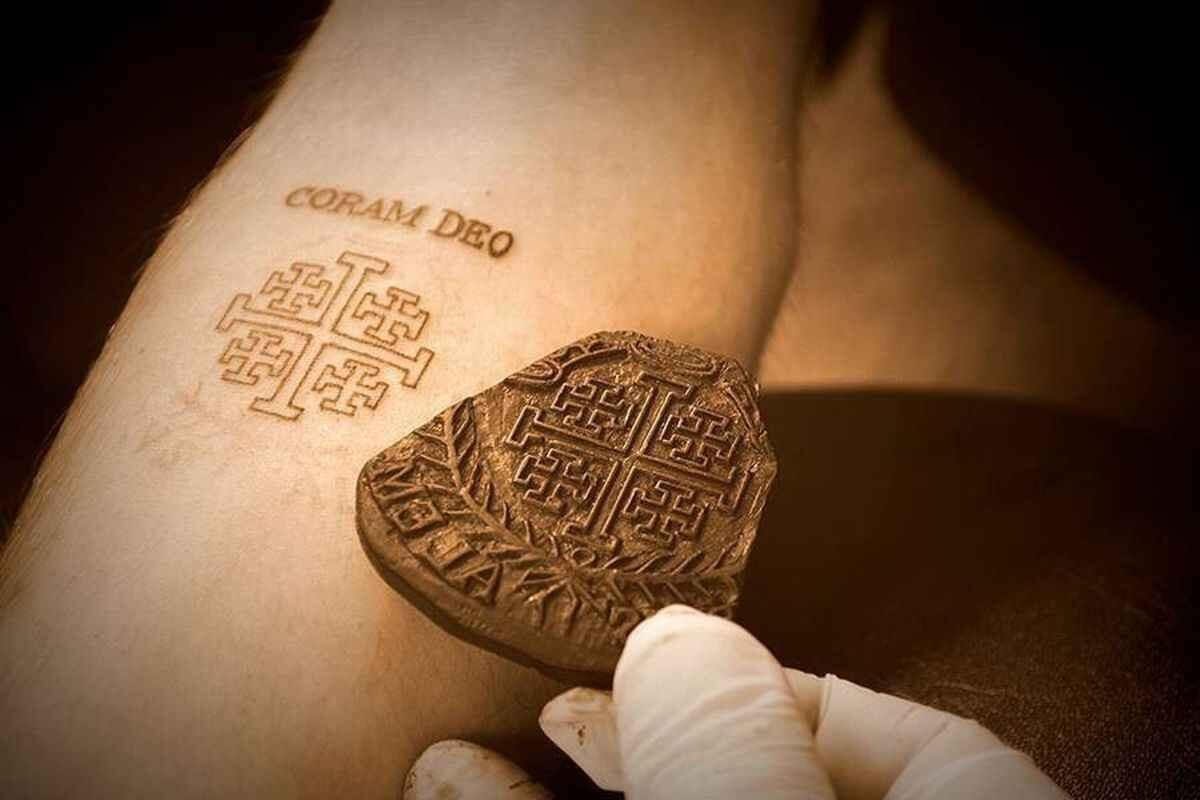
Should Christians get tattoos, and is it Biblical?
Posted by Luke J. Wilson on 31st August 2019 in Tattoos | tattoos,church history,Basil the Great,Leviticus,Old Testament
I was in a discussion not so long ago about tattoos, and I was asked about the historical view on this practice. It wasn’t something I had looked into before from a Church Fathers point of view, so it was an interesting topic of study. In my searching, I found this article from a Catholic site which seems to give a pretty interesting overview of some of the views about tattoos in the earlier centuries. The following is a quote about a Church Council in the context of native Britons, who still practiced tattooing at that time for pagan ritual, something which Tertullian also gives a fleeting reference to around 213 AD in his On the Veiling of Virgins, ch. 10....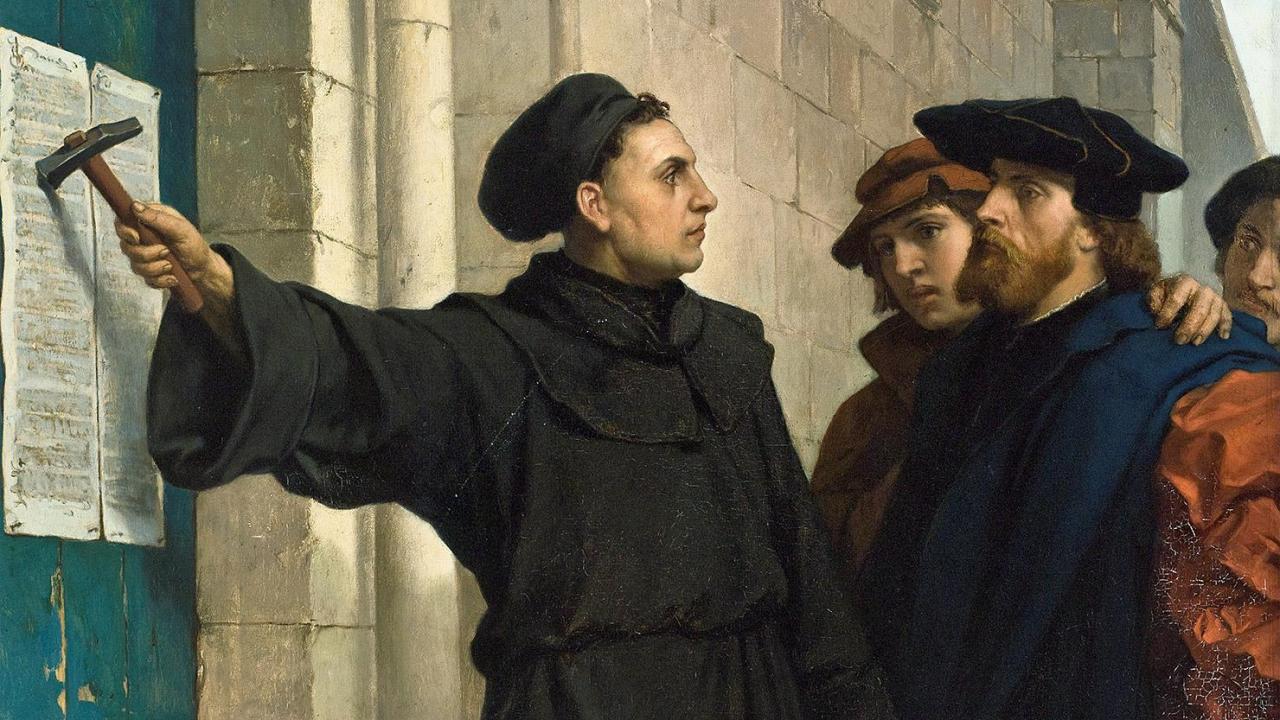
Nails, Theses, and Myth: The Truth About Luther's Famous Door
Posted by Luke J. Wilson on 5th June 2025 in Blogging | reformation,Luther,Protestantism,roman catholic
As we commemorated the 500th anniversary of the Protestant Reformation this year, the familiar image of Martin Luther striding up to the church door in Wittenberg — hammer in hand and fire in his eyes — has once again taken centre stage. It’s a compelling picture, etched into the imagination of many. But as is often the case with historical legends, closer scrutiny tells a far more nuanced and thought-provoking story.
The Myth of the Door: Was the Hammer Ever Raised?
Cambridge Reformation scholar Richard Rex is one among several historians who have challenged the romanticised narrative. “Strangely,” he observes, “there’s almost n...
Powered by WebBoss.io 3.7.1
Copyright © 2026 The Sacred Faith: Timeless Truths for Modern Minds. All Rights Reserved.
