
Blog Search Results


137 results for bad things
found
within the Blog
6 displayed out of 137 (0.28seconds)Page 17 of 23

Lent Day 33: Cyril of Jerusalem: Catechetical Lectures: Lecture XXII
Posted by Luke J. Wilson on 7th April 2017 in Lent | Lent,great lent,fasting,early church fathers,devotional,daily reading,Doctor of the Church,lectures,liturgy,catechism,Bishop of Jerusalem,Eucharist,Communion,Real Presence,Transubstantiation
Day Thirty-three: St. Cyril of Jerusalem: Catechetical Lectures: Lecture XXII
Who: Bishop of Jerusalem and Doctor of the Church, born about 315; died probably 18 March, 386. Little is known of his life, except from his younger contemporaries, Epiphanius, Jerome, and Rufinus, as well as from the fifth-century historians, Socrates, Sozomen and Theodoret.
What: Each of the lectures deal with a different topic to teach converts the mysteries of the Church, particularly: rites of the renunciation of Satan and his works, of anointing with oil, of baptism, of anointing with the holy chrism, and of partaking of the body and blood of Christ.
Why: Cyril delivered to ne...
Lent Day 34: Cyril of Jerusalem: Catechetical Lectures: Lecture XXIII
Posted by Luke J. Wilson on 8th April 2017 in Lent | Lent,great lent,fasting,early church fathers,devotional,daily reading,Doctor of the Church,lectures,liturgy,catechism,Bishop of Jerusalem,Eucharist,Lord's Prayer
Day Thirty-four: St. Cyril of Jerusalem: Catechetical Lectures: Lecture XXIII
Who: Bishop of Jerusalem and Doctor of the Church, born about 315; died probably 18 March, 386. Little is known of his life, except from his younger contemporaries, Epiphanius, Jerome, and Rufinus, as well as from the fifth-century historians, Socrates, Sozomen and Theodoret.
What: Each of the lectures deal with a different topic to teach converts the mysteries of the Church, particularly: rites of the renunciation of Satan and his works, of anointing with oil, of baptism, of anointing with the holy chrism, and of partaking of the body and blood of Christ.
Why: Cyril delivered to ne...
Evidence of the Trinity in the Hebrew Scriptures
Posted by Arnold Fruchtenbaum on 8th November 2017 in Trinity | trinity,monotheism,shema,Jewish,Jews,Messiah,messianic,Jews for Jesus,jewsforjesus.org,tri-unity,creeds
Table of Contents
Jewishness and the Trinity
1. God Is A Plurality
The Name Elohim
Plural Verbs used with Elohim
The Name Eloah
Plural Pronouns
Plural Descriptions of God
The Shema
II. God Is At Least Two
Elohim and YHVH Applied to Two Personalities
III. God Is Three
How Many Persons Are There?
The Three Personalities in the Same Passage
Conclusion
New Testament Light
I was recently in some discussions/debates online about the nature of God and whether the "Trinity" exists, or if God is purely singular and exists in different forms rather than different persons.
This idea that God has different "forms" or "mod...
Should Christians get tattoos, and is it Biblical?
Posted by Luke J. Wilson on 31st August 2019 in Tattoos | tattoos,church history,Basil the Great,Leviticus,Old Testament
I was in a discussion not so long ago about tattoos, and I was asked about the historical view on this practice. It wasn’t something I had looked into before from a Church Fathers point of view, so it was an interesting topic of study. In my searching, I found this article from a Catholic site which seems to give a pretty interesting overview of some of the views about tattoos in the earlier centuries. The following is a quote about a Church Council in the context of native Britons, who still practiced tattooing at that time for pagan ritual, something which Tertullian also gives a fleeting reference to around 213 AD in his On the Veiling of Virgins, ch. 10....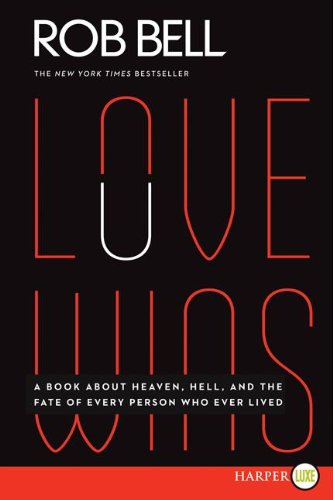
Rob Bell's “Love Wins” (Review)
Posted by Luke J. Wilson on 5th April 2014 in Hell | Rob Bell,book review
Book review on Rob Bell's “Love Wins” (originally written March 2013)
This book was quite openly condemned by some prominent Christian leaders when the book was first announced back around Spring 2011, mainly mainly accusing Bell of being a universalist and denying the existence of hell.
Lots of leaders formed opinions about the book and thus lots and laypeople took on various opinions as their own without much insight or research. The problem was that these leaders hadn't even READ the book! It wasn't released yet at the time. They decided their opinions based on the blurb and promo video which posed provocative questions about the doctrine of hell.
Th...
40 Days with the Fathers: Companion Texts OUT NOW!
Posted by Luke J. Wilson on 8th May 2019 in Early Church | early church,early church fathers,book,40 days,my book
40 Days with the Fathers: Companion Texts is now available to buy as Paperback or Kindle!
I am happy to say that the new book is now available in paperback and Kindle format on Amazon! Other eBook formats will be available soon as it rolls out.
This book is the companion to my other book (40 Days with the Fathers: A Daily Reading Plan), and includes twenty-three Early Church texts in full—including all additional footnotes from the original editors and translators so that you can get as close as possible to reading these ancient texts without needing to know ancient Greek or Latin.
It's structured in such a way to read a chapter a day over a 40 day period...
Powered by WebBoss.io 3.7.1
Copyright © 2026 The Sacred Faith: Timeless Truths for Modern Minds. All Rights Reserved.
