
Blog Search Results


23 results for forgiveness
found
within the Blog
6 displayed out of 23 (0.03seconds)Page 2 of 4

The Coming of Jesus: Coming on the clouds
Posted by Luke J. Wilson on 21st April 2014 in Second Coming Series | Second Coming,Return of Christ,Return of Jesus,Preterism,Prophecy,Last Days,Left Behind,Part 2,Part two,Coming in the Clouds,surfing,Eschatology
...ction and forgiveness of Christ!
Jesus's coming which he spoke of here was never to do with a physical return, but was always a prophetic reference to him visiting Jerusalem in judgement, just like God had done in previous generations, when he spoke to the people through prophets using this type of figurative language.
When we can clearly see that all of these visitations by God in the Old Testament, using the same phrases and language that Jesus used, were prophetic and symbolic references to God using armies and other nations to bring war and destruction on something as judgement against them as though God himself had done it, why then do we suddenly expec...
Lent Day 27: Athanasius: Life of Anthony: Chaps. 61-70
Posted by Luke J. Wilson on 31st March 2017 in Lent | Lent,great lent,fasting,early church fathers,devotional,daily reading,Athanasius,Bishop of Alexandria,Confessor,Doctor of the Church,Anthony the Great,demons,healing,miracles,heresy,heretics,Arianism,deity of Christ
...ion about forgiveness of sins
Athanasius relates now of a time when Anthony was praying and about to go and eat. On standing up he suddenly found himself in the Spirit and in what we'd call today an “out of body experience”. Suddenly he was taken up into the air by “certain ones”, which I assume to mean angels because he is then opposed by “certain bitter and terrible beings” which would seem like demons. They try to stop his passage by accusing him of his sins, but the ones accompanying Anthony tell them that, “the Lord has wiped out the sins from his birth” but that only since the time he became a monk can they accuse him; they failed and Anth...
Lent Day 34: Cyril of Jerusalem: Catechetical Lectures: Lecture XXIII
Posted by Luke J. Wilson on 8th April 2017 in Lent | Lent,great lent,fasting,early church fathers,devotional,daily reading,Doctor of the Church,lectures,liturgy,catechism,Bishop of Jerusalem,Eucharist,Lord's Prayer
...ts entire forgiveness for them”. For men to greet one another with a kiss was a typical custom in the ancient western Mediterranean, and later in our culture a handshake became customary to greet people with, so it makes sense that the the sign of the peace shifted from a kiss, though some Church branches do still greet one another this way.
Each phrase of the liturgy is broken down by Cyril, and explained in more detail about why we say these things. Mostly it is self-explanatory and about focussing our hearts and minds on God while we enter into worship; and by also joining in with the angels above by reciting the hymn of the Seraphim seen in Isaiah 6:3, ...
Fasting: A spiritual and physical discipline
Posted by Luke J. Wilson on 27th May 2019 in Fasting | fasting,didache,discipline,self control,Lent,early church,early church fathers
...utors and forgiveness.(For a more in-depth examination of early Christian thought on fasting and the reasons for doing so, see here: Fasting through patristic era.)
Some Fasting Guidelines
If you want to fast in the same way as the Early Church and keep with historical Christianity, fast every day until sunset (or 3pm) during your fasting period. Historically also, the Church has always had a weekly partial fast on Wednesdays and Fridays alongside other times (such as Lent).
Generally, you can drink what you like (except soup, as it’s still a food), though there are different types of fasts the Church has kept throughout the year (the Catholic and Easte...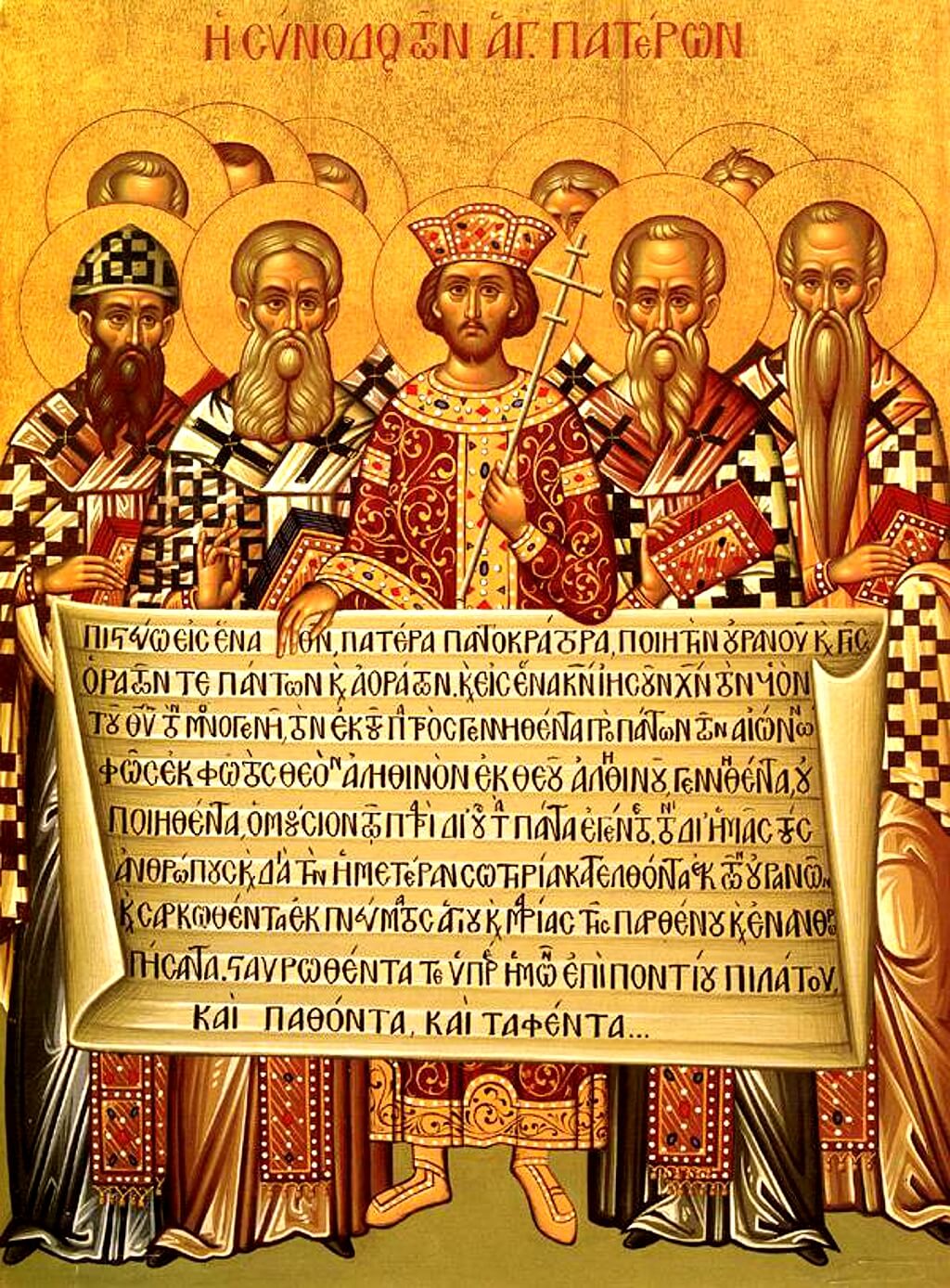
Creedal Christians: The Nicene Creed
Posted by Luke J. Wilson on 2nd June 2019 in Early Church | nicene creed,nicea council,creeds,creedal christians,creedal
...for the forgiveness of sins,
Acts 2:38; 22:16; Col 2: 12-13; 1 Peter 3:21
we look for the resurrection of the dead
John 11:25; Luke 20:36; John 5:28-29; Rom 6:4-5; 1 Thess. 4:16
And the life of the world to come. Amen.
2 Peter 3:13; Rev 21:1
And whosoever shall say that there was a time when the Son of God was not (ἤν ποτε ὅτε οὐκ ἦν), or that before he was begotten he was not, or that he was made of things that were not, or that he is of a different substance or essence [from the Father] or that he is a creature, or subject to change or conversion (τρεπτὸν) — all that so say, the C...
Slavery in the Bible – Does God Condone Slavery?
Posted by Joshua Spaulding on 15th September 2020 in Slavery | slavery,bond-servant,Philemon
...hrist for forgiveness of their sin should be treated in the same way … with the same love and respect.
What about Leviticus 25:44-46?
It is true that God specifically made room for forced slavery, as seen in Lev. 25:44-46. However, this passage should not be seen in the same context as other passages we have considered when dealing with the moral implications of slavery. The reason being that this slavery was a form of judgement by Holy God on a paganistic, rebellious people. It was actually mercy that the Lord allowed them to live in slavery, rather than to be destroyed for their extreme rebellion against God in embracing false gods, living in gross sin,...
Powered by WebBoss.io 3.7.1
Copyright © 2026 The Sacred Faith: Timeless Truths for Modern Minds. All Rights Reserved.
