
Blog Search Results


210 results for the church
found
within the Blog
6 displayed out of 210 (0.27seconds)Page 22 of 35

the Real St. Nicholas: A Man of Virtue, Not Violence
Posted by Luke J. Wilson on 7th December 2024 in Christmas | arianism,nicea council,nicene council,st nicholas,history,church fathers,church history
When we think of St. Nicholas, two contrasting images often emerge: the cheerful, gift-giving Santa Claus and the fiery bishop who supposedly punched Arius at the Council of Nicaea. the latter story, popularised through memes and tales of “righteous anger,” portrays Nicholas as a defender of truth through violence. But how much of this tale is rooted in fact?
St Nicholas of Myra slapping Arius at the Council of Nicaea.Fresco from the Soumela Monastery (Turkey)
the truth is both simpler and more profound: St. Nicholas embodied the teachings of Christ, not through impulsive acts of aggression, but through a life of love, generosity, and devotion.
Sepa...
Lent: Day 9 - Ignatius to the Philadelphians
Posted by Luke J. Wilson on 10th March 2017 in Lent | Lent,great lent,fasting,early church fathers,devotional,daily reading,Ignatius,Ignatius of Antioch: Letter to the Philadelphians,Law,Judaizers,judaism
Day Nine: St. Ignatius of Antioch: Letter to the Philadelphians (full text)
Who: Ignatius converted at a young age and later became Bishop of Antioch. A friend of Polycarp and fellow disciple of John, there is a long standing tradition that Ignatius was the child that Jesus held in his arms and blessed in Mark 10:13-16
What: As usual, a general call to remain in unity and heed their bishop. Also to avoid listening to Judaizers who would have them follow the Law.
Why: Ignatius wrote a series of letters to the churches in Asia Minor whilst en route to Rome to face martyrdom by wild beasts in the Colosseum around 108 AD.
When: Around 107-108 AD
As with the re...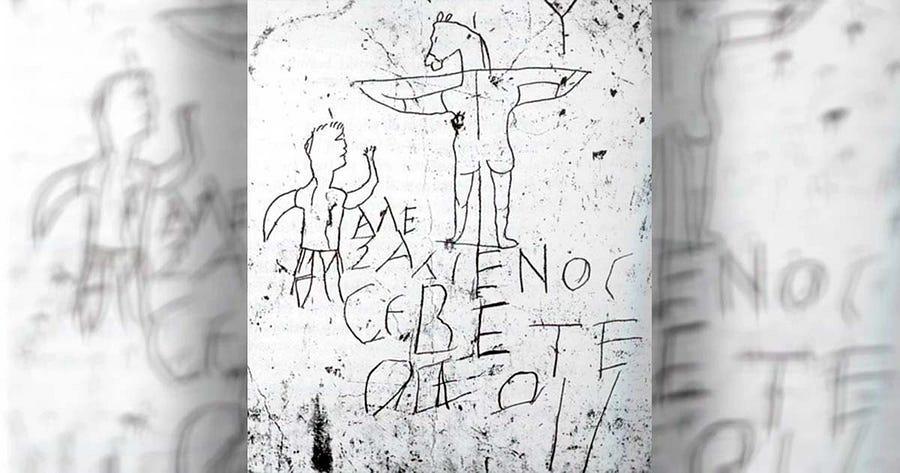
the World's Oldest Anti-Christian Meme
Posted by Luke J. Wilson on 9th March 2026 in Archaeology | Alexamenos graffito,archaeology,history
I first came across the Alexamenos graffito back in Bible college in the early 2000s. It was one of those “fun facts” that gets dropped into a church history lecture and sticks with you — the ancient Roman equivalent of someone spray-painting an insult on a wall. I filed it away, thought it was fascinating, and largely forgot about it for two decades.
then, recently, I discovered something about it I had never known. there’s a response to it. Scratched in a different room, in a different hand.
So I started digging into this more to verify the information and discovered more historical curiosities surrounding the graffiti than I ever knew existed wh...
Before the Pumpkins: Reclaiming All Hallows’ Eve
Posted by Luke J. Wilson on 12th October 2025 in Halloween | halloween,pagan roots,pagan,history,series
It’s that time of year again when pumpkins appear in windows, skeletons hang from doorways, and debates resurface about whether Christians should have anything to do with Halloween. Some will say it’s entirely “pagan” in origin, others that it’s harmless fun — and many of us fall somewhere in the middle, just trying to work out what’s right (or try to ignore it!).
But what if we’ve forgotten that Halloween began not with ghosts and ghouls, but with grace and glory? Hallowe’en — “All Hallows’ Eve” — was never about celebrating darkness; it was about remembering the light. It marked the night before All Saints’ Day, a day...
It’s Not Your Job To Convert Anyone
Posted by Luke J. Wilson on 1st December 2025 in Evangelism | evangelism,Andrew,Apostle Andrew
On Sunday it was St Andrew’s Day and I was in church listening to a sermon about Andrew (and the namesake of our church), that often overlooked disciple, meeting Jesus for the first time. In John’s Gospel, it says:
John 1:40–42One of the two who heard John speak and followed him was Andrew, Simon Peter’s brother. He first found his brother Simon and said to him, ‘We have found the Messiah’… He brought Simon to Jesus.
As I sat there listening to our vicar speak about evangelism and how we should be more like Andrew in bringing people to meet Jesus, something from many, many years ago flickered to life in the back of my mind. A realisation I had lo...
Who was the real Santa Claus?
Posted by Luke J. Wilson on 17th December 2018 in Christmas | christmas,xmas,St Nicholas,early church,Nicea council,father Christmas,santa claus
It's that magical time of year when the lights go up, the trees get decorated and a familiar bearded man in a red suit pops up everywhere.
He goes by a few names: Santa Claus, Father Christmas, and Saint Nick.
But who was the real Santa Claus?
Well, to answer that, we need to go way back in history to the fourth century to a Bishop called Nicholas of Myra (present-day Demre, Turkey).
Memes abound about St Nicholas and Arius
Some early lists place him as one of the Bishops who attended the First Council of Nicaea in 325 AD, and there are some questionable legends which state that he was temporarily defrocked (removal from office) and imprisoned during...
Powered by WebBoss.io 3.7.1
Copyright © 2026 The Sacred Faith: Timeless Truths for Modern Minds. All Rights Reserved.
