Blog Search Results


56 results for apostolic tradition
found
within the Blog
6 displayed out of 56 (0.85seconds)Page 3 of 10

Free Early Church Resources
Posted by Luke J. Wilson on 13th November 2018 in Early Church | early church,early church fathers,maps,timeline,patristics,free resources,ante nicene fathers,apostolic fathers
Free Early Church Resources
I've created a few resources to aid with your studies or interest in the Early Church. The below maps are converted from the appendices in my book. I'll also soon add some hi-res versions as A3 poster size to purchase as well. Below the maps is an interactive chronological timeline of when the New Testament and Early Church texts were written. At the time of writing, I have covered most of the Ante-Nicene (pre-325 AD) period.
Geographical Locations of Early Church Texts
Approximate locations of where the NT and Ante-Nicene texts were written (or sent).
Blue book icons represent the New Testament books, the red crosses are a selec...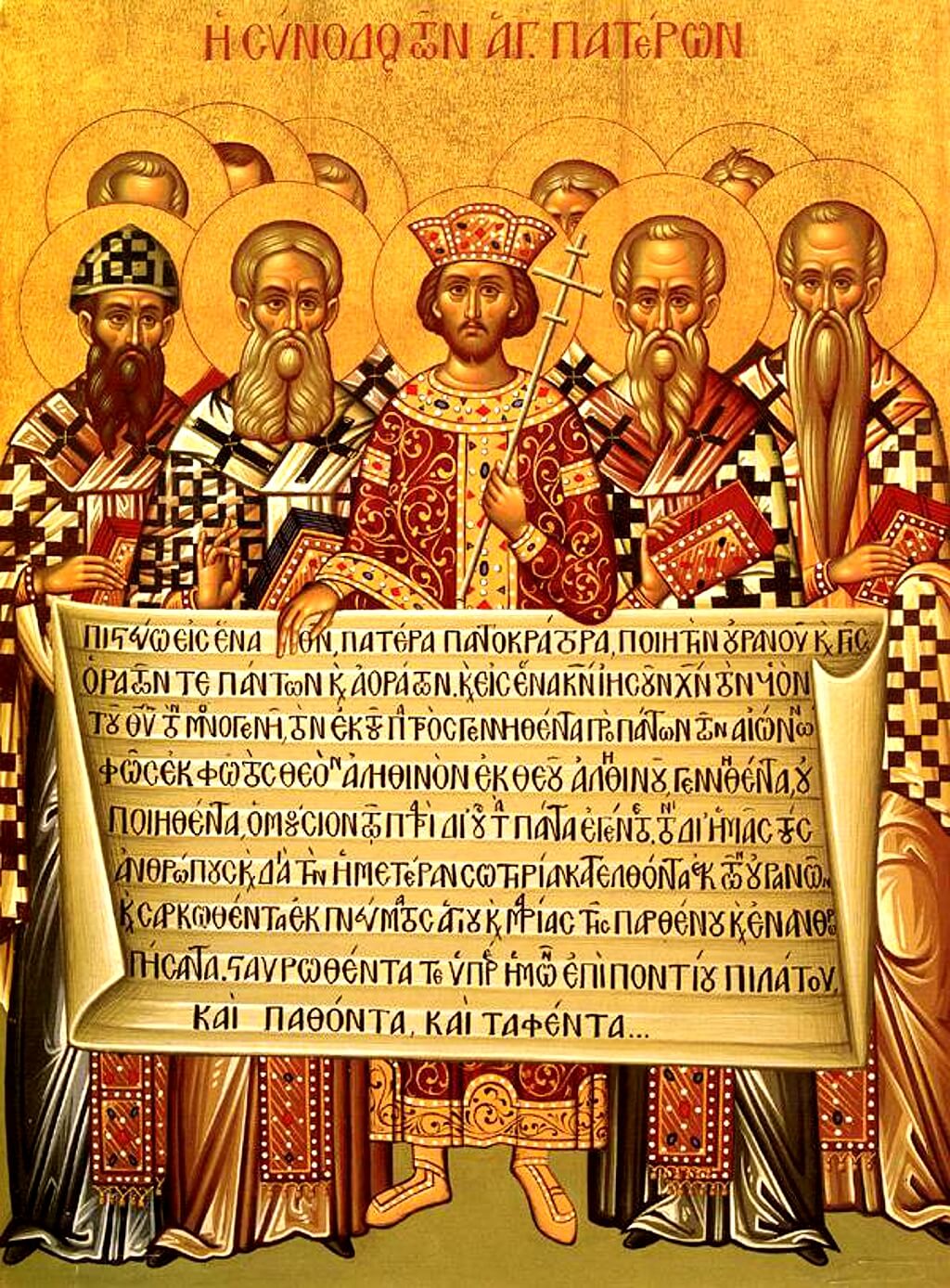
Creedal Christians: The Nicene Creed
Posted by Luke J. Wilson on 2nd June 2019 in Early Church | nicene creed,nicea council,creeds,creedal christians,creedal
The Nicene Creed — what is it and why is it called that?
This creed gets its name from a time and place: the first ecumenical Church council held at Nicaea, which is now known as İznik in northwestern Turkey, in 325 AD.
Now that may raise another question for you: what is an ecumenical council? Well, to explain more about the Nicene Creed, we are going to have to take a look at The First Council of Nicaea in order to better understand why this creed was written.
First things first though; an “ecumenical council” is ideally a Church-wide meeting where all the Bishops from all across the Church come together to hold a very large and very important meetin...
Did the Early Church invent the Trinity?
Posted by Luke J. Wilson on 4th January 2022 in Trinity | early church,trinity,church fathers,theology,council of nicaea,nicea council
The doctrine and concept of the Trinity is encapsulated in Matthew 28:19, where Jesus instructs the apostles: “Go therefore and make disciples of all nations, baptizing them in the name of the Father and of the Son and of the Holy Spirit”. John, who was very close to Jesus and obviously knew him well, alludes to this teaching frequently in his Gospel, too. For example: John 1:1; John 8:58; John 10:30; and John 10:38.
Yet, despite this, and numerous other examples throughout the New Testament which point towards the threefold nature of God, plenty of myths and legends abound online and in books which state that the divinity of Jesus (and therefore the Trinit...
God from God: The Eternal Son in the Crib
Posted by Luke J. Wilson on 13th December 2025 in Christmas | advent,incarnation,xmas,christmas
How can God beget a Son? Does that mean Jesus is His creation?
This question comes sharply into focus during Advent, when the Church contemplates the Incarnation: the eternal Son entering the world as a baby in Mary’s womb. And to understand this, we turn to language the Church has treasured for centuries — especially that crucial distinction between begotten and created.
And C. S. Lewis describes this with a real concise clarity:
We don’t use the words begetting or begotten much in modern English, but everyone still knows what they mean. To beget is to become the father of: to create is to make. And the difference is this. When you beget, you beget...
Before The Pumpkins: Faith In The Flames
Posted by Luke J. Wilson on 25th October 2025 in Halloween | polycarp,martyrdom,halloween
Picture the scene: the year is somewhere around 155–160, Polycarp has just been arrested and brought to the city. The crowd roared in the stadium. The smell of sweat and fear mingled with the dust of Smyrna’s arena. And in the centre of it all stood an old man — calm, unflinching, his face marked with years of faith. The Roman proconsul urged him again: “Swear by the fortune of Caesar. Curse Christ, and I will release you.”
Polycarp looked him in the eye and replied with a defiant response that has echoed down the ages,
Eighty and six years I have served Him, and He has done me no wrong. How can I blaspheme my King who saved me?
Those words hav...
Lent: Day 11 - Ignatius to Polycarp
Posted by Luke J. Wilson on 13th March 2017 in Lent | Lent,great lent,fasting,early church fathers,devotional,daily reading,Ignatius,Ignatius to Polycarp,martyrdom
Day Eleven: St. Ignatius of Antioch: Letter to Polycarp (full text)
Who: Ignatius converted at a young age and later became Bishop of Antioch. A friend of Polycarp and fellow disciple of John, there is a long standing tradition that Ignatius was the child that Jesus held in his arms and blessed in Mark 10:13-16
What: A letter addressed personally to Polycarp giving him advice and encouragement as a bishop, plus some instructions on marriage to the church, which are reminiscent of Paul’s epistles.
Why: Ignatius wrote a series of letters to the churches in Asia Minor whilst en route to Rome to face martyrdom by wild beasts in the Colosseum around 108 AD.
Wh...
Powered by WebBoss.io 3.7.1
Copyright © 2026 The Sacred Faith: Timeless Truths for Modern Minds. All Rights Reserved.