
Blog Search Results


Did you mean:
apostle andrew
?
37 results for Apostle Andrew
found
within the Blog
6 displayed out of 37 (1.11seconds)Page 4 of 7

The Coming of Jesus: Revelation Fulfilled?
Posted by Luke J. Wilson on 31st December 2015 in Second Coming Series | Revelation,Second Coming,Preterism,apocalypse,armageddon,fulfilled prophecy,Return of Christ,Return of Jesus,Eschatology
Don’t let the title put you off, we’re about to go on a mad journey through the annuls of history and the Roman Empire, contrasting what John saw in his vision with what has already played out on the “world’s stage” and what we possibly have to look forward to!
First though, let’s look at a little history concerning the book itself before delving into its contents. Why do this? For a couple of reasons really: one, Revelation has some dispute over the year in which it was written, which can impact on the interpretation. Two, at various points in early church history, the book was held in suspicion of being spurious and almost...
What does the word "Catholic" mean?
Posted by Luke J. Wilson on 8th March 2021 in Etymology | catholic,church fathers,church history,etymology,roman catholic,eastern orthodox,Great Schism,Muratorian Fragment
For many people today, non-Christians and (low church) Christians alike, when they hear the word “Catholic”, certain images spring to mind: the Pope, the rosery, Catholic school, big old churches buildings, choirboys, maybe monks or statues of Mary even; and sadly more recently, sex abuse scandals.
But, generally speaking, all of these are actually aspects of Roman Catholicism — a particular branch of Christianity, and not what the word “catholic” truly means as we’ll see when examining how the early church used the word and what the original Greek word means.
καθολικός (katholikos)
The Greek word where we get the English word “c...
Lent Day 18: Cyprian: On the Unity of the Church: 1-9
Posted by Luke J. Wilson on 21st March 2017 in Lent | Lent,great lent,fasting,early church fathers,devotional,daily reading,Cyprian,Bishop of Carthage,unity
Day Eighteen: St. Cyprian: On the Unity of the Church: 1-9
Who: Third century bishop of Carthage (in modern Tunisia), and martyr from Africa
What: A letter to encourage the unity of the church against schisms and heresy during massive Roman persecution
Why: A disturbance had happened in the church because of a priest called Novatian — a schismatic of the third century, and founder of the sect of the Novatians. Cyprian wrote to counter this and argues that there can only be one united Church, and the Novatian breakaway was a false church and that Novatian was an antipope.When: Around 249 AD
You can find today’s reading on page 92 here: lentfatherscomplete...
Lent Day 19: Cyprian: On the Unity of the Church: 10-18
Posted by Luke J. Wilson on 22nd March 2017 in Lent | Lent,great lent,fasting,early church fathers,devotional,daily reading,Cyprian,Bishop of Carthage,unity
Day Nineteen: St. Cyprian: On the Unity of the Church: 10-18
Who: Third century bishop of Carthage (in modern Tunisia), and martyr from Africa
What: A letter to encourage the unity of the church against schisms and heresy during massive Roman persecution
Why: A disturbance had happened in the church because of a priest called Novatian — a schismatic of the third century, and founder of the sect of the Novatians. Cyprian wrote to counter this and argues that there can only be one united Church, and the Novatian breakaway was a false church and that Novatian was an antipope.When: Around 249 AD
You can find today’s reading on page 97 here: lentfatherscomple...
Lent: Day 4 - Polycarp to the Philippians
Posted by Luke J. Wilson on 4th March 2017 in Lent | Lent,great lent,fasting,early church fathers,devotional,daily reading,episle of Polycarp to the Philippians
Day Four: Epistle of Polycarp to the Philippians (full text)
Who: Polycarp of Smyrna, who was a direct disciple of the Apostle John. We also have some information about Polycarp via Irenaeus (who knew Polycarp) in his book, Adv. Haer., III.3.4: “But Polycarp also was not only instructed by Apostles, and conversed with many who had seen Christ, but was also, by Apostles in Asia, appointed bishop of the Church in Smyrna”.
What: Lots of exhortations are contained in this letter, and is also referenced by Irenaeus as being for “those who wish to do so, and are anxious about their salvation, can learn the character of his (Polycarp's) faith, and the preachin...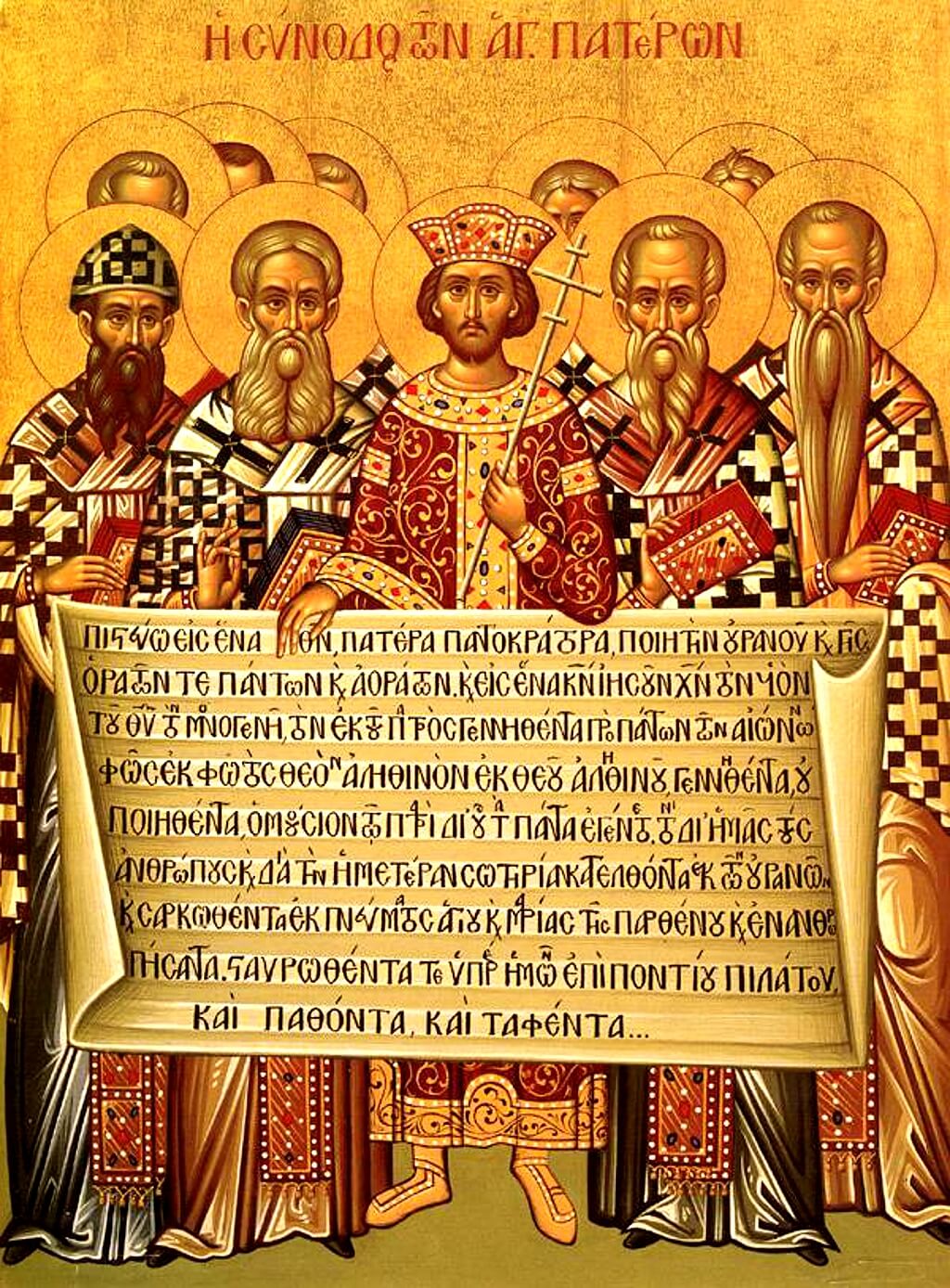
Creedal Christians: The Nicene Creed
Posted by Luke J. Wilson on 2nd June 2019 in Early Church | nicene creed,nicea council,creeds,creedal christians,creedal
The Nicene Creed — what is it and why is it called that?
This creed gets its name from a time and place: the first ecumenical Church council held at Nicaea, which is now known as İznik in northwestern Turkey, in 325 AD.
Now that may raise another question for you: what is an ecumenical council? Well, to explain more about the Nicene Creed, we are going to have to take a look at The First Council of Nicaea in order to better understand why this creed was written.
First things first though; an “ecumenical council” is ideally a Church-wide meeting where all the Bishops from all across the Church come together to hold a very large and very important meetin...
Powered by WebBoss.io 3.7.1
Copyright © 2026 The Sacred Faith: Timeless Truths for Modern Minds. All Rights Reserved.
