
Blog Search Results


Did you mean:
jews
?
36 results for Jews
found
within the Blog
6 displayed out of 36 (0.03seconds)Page 6 of 6

When Church History and Science Collide
Posted by Luke J. Wilson on 23rd April 2022 in General Interest | church history,supernova,space,universe,creation,signs
...ng of the Jews? For we observed his star at its rising, and have come to pay him homage.”
See also various other references to the stars as signs here: Revelation 6:12–17, Matthew 24:29–30, Isaiah 13:13, Jeremiah 10:2, Joel 2:31, Haggai 2:6, Luke 21:25–26, Ezekiel 32:7–8, Job 38:31–33, Amos 5:8, Psalm 19:1.
But what makes this supernova of 1054 even more interesting isn’t just that it happens in the same year, but the same month! The Great Schism is generally dated to 16th July 1054 as the clinching moment of the Eastern and Western church parting ways (with the excommunication of the Patriarch of Constantinople, Michael Cerularius), and this su...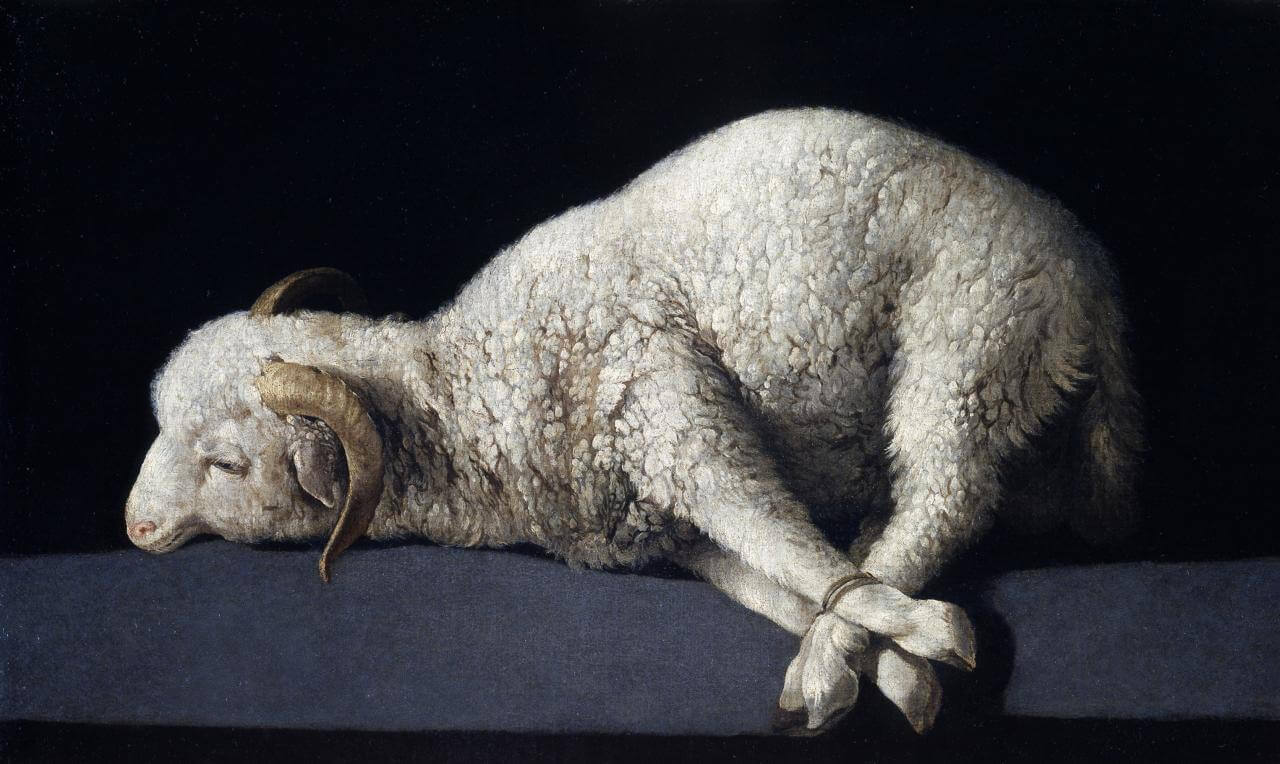
How was Jesus a sacrifice?
Posted by Luke J. Wilson on 25th March 2018 in Lent | sacrifice,sabbath,crucifixion,passover lamb,paschal lamb,sin,death,Palm Sunday
...ning. The Jews asked Pilate to let them take the bodies down that same day (which was unusual, but done because of the Sabbath), so that meant that Jesus wasn’t left overnight, thus fulfilling the obligations of the Passover ritual!
The apostles obviously recognised these parallels, as they refer to them in their epistles — see 1 Peter 1:18-20, 1 Corinthians 5:7 and basically all of Revelation. But how does this help us in our sins? The Passover wasn’t a sin offering, yet somehow the death of Jesus in this way saves us from our sins. To better understand this, and to grasp why in various places Jesus is called our “ransom”, we need to go back to the r...
Unveiling the Trinity: Exploring the Nature of Jesus and the Incarnation
Posted by Luke J. Wilson on 4th November 2023 in Trinity | trinity,incarnation,two powers in heaven
...Ancient Jews recognized this as the concept of "the two powers in heaven," possibly implying a binitarian understanding that acknowledges two distinct persons within God: the Father and His Word. Only in the New Testament period do we see the full recognition of the Holy Spirit as God, rather than a separate or lesser being (John 14:15-31).
The New Testament further clarifies these theological concepts, especially regarding the incarnation:
John 1:14
"The Word became flesh
and took up residence among us.
We observed His glory,
the glory as the One and Only Son from the Father, full of grace and truth."
Philippians 2:6-7
"[Jesus], who, existing in...
Debunking the Crusades: 5 Myths You Probably Believe
Posted by Luke J. Wilson on 14th October 2024 in Crusades | Crusades,Medieval,history,muslim
...Muslims, Jews, and Christians.
Truth:
While the Crusades were brutal, and there were certainly episodes of horrific violence, such as the sack of Jerusalem in 1099, it is an oversimplification to paint all Crusaders as bloodthirsty. At times, crusading armies negotiated with Muslim leaders, such as Saladin, who famously retook Jerusalem in 1187 but allowed Christians to leave the city unharmed. Moreover, Christian pilgrims, merchants, and even soldiers often lived and traded peacefully with Muslim and Jewish communities in the Crusader States. The violence of the Crusades must be understood in the broader context of medieval warfare, which was brutal across a...
Biblical Inspiration and the Canon: How We Got the Bible
Posted by Luke J. Wilson on 28th February 2025 in Early Church | canon,nicea council,nicene council,myths,church history,church fathers
...-speaking Jews and later by early Christians, including the apostles. The Septuagint included several books not found in the Hebrew Bible, known as the Deuterocanonical books (such as Tobit, Judith, Wisdom, and 1–2 Maccabees). While these books were accepted in many early Christian communities and remain part of the canon in Catholic and Orthodox traditions, Protestant reformers later removed them, considering them useful but not divinely inspired at the same level as the rest of Scripture.
The reformers’ view was influenced by Jerome, who, in the 4th century, argued that these books were not part of the Hebrew Bible and therefore should be considered separ...
Did Herod’s Massacre Of The Innocents Historically Happen?
Posted by Luke J. Wilson on 29th December 2025 in Christmas | josephus,herod,nativity,christmas,epiphany,magi
...es of the Jews 16.11.7
So, why the silence here about Bethlehem?
The answer, I would say, isn’t anything nefarious or made-up by Matthew, but just something simply down to scale.
Bethlehem Was a Very Small Place
Bethlehem in the early first century was not a city. It was a village — small, agricultural, and politically insignificant. Most historians estimate its population at somewhere between 300 and 1,000 people, with around 500 being a sensible midpoint.
Once we factor in ancient demographics, the numbers become surprisingly modest.
Modern demographic research into pre-industrial societies consistently shows that nearly half of all children die...
Powered by WebBoss.io 3.7.1
Copyright © 2026 The Sacred Faith: Timeless Truths for Modern Minds. All Rights Reserved.
