
Blog Search Results


62 results for eternal consequences
found
within the Blog
6 displayed out of 62 (0.83seconds)Page 8 of 11

It's no longer about land!
Posted by Luke J. Wilson on 16th August 2014 in Israel | Israel,war,politics,current events,Hamas,Gaza,promised land,New Covenant,spirit and truth,worship,new creation
As I've been thinking more about the Israel situation, and reading and hearing the responses and debates on my last article, and the issue in general, it seems to me that people can't help but get stuck in the mindset of a geo-political debate. Yes, there's a place called "Israel" in the middle-east, and yes there's a war going on which is terrible for all involved — but from a New Testament Christian perspective, that shouldn't be our focus when it comes to thinking about the true Israel!
This is what it's about!
If you want to "support Israel" because you believe they are in the right or have 'just cause', then fine – just don't cal...
The Coming of Jesus: Our Future Hope - What Now?
Posted by Luke J. Wilson on 22nd January 2016 in Second Coming Series | second coming,70 weeks,70ad,what now?,what next,preterism,fulfilled prophecy,eighth day
So here we are at the final part of this Coming of Jesus series. If you’re new here, you can start from the beginning by clicking here, or carry on reading as I will give a brief overview of what’s been covered so far.
This series has covered many topics and themes of eschatology, starting with Daniel’s prophecy of the Messiah’s first coming to this world, all the way through to the prophecies of another coming. It’s been a very interesting and eye-opening journey of discovery, at least for myself, if no one else. I didn’t start this study with a particular doctrine or conclusion in mind, but rather went in with the minds...
Man-Made Tradition vs Apostolic Tradition
Posted by Luke J. Wilson on 28th February 2016 in Early Church | early church,early church fathers,tradition,creeds,nicene creed,apostolic creed,man made tradition,apostolic tradition
Quite often in discussions which are about or involve some aspects of early church history or practices earlier Christians did, someone will inevitably throw out the "show stopper" that is "it's all just man made tradition" therefore not valid and the discussion is over. It’s as though saying it's "man made", without considering anything other than that they can't find an isolated chapter and verse in the bible which states something explicitly, means they've "won" the debate!
Nothing more to see here folks, someone told us it's man made so we can all go home now. Either that, or the mere mention of the word “tradition” and suddenly you’re accused of be...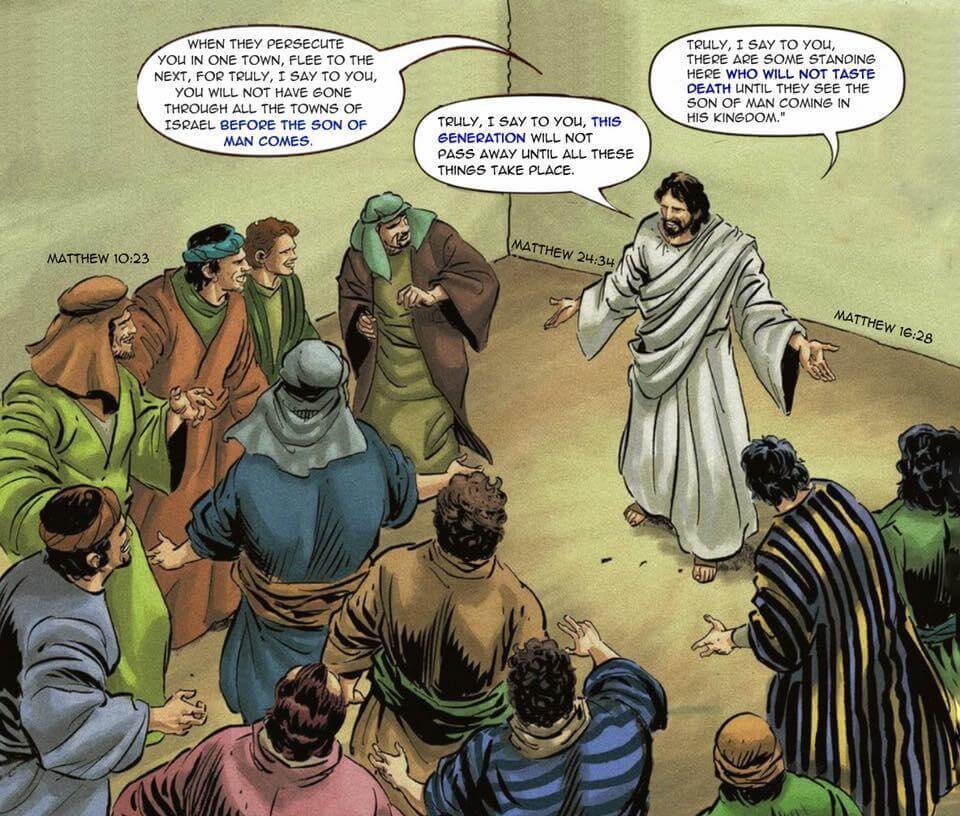
The Coming Kingdom of the Son of Man
Posted by Luke J. Wilson on 20th July 2016 in Eschatology | second coming,preterism,Kingdom of God,Coming kingdom,olivet discourse,Gospels,end times,end of the world,end of the age
The importance of context of what's being said, and to whom, in Scripture.
I came across this image the other day (in the header above; see larger here) that links together three parts of Matthew’s Gospel to highlight the connection which many often miss, or read as separate events. I like the image because it shows that when Jesus spoke these things, he would have been saying them directly to the disciples and others who were listening to his teaching, and not in some cryptic, ambiguous dictation to a prophetic scribe, devoid of all context and meaning to those around him at the time.
Update Feb 2017: I am adding some additional information to this to dis...
Before The Pumpkins: The Day Two Women Defied Rome
Posted by Luke J. Wilson on 29th October 2025 in Halloween | halloween,martyrdom,Perpetua,Felicity
In the last post, we looked at Polycarp — a faithful bishop who faced the flames rather than deny his Lord. His courage in the face of certain death became a rallying light for generations of believers after him. But his story is only one among many in the long line of the cloud of witnesses who ran the race before us (Hebrews 12:1). Today, we step forward a few decades to another account of extraordinary faith — that of two women, Perpetua and Felicity.
Perpetua left an account of her own martyrdom (technically a Passion) which is considered historically reliable. What makes it extraordinary is that Perpetua herself wrote a portion of it in Latin b...
Lent Day 35: Ambrose of Milan: Concerning the Mysteries: 1-4
Posted by Luke J. Wilson on 10th April 2017 in Lent | Lent,great lent,fasting,early church fathers,devotional,daily reading,Doctor of the Church,lectures,liturgy,catechism,Eucharist,Bishop of Milan,St Ambrose,mysteries,treatise
Day Thirty-five: St. Ambrose of Milan: Concerning the Mysteries: 1-4
Who: Bishop of Milan from 374 to 397; born probably 340, at Trier, Arles, or Lyons; died 4 April, 397. He was one of the most illustrious Fathers and Doctors of the Church.
What: The treatise was composed for use during the latter part of Lent, for the benefit of those about to be baptised, the rites and meaning of that Sacrament, as well as of Confirmation and the Holy Eucharist. For all these matters were treated with the greatest reserve in the Early Church, for fear of being misused by unbelievers.
Why: Ambrose states that after the explanations he has already given of holy living (in pr...
Powered by WebBoss.io 3.7.1
Copyright © 2026 The Sacred Faith: Timeless Truths for Modern Minds. All Rights Reserved.
